

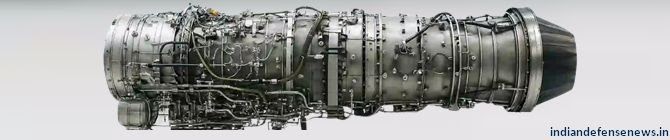
The Gas Turbine Research Establishment (GTRE) has embarked on an ambitious project to develop the new and more powerful Kaveri engine. This initiative marks a significant step forward in India’s indigenous aero-engine capabilities, building on decades of research and development.
GTRE’s immediate priority remains the certification of the existing GTX-35VS Kaveri engine. This foundational effort is essential to validate the engine’s design and performance under rigorous standards before advancing to newer variants.
Flight tests for the GTX-35VS Kaveri engine are scheduled in the near future. These trials will comprehensively assess the engine’s performance and capabilities, providing critical data on thrust output, fuel efficiency, reliability, and integration with airframes.
Successful certification and flight testing will pave the way for the much-anticipated Kaveri engine. This successor promises to be even more advanced, incorporating cutting-edge materials, improved aerodynamics, and enhanced thermal management systems.
The Kaveri engine is designed to deliver 55–59 kN of thrust without afterburner. This dry thrust range represents a substantial upgrade over previous iterations, enabling superior sustained performance in diverse mission profiles.
With afterburner engaged, the Kaveri will achieve up to 90 kN of thrust. This peak output ensures exceptional acceleration, climb rates, and supersonic capabilities, making it a versatile powerplant for modern combat aircraft.
Such thrust levels are considered crucial for India’s future fighter jet projects. Emerging platforms like the Advanced Medium Combat Aircraft (AMCA) demand high-performance engines to match global standards in stealth, agility, and multi-role operations.
GTRE’s work on Kaveri aligns with India’s Atmanirbhar Bharat initiative in defence. By reducing reliance on foreign engines like the GE F414, it bolsters self-reliance in critical aerospace technologies.
The original Kaveri engine, developed since the 1980s under the Light Combat Aircraft (LCA) Tejas program, faced challenges with thrust shortfalls and weight issues. Lessons from these have informed the redesign for greater efficiency and power density.
Recent collaborations, including with Safran of France, have accelerated progress through technology transfers in single-crystal blade manufacturing and advanced coatings. These partnerships enhance GTRE’s expertise without compromising indigenous core development.
Flight testing of the GTX-35VS on a modified Tejas Mk1 or flying testbed is imminent, expected within the next 12–18 months. Positive outcomes could lead to in-service integration by the early 2030s.
The Kaveri’s 90 kN wet thrust positions it competitively against engines like the EJ200 (used in Eurofighter Typhoon) or RD-33 (in MiG-29). This will enable India to field fifth-generation fighters with domestic powerplants.
Beyond fighters, the engine’s scalability could support unmanned combat aerial vehicles (UCAVs) and trainer aircraft. Its modular design allows for future upgrades, such as variable cycle technology for better fuel economy.
GTRE’s Bangalore facility, with its advanced test cells and simulation labs, is at the heart of this endeavour. Supported by DRDO and private partners like Godrej Aerospace, production scaling is underway.
Challenges persist, including achieving consistent high-temperature performance and life-cycle costs. However, GTRE’s iterative approach, informed by over 1,600 hours of ground testing on prior Kaveri variants, instils confidence.
This development comes amid India’s expanding defence budget and focus on indigenous manufacturing. With HAL and private firms gearing up, Kaveri could power hundreds of jets, creating a robust ecosystem.
GTRE’s dual-track strategy—certifying the GTX-35VS while advancing Kaveri —heralds a new era for Indian aviation power. Its 55–59 kN dry and 90 kN wet thrust will be pivotal for next-gen fighters, securing strategic autonomy.
IDN (With Agency Inputs)
