

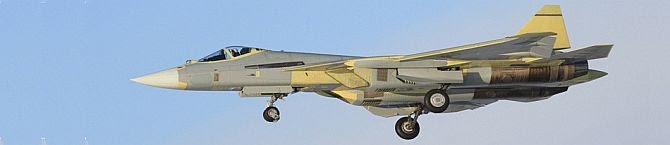
Analysts suggest that this move could include local production in India, alongside upgrades to engines and avionics, marking a significant step in New Delhi’s airpower modernisation plans.
According to Military Watch Magazine, the Su-57M1 fighters delivered to India will be powered by the advanced AL-51 F-1 engines. These engines are expected to provide superior thrust compared to the American F-22 and potentially match the Chinese J-20, while also reducing maintenance requirements and improving operational readiness.
The publication highlighted that India may adopt a licensed production model similar to its earlier Su-30MKI programme, which combined Russian technology with Indian industrial participation.
The upgraded Su-57M1 is reported to feature a redesigned fuselage, offering greater lift, enhanced stability at supersonic speeds, and improved stealth performance. The aircraft will also be equipped with a new radar system, further strengthening its combat capabilities. These enhancements are seen as part of Russia’s effort to position the Su-57M1 as a competitive fifth-generation platform in global markets.
Military Watch Magazine also noted that India could receive a customised version of the Su-57M1 tailored to its specific requirements. This variant may include a second seat and integration of Indian avionics, enabling greater operational flexibility and domestic technological input.
Analysts believe such a modification could eventually compete in export markets, even against the baseline Su-57, by offering unique features aligned with India’s defence needs.
The prospect of India expanding its Su-57M1 orders underscores the country’s long-term interest in advanced fighter technology and its willingness to pursue deeper industrial cooperation with Russia. If realised, this would represent a continuation of India’s strategy of combining foreign platforms with indigenous systems to strengthen its aerospace sector and military self-reliance.
Agencies
