

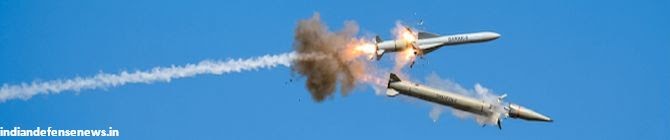
The missile was brought down over Sirsa airspace, and parts of it were later retrieved by security forces on 10 May, with videos of the debris circulating widely online.
The interception was led by Air Commodore Rohit Kapil, Air Officer Commanding of 45 Wing, whose team’s vigilance and swift action averted a major attack. Their success demonstrated the strength of India’s integrated air defence network, which the government is now expanding under the Sudarshan program.
This initiative aims to establish a multi-layered defence shield across India, integrating systems such as the Russian S-400s, Barak-8 MRSAM, and the indigenous Project Kusha interceptor system to protect cities, strategic assets, and infrastructure against drones, cruise missiles, and hypersonic threats.
Air Commodore Kapil’s role in the interception earned him the Yudh Seva Medal, awarded by President Droupadi Murmu on 14 August. Commissioned as a fighter pilot in 1998, Kapil is a Su-30MKI pilot, a Category ‘A’ qualified flying instructor, and has previously commanded an operational Su-30MKI squadron. His leadership during the crisis highlighted the professionalism and preparedness of the IAF.
On the eve of the first anniversary of the Pahalgam terrorist attack of 22 April 2025, which claimed 26 civilian lives and prompted India’s launch of Operation Sindoor against Pakistan, the Indian Army issued a stern warning to its neighbour.
Posting on X, the Army declared, “When boundaries of humanity are crossed, the response is decisive,” accompanied by a digital poster showing a silhouetted map of India with the caption, “Some Boundaries should Never Be Crossed.”
TOI
