

India’s space programme has taken a decisive step forward with the allocation of ₹10,397 crores (approximately $1.09 billion) for the year 2026–27 under the category of ‘Space Technology’.
This budgetary provision is intended to support a range of missions and developmental activities, with a particular focus on strengthening the capabilities of the country’s most powerful rocket, the Launch Vehicle Mark 3 (LVM3).
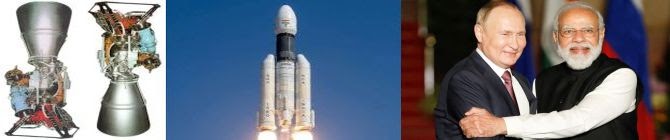
The Indian Space Research Organisation (ISRO) will be procuring and inducting semi-cryogenic rocket engines to enhance the lifting power of the LVM-3. These engines, which burn a combination of rocket-grade kerosene and super-cooled liquid oxygen, represent a significant technological upgrade.
India does not currently possess a proven, flight-ready semi-cryogenic engine, making procurement essential to expedite the enhancement of payload capacity. The Parliamentary Standing Committee on Science and Technology has explicitly noted this allocation in its latest 60-page report, marking the first official government document to confirm funding for semi-cryogenic engine acquisition.
Since 2023, reports have suggested that India may procure the Russian RD-191 semi-cryogenic engines, given Russia’s longstanding role as a strategic partner in defence, nuclear energy, and space technology.
While the Parliamentary report does not specify the exact engine variant or its country of origin, the mention of allocated funds signals a concrete move towards acquisition. This development is crucial for India’s future space ambitions, as semi-cryogenic propulsion offers greater efficiency and lifting capacity compared to existing systems.
The RD-191 engine is a high-performance design fuelled by kerosene and liquid oxygen. Classified as semi-cryogenic, it uses kerosene stored at room temperature and liquid oxygen maintained at cryogenic temperatures below –150 degrees Celsius.
India’s current rockets rely on solid-fuel, liquid-fuel, and cryogenic engines, with cryogenic systems using liquid hydrogen and liquid oxygen.
Although indigenous efforts have been underway to develop the SE-2000 semi-cryogenic engine, India does not yet have a flight-ready version, and several more years may be required before the homegrown design is operational.
The decision to procure semi-cryogenic engines reflects both the urgency of enhancing India’s launch capabilities and the strategic foresight of bridging the technological gap until indigenous solutions are ready.
By strengthening the LVM3 with semi-cryogenic propulsion, ISRO will be able to carry heavier payloads, reinforcing India’s position as a leading spacefaring nation.
Agencies
