

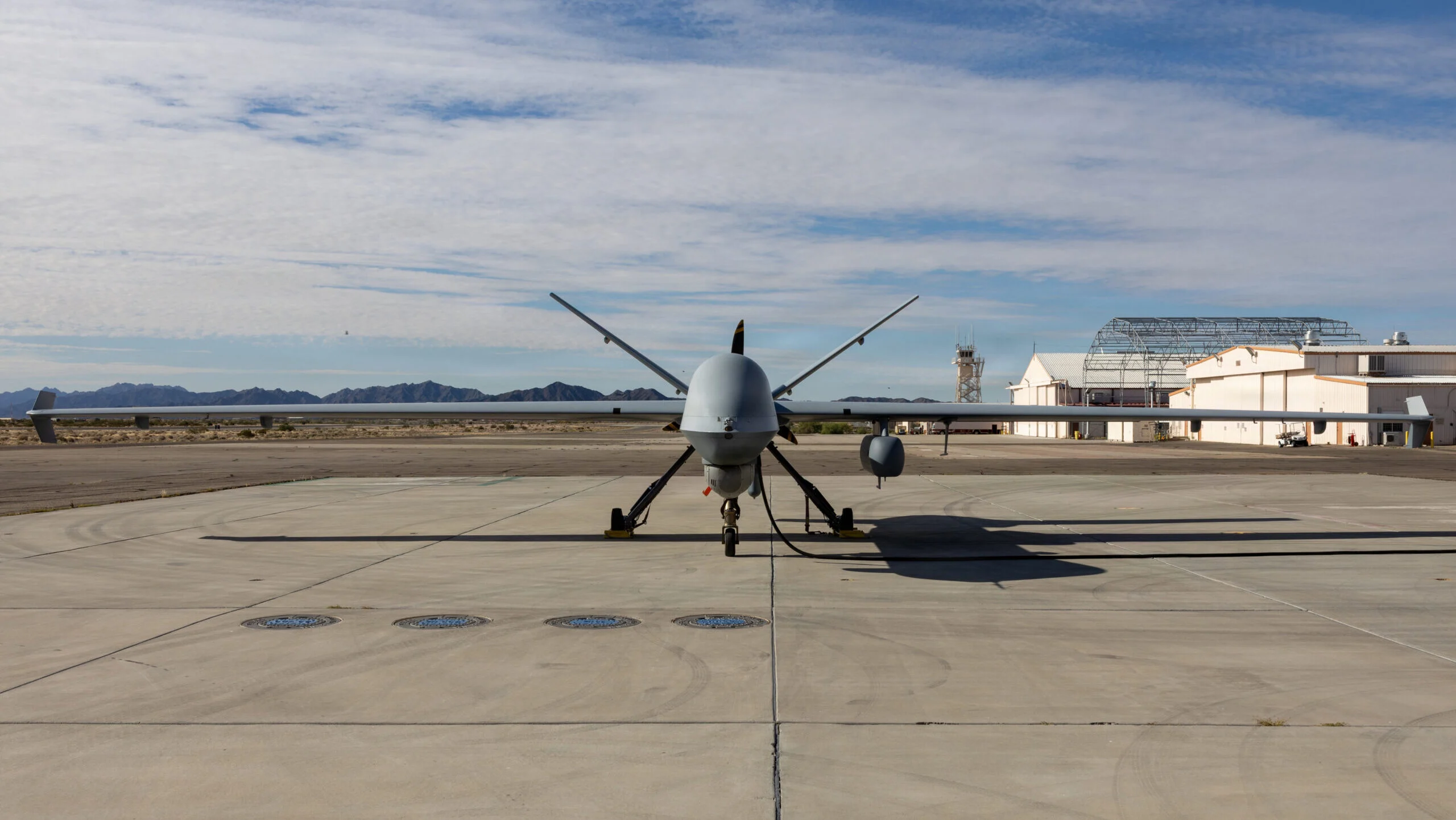
WASHINGTON — The US Air Force has finalized requirements for a drone to replace the service’s General Atomics MQ-9A Reaper, and in the near term is looking to replenish combat losses of the aircraft, officials said Tuesday.
Testifying before the Senate Armed Services Airland subcommittee, Air Force Maj. Gen. Christopher Niemi said he “signed out” requirements on Monday for a new platform to replace the Reaper, which has been in service since 2007. The new unmanned aircraft, Niemi said, must consist of open architectures, be easily mass produced and have a higher tolerance for attrition — meaning that it would be cheaper per unit.
“The MQ-9 is serving us well over in the conflict that’s ongoing in the Middle East. But the MQ-9, depending on what sensors are on that, can cost up to $50 million a copy,” said Niemi, the military deputy for Air Force Futures. Niemi was recently nominated to become the service’s first chief modernization officer.
“So by getting something that’s more modular, we think we could take advantage of an opportunity — if you knew that aircraft was going to operate in a high-threat environment — of taking off those packages, that [would] drive that cost to a much lower price point,” Niemi added.
The Air Force approximately a month ago released a request for information targeting an attritable intelligence, surveillance and reconnaissance (ISR) drone. Lt. Gen. Luke Cropsey, the Air Force’s military deputy for acquisitions who testified alongside Niemi, said over 50 vendors responded.
“There is, I think, a burgeoning interest across the broader defense industrial base on what comes next. And I think we have enough interest to really get some interesting proposals back,” Cropsey said.
The Reaper, along with its variants, for nearly 20 years has been used by the US and partner military and intelligence outfits for ISR as well as direct strike missions, making a name for itself especially over the Middle East and Southwest Asia during the Global War on Terror. However, amid discussion of the US potentially sending Reapers to Ukraine, the aircraft’s survivability against sophisticated air defenses has come into question, and several of the drones reportedly have been lost in recent combat in missions over Yemen and Iran.
Today General Atomics spokesman C. Mark Brinkley defended the aircraft as a key existing capability, saying he “can’t debate paper airplanes and crystal ball predictions.”
“We are offering the U.S. Air Force modular options for MQ-9B, at a price that reflects the DOW’s requirements and can be delivered today, not someday,” Brinkley said in a statement to Breaking Defense, using an initialism of the Department of Defense’s secondary name.
“Our MQ-9 aircraft series endures a lot of misinformation — from price to survivability to performance — and that gamesmanship undermines American national security. We are investing significant dollars to meet immediate demand, just as we have done for more than three decades,” Brinkley continued.
“Bottom line, our MQ-9 series aircraft are the best value for dollars out there today, and we stand behind them,” he said.
During the hearing Air Force Lt. Gen. David Tabor, the service’s deputy chief of staff for plans and programs, maintained that recent operations have demonstrated the drone’s value, though the Air Force “certainly” doesn’t view it as an “attritable asset.”
“The good news is that even with that attrition — we’re down to about 135 planes right now — we are still able to fulfill our contract of 56 combat lines worldwide,” Tabor said during the hearing. “With that said, we are concerned about how they’ve attrited, and we’re looking at options to buy back as many of the MQ-9As as we possibly can right now.”
Tabor added there’s a “short-term effort” to buy drones this fiscal year, and in the “medium-term” officials are exploring options for what platform might follow.
