

Japan’s recent flurry of defense diplomacy – from Manila to Jakarta, Canberra to Wellington – has prompted familiar anxieties about the country’s pacifist commitments. Critics warn of a slippery slope toward remilitarization. Yet this framing fundamentally misreads what Tokyo is actually doing. Viewed clearly, Japan’s defense equipment transfers represent something more modest in military terms, and more significant in strategic ones: the deliberate construction of a middle power cooperation network anchored by shared weapons supply chains.
The scale of Japan’s defense buildup, while notable by its own postwar standards, remains far below what would qualify as militarization by any comparative measure. European middle powers such as France, Germany, and the United Kingdom have long maintained arms export industries and military capabilities that dwarf Japan’s emerging posture. The April 2026 Cabinet decision to remove the long-standing “five categories” restriction on lethal weapons exports is consequential domestically – but it does not make Japan a military great power. What it does is open the door to a different kind of strategic contribution: becoming a supplier and partner within a regional defense ecosystem.
Soeya Yoshihide, professor emeritus at Keio University in Tokyo, has articulated this distinction with unusual clarity. Japan’s postwar diplomacy, he argues, has consistently reflected a multilateral, middle power orientation. The current arms export agenda should therefore be understood through that same lens. The real logic is not deterrence through unilateral military buildup, but the creation of shared weapons supply chains across Asian middle powers — building interoperability, mutual dependence, and strategic alignment through common platforms.
This distinction matters enormously for how Japan frames its approach to potential partners. A China-containment narrative may resonate with the Philippines, which is locked in direct confrontation with Beijing over the South China Sea. But it falls flat – or worse, triggers resistance – in Jakarta. Indonesia, much like India, pursues strategic autonomy between Washington and Beijing. Telling Indonesia that Japanese frigates or submarines will help contain China is, frankly, counterproductive.
The more persuasive argument is one of regional supply chain integration: that participating in a shared defense industrial network enhances Indonesia’s own capabilities and autonomy, while strengthening the collective resilience of Indo-Pacific middle powers. Jakarta signed a Defense Cooperation Agreement with Tokyo in May 2026, and Indonesian naval officials have openly acknowledged interest in Japanese frigates and submarines – but on Indonesia’s own terms, not as a junior partner in an anti-China coalition.
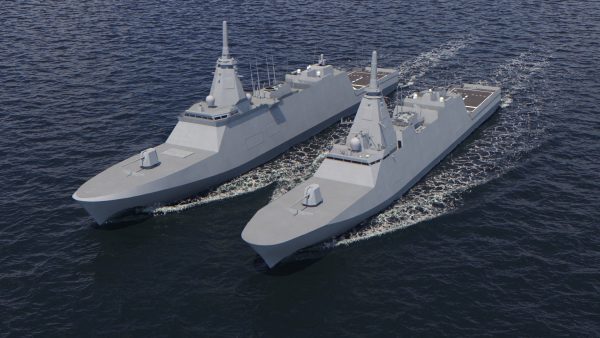
The most compelling evidence for this “middle power supply chain” thesis is the emerging story around Japan’s upgraded Mogami-class frigate, known in Japan as 06FFM or “New FFM.” Australia selected the platform as its future general-purpose frigate, with 11 vessels planned and the first three to be built in Japan.
On May 7, New Zealand identified the same frigate – alongside Britain’s Type 31 – as a finalist in its own replacement program. Wellington’s interest is not simply about hardware specifications. It reflects the logic of operating alongside partners using common platforms: shared parts, shared logistics, shared maintenance, shared training, and ultimately shared operational resilience during crises.
If New Zealand selects the New FFM, Japan’s vision of a shared middle power maritime network would begin to take concrete form. Japan would operate 12 Mogami-class and 12 New FFMs. Australia would field 11 New FFMs. New Zealand would add at least two. More than 37 ships across three Indo-Pacific navies could eventually share a common platform family.
Chief Cabinet Secretary Kihara Minoru described the potential selection as enhancing trilateral interoperability among Japan, Australia, and New Zealand, while Defense Minister Koizumi Shinjiro framed the broader pattern – Australia, New Zealand, the Philippines – as giving concrete shape to a Free and Open Indo-Pacific in defense terms.
This is the language of middle power cooperation rather than traditional great-power rivalry.
The Philippines case illustrates the practical dimension. Tokyo and Manila agreed in May 2026 to establish a working group for the potential transfer of Abukuma-class destroyer escorts – a move that could become Japan’s first export of lethal military equipment under the revised framework and an early test case for its emerging middle power defense strategy.
Underlying all of this is a second, less openly discussed driver: uncertainty about the United States itself. Japanese policymakers are acutely aware that Washington’s long-term strategic reliability cannot be taken for granted – a concern sometimes referred to privately as the “Trump risk.” The Trump administration’s “America First” foreign policy, with its transactional approach to alliances and selective engagement in regional contingencies, has prompted Tokyo and its partners to hedge by deepening horizontal ties among themselves.
It is true the Japan-U.S. alliance remains the cornerstone of Tokyo’s security policy. But many regional states increasingly see Washington-centered alliances alone as insufficient in an era of geopolitical volatility. As a result, countries such as Japan and Australia are strengthening horizontal ties among regional middle powers, building resilience that can complement – rather than replace – the alliance system.
In that sense, the middle power supply chain agenda serves a dual purpose: building collective capacity against external coercion while reducing excessive dependence on any single patron.
Obstacles remain, of course. Japan still lacks the mature export infrastructure – long-term maintenance systems, technology transfer frameworks, industrial participation arrangements, and overseas support networks – that European defense exporters have developed over decades. Building those capabilities will itself require sustained institutional adaptation.
Messaging also remains delicate. The framing that works in Manila may not work in Jakarta. Overemphasizing anti-China deterrence risks alienating Southeast Asian states that prefer strategic ambiguity and diplomatic balance.
Yet the broader strategic opportunity is real.
Many Indo-Pacific middle powers – including Australia, New Zealand, the Philippines, Indonesia, and Vietnam – share an interest in preserving a stable and rules-based regional order, even if they differ in how directly they wish to confront China. Japan’s emerging offer is not simply to sell weapons or build an Asian NATO. Rather, it is to become an anchor of a shared defense industrial ecosystem that enhances interoperability, strengthens supply-chain resilience, and deepens long-term strategic interdependence among regional partners.
That is an offer many countries can accept on their own terms.
Japan’s postwar diplomacy has historically worked best through multilateral frameworks and cooperative networks. Properly understood, Tokyo’s evolving defense export policy is not a departure from that tradition, but an extension of it into the security domain. Whether Japan can successfully build such a middle power network may shape not only its future security role, but also the broader strategic architecture of the Indo-Pacific itself.
