

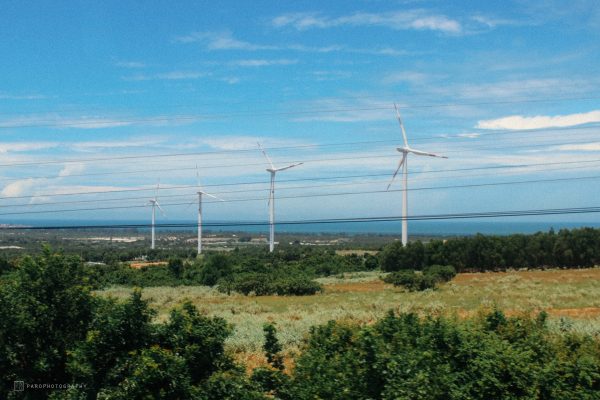
A surge in global fuel prices following disruptions around the Strait of Hormuz has exposed the extent to which Southeast Asia still depends heavily on imported fossil fuels for its security energy.
Across the region, governments have scrambled to stabilize supply. Coal plants are operating at higher capacity, with emergency measures announced to shield economies from price shocks.
Beyond the immediate term, perhaps the most pressing question is whether the crisis will slow or accelerate the region’s transition to renewable energy.
Short-term Fix, Long-term Risks
In the Philippines, the government’s response has underlined the tension between short- and long-term imperatives.
In late March, President Ferdinand Marcos Jr.’s administration declared a “national energy emergency” amid rising geopolitical tensions, introducing a range of measures to secure and conserve fossil fuel supplies. Coal-fired plants in the country have increased production, while lower-grade petroleum products have been allowed to ease shortages.
At the same time, policymakers are reconsidering earlier commitments to phase out fossil fuels.
“I know how sensitive we are to the renewable energy transition,” said Economy Secretary Arsenio Balisacan during an April Senate hearing. “But even countries like Japan and Germany are revisiting their timelines.”
Balisacan suggested suspending the Philippines’ coal moratorium, arguing that delaying his country’s transition to renewables may be necessary to preserve industrial competitiveness. In place since 2020, the moratorium was enacted to allow the nation to focus on its transition to renewable energy.
The Philippines is not alone in its actions to stabilize prices and ensure system reliability.
Across Southeast Asia, governments are leaning on fossil fuels to manage immediate risks. Thailand has restarted decommissioned coal plants. Vietnam is securing additional coal supplies. Indonesia has increased its coal production.
Even beyond the region, major economies are taking similar steps. South Korea has delayed the shutdown of ageing coal plants, while Japan has expanded the role of coal in its capacity markets.
In all these places, the response has followed the same pattern: energy security first.
But analysts say this shift is temporary.
“We see this shift as largely a short-term response rather than a long-term direction,” said Alnie Demoral, Southeast Asia analyst at the global energy policy institute Ember. “These measures address immediate shocks, but they also increase exposure to future volatility.” Companies and governments are increasingly treating energy security and sustainability as aligned rather than competing goals, she added.
Crisis or Catalyst
For some in the renewable energy sector, the current turmoil is not a setback, but a turning point.
“This is an opportunity,” said Gerry Magbanua, president of Philippine renewable energy firm Alternergy. “I believe this will accelerate the transition.”
Magbanua points to investment trends as evidence. His company is pursuing an ambitious goal of one gigawatt of renewable capacity by 2030, with multiple projects set for completion this year. Although a smaller energy player, Altenergy has invested nearly 25 billion pesos ($404 million) in its projects over the past two years.
Across the Philippines, clean energy investment has grown steadily over the past decade, supported by policies such as the Green Energy Auction Program. According to industry figures, investment rose from $2.6 billion in 2015 to $3.4 billion in 2024.
“I have yet to see significant new capital flowing into non-renewables,” Magbanua said. “The shift has already been made.” Before the geopolitical shocks, the Philippines had already set targets of a 35 percent renewable energy share in its power generation mix by 2030 and 50 percent by 2040.
Demoral agrees that while some short-term investment may still flow into fossil fuels, the country’s broader trajectory remains unchanged.
“Renewables are becoming the more attractive and resilient investment pathway,” she said.
On the ground, at the consumer level, Magbanua said there remains an unserved demand for EVs. Solar installers have also reported seeing more inquiries from homes and small businesses.
While government policy guides industry-level decisions, the general public is also considering how they can ease the pressure of the crisis on their own lives – pressure that could influence the policy decisions of those they choose to elect.
A Region Moving at Different Speeds
ASEAN’S long-term energy security and decarbonization strategy prioritizes renewable energy, as guided through its recent ASEAN Plan of Action for Energy Cooperation (APAEC). But across the diverse region, the transition is far from uniform.
Vietnam has emerged as a regional leader, with solar capacity reaching around 18 gigawatts, driven by earlier feed-in tariffs and strong commercial demand. Vietnam’s largest conglomerate, Vingroup, also announced it planned to halt construction of the country’s largest LNG-fired power plant, opting for a renewable energy project instead.
Malaysia and Thailand have also expanded solar capacity through auction systems and incentive schemes. Indonesia, by contrast, has lagged despite accounting for around 40 percent of Southeast Asia’s population.
Its energy mix remains dominated by coal, which supplies roughly 65 percent of the electricity. As one of the world’s largest coal exporters, Indonesia faces fewer import pressures than its neighbors, reducing the urgency to transition to renewables.
“There is a growing recognition that the transition is unavoidable,” said Putra Adhiguna, managing director of the Energy Shift Institute based in Jakarta. “But the practical outcomes are not moving as fast.”
Indonesian President Prabowo Subianto has set ambitious targets, including a plan to install 100 gigawatts of solar capacity within two years. Yet analysts say implementation remains uncertain. “On paper, clean energy dominates future investment plans,” Adhiguna said. “But realization is still patchy.”
It is a common theme in Southeast Asia that leaders are affirming the need to strengthen energy resilience through renewables, but there remains a lack of bold action towards this.
Structural Barriers Remain
Even in countries pushing forward, the transition faces significant obstacles beyond the current fuel crisis.
In the Philippines, developers point to slow permitting processes as a major bottleneck.
“The challenge is not just funding or technology,” Magbanua said. “It’s navigating multiple government agencies. That delays everything.”
Infrastructure constraints also limit progress. Renewable energy projects are often located far from transmission networks, leaving substantial potential capacity stranded.
The Institute for Climate and Sustainable Cities, a Filipino NGO, said that the country has more than enough localized renewable energy to support an affordable, reliable, and secure power mix. “The constraint is the efficient integration of renewable energy into the country’s power mix,” executive director Angelo Kairos dela Cruz said. “What the grid requires now is flexibility, variable renewable energy, complemented by storage and responsive systems that can meet peak and shifting demand.”
“To accelerate renewables deployment, you need grid expansion, storage, and market reforms, alongside aligning policy,” Demoral added. “But those systems are still developing.”
At the same time, existing fossil fuel infrastructure creates inertia. Many coal plants operate under long-term contracts, which makes it financially difficult to phase them out quickly.
“These contracts incentivize continued operation to ensure cost recovery,” Demoral said. “Even when cleaner alternatives are available.” If the government then chooses to accelerate the coal phase-out, costs are likely to be passed on to the general public to maintain the power plants’ financial viability.
Reducing dependence on fossil fuels will strengthen economic resilience, Cruz said. “It improves the trade balance, shields the economy from commodity and currency volatility, and helps stabilize power costs.”
An Irreversible Shift
For now, the region remains caught between two imperatives: securing energy today to keep the lights on for its people, and transforming systems for the future.
In the short term, fossil fuels continue to fill the gaps. But the crisis has also underscored the risks of relying on imported energy, strengthening the case for renewables as a source of long-term stability.
“With or without this crisis, the Philippines was already on the path toward renewables,” Magbanua said. “What this has done is put the spotlight on how urgent that transition really is.”
Coal is already becoming hard to finance, and gas is a declining resource across Southeast Asia, Adhiguna said. “This unprecedented event is a wake-up call. Countries are realizing that they need to move forward. I believe the renewable share will increase,” he said.
Across Southeast Asia, the same dynamic is playing out.
Far from derailing the region’s energy transition, the current crisis has exposed how fragile it remains, and how much faster it will need to move.
“This crisis shows that we should have completed this transition decades ago,” Magbanua said, “then it wouldn’t be an energy emergency.”
