For more than 50 years, the Nuclear Non-Proliferation Treaty (NPT) has stood between the world and nuclear chaos.
At a moment of unprecedented strain on the global nuclear order, diplomats are meeting in New York to review the treaty’s three pillars – nonproliferation, disarmament, and peaceful uses of nuclear energy – and to seek agreement on forward-looking steps to strengthen the regime. Yet with regional conflicts raging, key arms control agreements lapsed, and nuclear-weapon states actively expanding and modernizing their arsenals, even modest progress seems unlikely.
The NPT is under significant stress in five key areas: 1) the debate over U.S. and Israeli strikes to prevent a nuclear Iran; 2) the unwinding of great power restraint, as a rising China, belligerent Russia, and assertive United States compete for nuclear advantage; 3) uncertainty in Europe and Asia over the credibility of the U.S. nuclear umbrella; 4) a nuclear-armed Russia’s war against non-nuclear Ukraine; and 5) the further spread of nuclear fuel-making technologies that could be repurposed for nuclear weapons.
It is squarely in the U.S. national interest to spearhead tangible progress on these challenges – both at the conference and beyond.
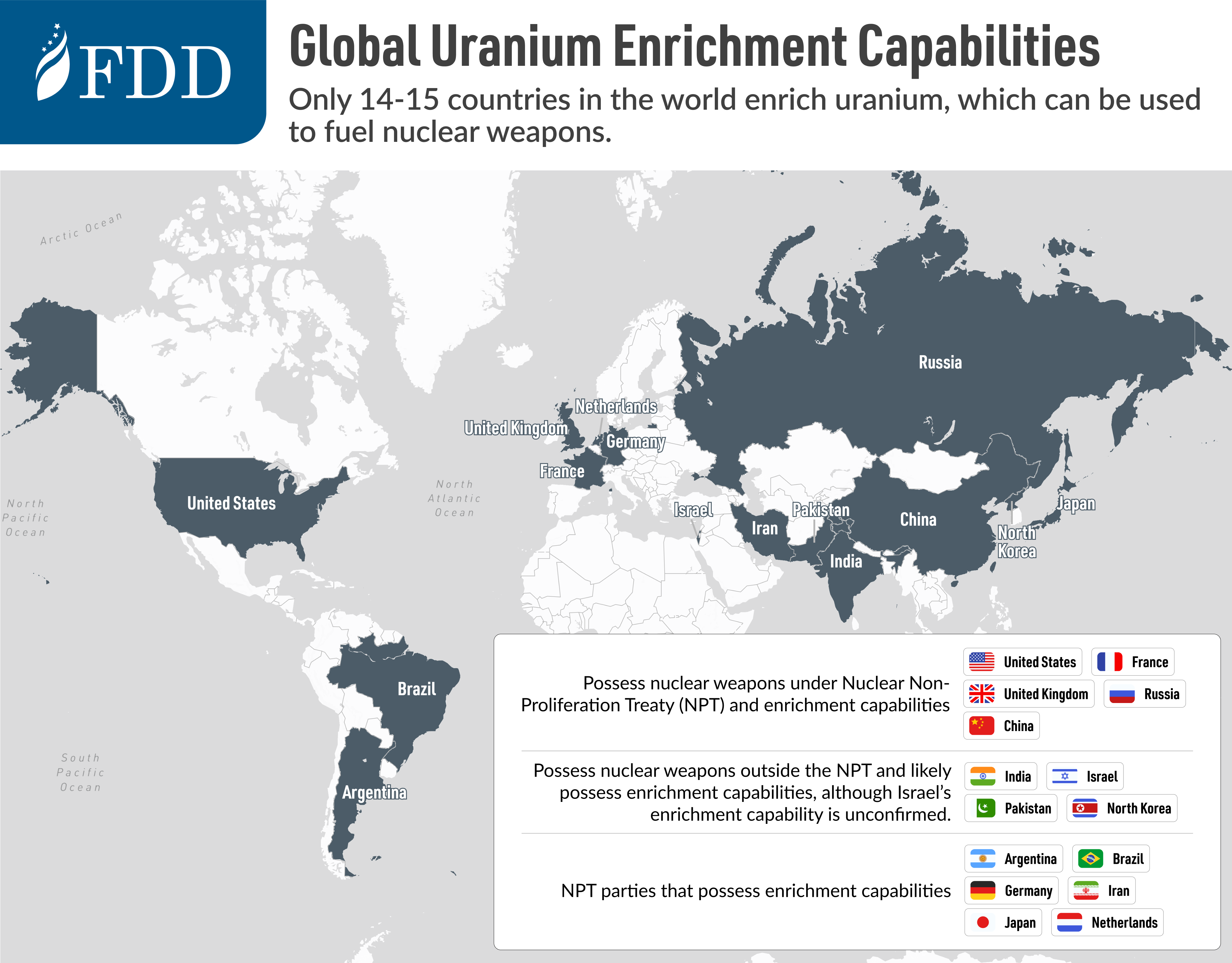
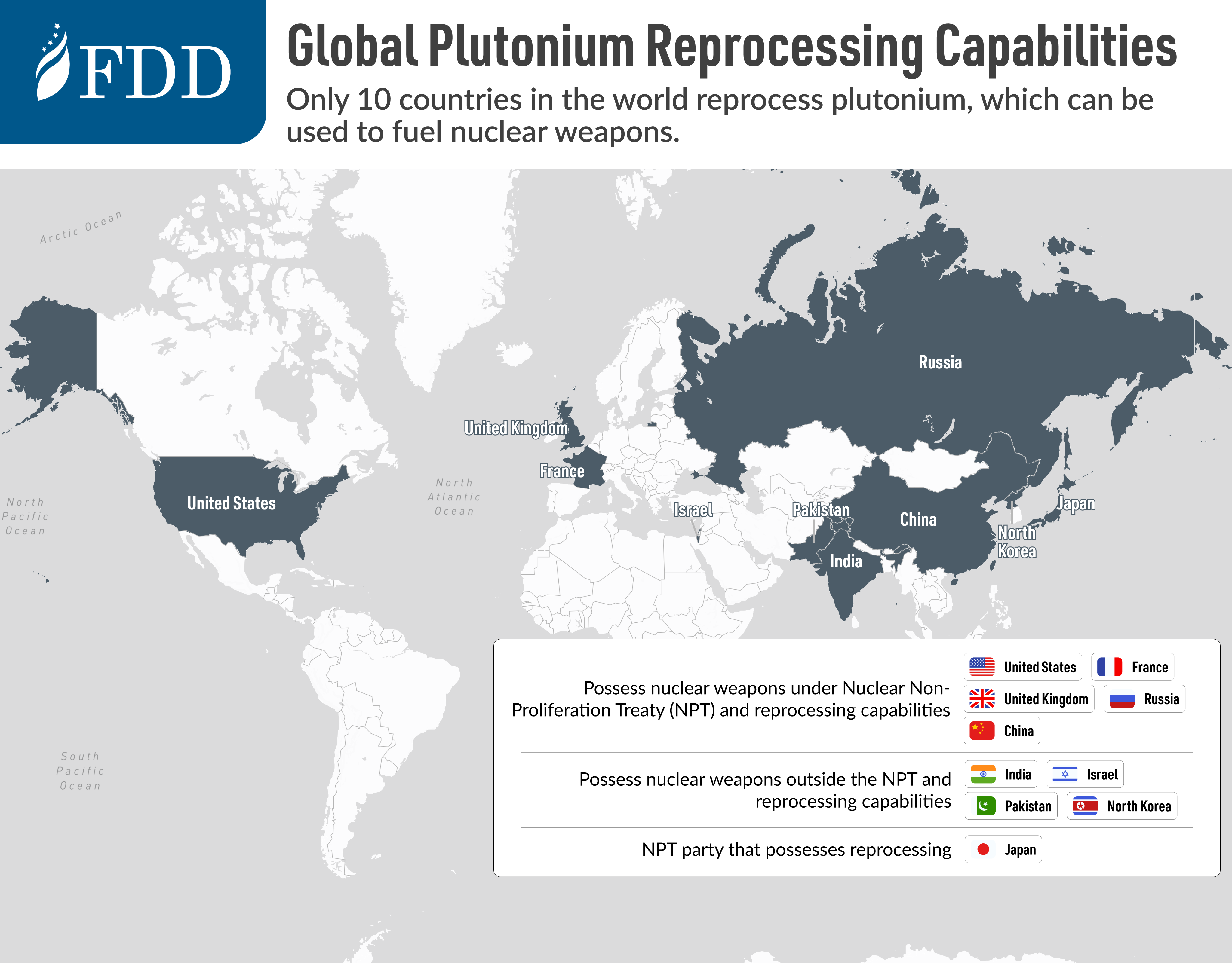
The NPT formally recognizes five nuclear-weapon states – the United States, United Kingdom, France, Russia, and China – while committing all other parties to forgo nuclear weapons and preserving their access to peaceful nuclear energy. Israel, India, and Pakistan, all de facto nuclear-armed states, never joined the treaty and participate only as observers. North Korea withdrew in 2003.
Although the conference aims to adopt a consensus final document assessing implementation and outlining practical commitments, success is far from assured. Of the 10 previous Review Conferences, only four produced consensus outcomes (in 1975, 1985, 2000, and 2010). More modest written understandings or targeted commitments remain possible.
At the conference, Washington should therefore focus on shaping a meaningful outcome by uniting states behind clear language condemning proliferation risks, reinforcing the norm against new nuclear-weapon states, and advancing practical steps on transparency and risk reduction – even if a comprehensive consensus document proves elusive.
Debate Over U.S. and Israeli Strikes to Prevent a Nuclear Iran
The most contentious issue is the recent Israeli-U.S. strikes against Iranian nuclear facilities. Washington and Jerusalem argue that Operations Midnight Fury and Rising Lion (2025) and Epic Fury and Roaring Lion (2026) prevented Iran from crossing the nuclear threshold.
At the time of the first strikes, which hit more than two dozen nuclear sites and killed 12 nuclear scientists, Tehran was on the cusp of a medium-sized nuclear arsenal. The regime was engaged in active weaponization efforts, long-running safeguards violations, and had amassed enough highly enriched uranium for roughly 11 bombs, plus additional stocks enriched to lower levels for another 11. It could have assembled a crude nuclear device within six months.
The subsequent strikes targeted at least 10 more nuclear sites and eight scientists, further degrading Iran’s nuclear weapons pathway. Absent foreign assistance, Tehran’s nuclear breakout capability has likely been set back by more than two and a half years – and possibly significantly longer.
Iran and its allies in the Non-Aligned Movement (NAM) strongly reject this justification. A bloc of about 120 developing countries, the NAM coordinates positions on areas to extract concessions from nuclear-weapon states and prepares commitments for NPT meetings. After already condemning the strikes (noting that Israel is not an NPT party), the NAM is expected to leverage the issue to resist new nonproliferation measures. Its selection of Tehran as representative and vice chair of the conference signals a clear pro-Iran tilt.
Amid renewed negotiations aimed at ending the conflict, but with dual naval blockades continuing to inflict global economic pain, the stalemate could drag on well beyond the Review Conference. For the United States, Europe, and Israel, the desired endgame – verifiable elimination of Iran’s enriched uranium stockpiles, the end of all enrichment activities, dismantling of remaining facilities and assets, and unrestricted International Atomic Energy Agency (IAEA) access – would be worth the sustained effort. The region would benefit from a permanently disarmed Iran and a more durable peace. But Washington still must translate these goals into action.
Intense disagreement over Iran will almost certainly scuttle a final consensus document. Yet one clear lesson has already emerged: the United States is willing to use military force to prevent new nuclear proliferation.
Great Power Competition and the Unwinding of Restraint
It is not solely the fault of the United States that the nuclear-weapon states have little credible progress to offer on disarmament. China is rapidly expanding its nuclear arsenal and Russia continues its nuclear saber-rattling.
In February, New START – the last remaining Russia-U.S. nuclear arms control agreement – expired without a successor. Russia had suspended the treaty’s verification provisions in 2022 after its invasion of Ukraine. Washington had criticized the treaty for failing to constrain Moscow’s larger non-strategic nuclear arsenal and new delivery systems, while also limiting the United States’ ability to respond to China’s nuclear buildup.
China is pursuing the most rapid nuclear buildup in its history, growing from roughly 200 nuclear weapons to an estimated 600 today, with projections reaching 1,000 by 2030. The United States has even accused China of possible low-yield nuclear tests in violation of the global testing moratorium. Beijing has refused arms control talks.
New START’s expiration has prompted a necessary reevaluation of the U.S. nuclear force posture in a multipolar nuclear environment. Rather than pursuing costly nuclear arsenal increases and nuclear testing, Washington should optimize its existing arsenal, refine overdue and over-budget nuclear modernization programs, complete the long-delayed Sentinel intercontinental ballistic missile program, and rapidly advance missile defenses.
At the same time, the United States, Russia, and China should pursue bilateral Russia-U.S. and trilateral strategic dialogues to reduce tensions, increase transparency on plans, and lower risks of a fresh arms race, escalation, and miscalculation. Such engagements could also help introduce Beijing to unfamiliar arms control norms based on mutual inspections and information sharing – practices that underpinned decades of Soviet-U.S. and Russia-U.S. strategic stability. Above all, Washington should prioritize strategic competition and pursue arms control only when it clearly advances U.S. interests and does not constrain the U.S. ability to deter adversaries.
Ahead of the NPT Review Conference, the three nations held talks on future strategic stability discussions. Hopefully, they have something concrete to report to NPT member states, since Washington cannot engage on the matter alone.
Uncertainty About the Credibility of the U.S. Nuclear Umbrella Over Europe and Asia
The United Kingdom and France are also planning arsenal increases, while discussions grow in Europe about a pan-European, French-led nuclear deterrent, including forward deployment of French nuclear weapons. Some countries, such as Poland, are even debating their own nuclear options. Outside the NPT, North Korea continues expanding its nuclear arsenal, prompting South Korean and Japanese officials to openly discuss their own nuclear possibilities.
At the heart of these concerns is the credibility of U.S. extended nuclear deterrence commitments to allies in Europe and Asia amid an “America First” approach. U.S. allies are rightly concerned about an aggressive Russia and a China with growing global ambitions.
To reinforce extended deterrence, Washington should devote diplomatic and political effort to strengthening its nuclear commitments through enhanced military dialogues, sustained U.S. troop presence, readiness improvements, and candid discussions on proliferation concerns. The United States should also prioritize replenishing regional THAAD interceptors and munitions to strengthen deterrence against a potential Chinese attack.
Don’t look to the Review Conference as the platform for resolving these thorny issues – the United States has significant legwork ahead with its allies.
A Nuclear-Armed Russia’s War Against Ukraine
Russia bears primary responsibility for shattering a period of relative European stability through its full-scale invasion of Ukraine. Moscow’s war reached its fourth anniversary in February, with no peace agreement in sight.
The 2022 invasion highlighted the West’s failure to deter Russian aggression and exposed the limits of its security assurances provided to Ukraine under the 1994 Budapest Memorandum, in which Kyiv relinquished its inherited Soviet nuclear weapons. Russia has repeatedly threatened nuclear use and continues to occupy Ukraine’s Zaporizhzhia Nuclear Power Plant, with an IAEA team on site to monitor safety and security. Moscow has repeatedly shelled the facility and its power supplies and refuses to relinquish control.
This stalemate underscores both the perceived deterrent value of nuclear weapons for would-be proliferators and the shortcomings of Western security guarantees. If the United States and its European allies wish to reverse this damage and shift perceptions, they should intensify economic pressure on Russia through tighter sanctions on oil export revenues – including by reversing exceptions granted to ease oil markets during the Iran conflict. After the war ends, they must avoid repeating the same mistakes in response to future Russian aggression against NATO or non-NATO allies and extend ironclad security guarantees to Ukraine.
For their part, most NPT member states should have little difficulty condemning Russia’s invasion of a sovereign state, its nuclear threats, and its illegal occupation of a civilian nuclear power plant. However, Moscow and its allies are expected to block consensus on any document that includes such a condemnation. Russia scuttled the 2022 NPT Review Conference over language criticizing its invasion of Ukraine.
The Further Spread of Nuclear Fuel-Making Technologies
As the United States works to end Iran’s uranium enrichment and plutonium reprocessing – technologies that can produce material for nuclear weapons – Washington has begun selectively relaxing long-standing restrictions on these technologies for close allies. In a notable policy shift, the administration granted South Korea enrichment and reprocessing rights and is reportedly preparing to do the same for Saudi Arabia.
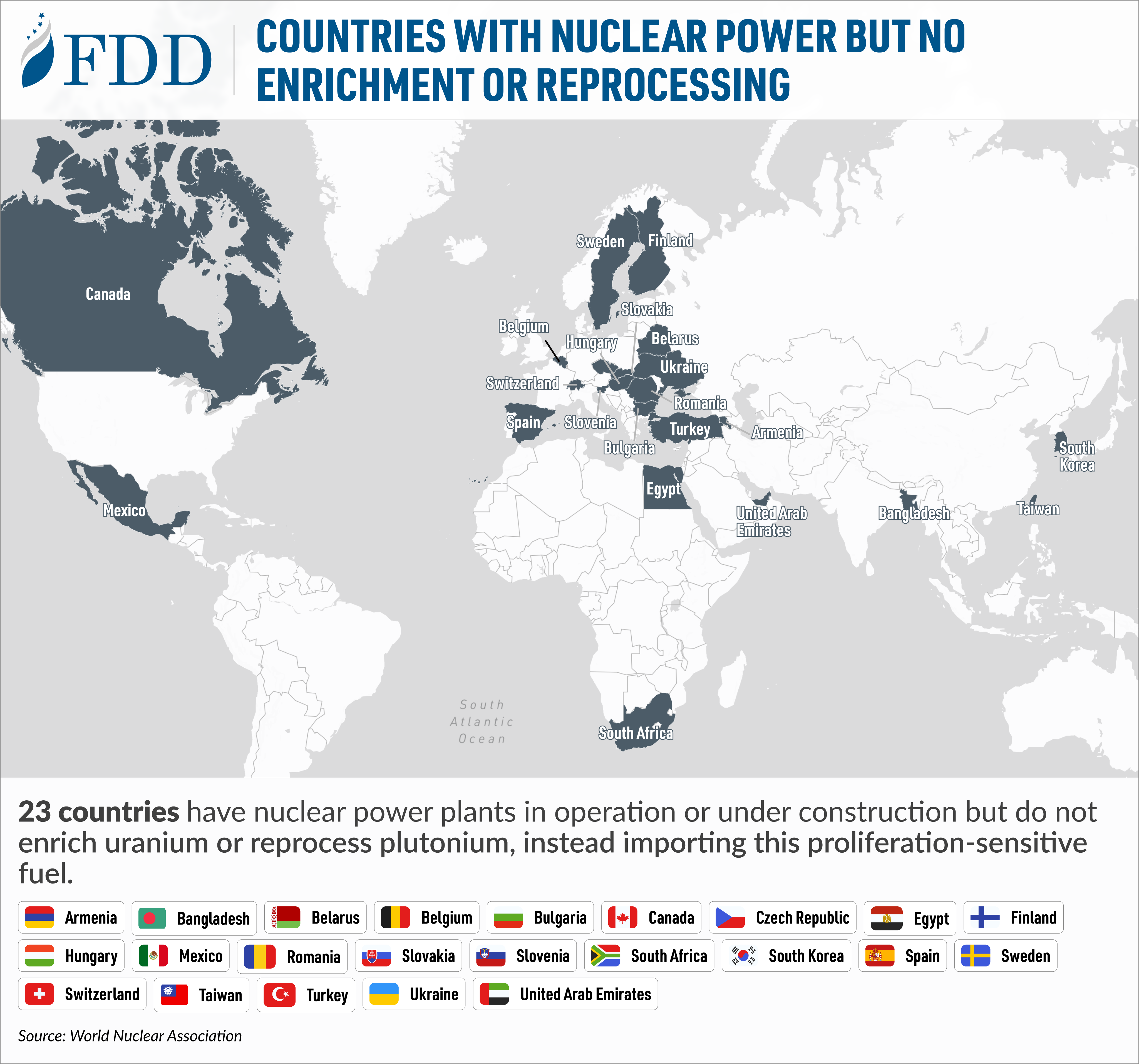
This risky relaxation of nonproliferation standards with even friendly states risks undermining decades of restraint and could trigger a cascade of proliferation across the Middle East and Northeast Asia. Washington should halt these permissions, maintain strict controls, and encourage restraint by Seoul and Riyadh. More than 20 nations operate civil nuclear power programs without enrichment and reprocessing facilities, relying instead on readily available commercial nuclear fuel supplies. By contrast, only a handful of non-nuclear-weapon states currently engage in these activities (a tally that no longer includes Iran).
The Review Conference is unlikely to produce strong new commitments to reverse such exceptions, as many members wish to preserve their own future options. The United States should therefore lead by example and prevent a broader race for indigenous fuel-cycle capabilities.
The list of challenges facing the United States in shoring up the NPT is considerable – and far from complete. Pro-disarmament nations continue pressing for a total ban on nuclear weapons. India and Pakistan remain locked in a nuclear-armed stand-off punctuated by fragile peace. Israel’s program remains understandably opaque, and North Korea’s nuclear arsenal could soon rival those of the U.K. and France.
While the United States has yet to fully address evolving security dynamics, it can prevent further proliferation by assessing what has worked to date and seriously review areas where Washington is undermining its own objectives.
Without such changes, the NPT may not survive the century.