

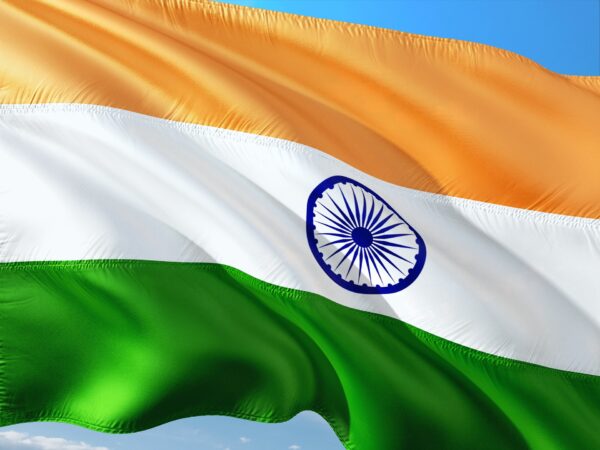
Indian Prime Minister Narendra Modi’s visit to the Netherlands this weekend marks an important moment in the relationship between the two countries. During the visit, an official strategic partnership is expected to be announced, following months of preparation.
It is a logical step – and one of considerable strategic value for both countries. India is emerging as one of the most important economic and geopolitical players of the 21st century. The Netherlands, meanwhile, plays a central role within Europe in logistics, technology, and international trade.
Yet the symbolic and political visibility of this relationship remains surprisingly limited. Modi’s visit was only officially confirmed at a late stage. It is happening during a week when much international attention is on the Beijing summit between Presidents Xi Jinping and Donald Trump, or the BRICS summit (incidentally in New Delhi). Moreover, the Netherlands is merely one stop on a broader tour which includes the UAE and various other European capitals. This reflects a wider reality: although cooperation between India and the Netherlands has grown significantly in recent years, the strategic importance of the relationship largely remains under the public radar.
Economically, ties have nevertheless expanded considerably. Today, the Netherlands is the main destination within the European Union for Indian goods exports, mainly given the central role of Rotterdam’s port as a hub for Asian imports in Europe. At the same time, an increasing number of Dutch companies view India as a crucial partner within their “China+1” strategies. As geopolitical tensions between China and the West continue to rise, many companies are seeking to reduce their dependence on China by geographically diversifying production and investment. India is playing an increasingly important role in that process.
Cooperation between the two countries is also no longer limited to traditional trade. New areas are rapidly gaining importance, including semiconductors, artificial intelligence, green hydrogen, digital infrastructure, climate adaptation, and water management. Particularly in the fields of technology and innovation, the two economies are finding growing areas of convergence.
This evolution is taking place within a profoundly changing international context. The war in Ukraine, growing rivalry between the United States and China, and rising concerns about economic dependencies have pushed many European countries to rethink their strategies. Economic security, technological independence, and resilient supply chains now rank much higher on the political agenda than they did only a few years ago, and especially with the new Rob Jetten government.
Within this shifting geopolitical landscape, India is becoming increasingly important for Europe. The country combines a vast market with a young population, technological ambitions, and growing international influence. For European countries, cooperation with India is therefore no longer solely about trade, but also about geopolitical positioning and strengthening partnerships beyond China.
Nevertheless, India has long received less strategic attention in the Netherlands than China. Dutch policy toward Asia historically focused primarily on trade and economic pragmatism. Within that framework, China enjoyed priority for many years. India was recognized as an important growth market, but less so as a long-term strategic partner.
From the Indian side as well, relations with the Netherlands remained relatively limited in political significance. India traditionally focused its European diplomacy on larger countries such as France and Germany. In New Delhi, the Netherlands was primarily viewed as an economic and technological partner rather than as a major geopolitical actor.
As a result, cooperation has mainly developed at a technical and economic level. Diplomats, companies, universities, and port authorities strengthened ties, but a broader political vision largely remained absent. This has created a paradoxical situation today: a relationship with growing strategic relevance, but without a strong political narrative or clear public profile.
Yet the two countries complement each other remarkably well. The Netherlands possesses strong capabilities in logistics, agricultural technology, water management, advanced industry, and semiconductors. India offers scale, economic growth, technological innovation, and an increasingly influential role in international politics. Both countries are also heavily dependent on open trade routes and stable maritime connections.
Precisely for that reason, the relationship has the potential to go far beyond economic cooperation alone. The Netherlands can continue to serve as an important gateway to Europe for India, while India can become a crucial partner for the Netherlands in the Indo-Pacific region, which is playing an increasingly important role in global power dynamics.
However, a genuine strategic partnership requires more than trade figures and cooperation agreements. If both countries want to deepen their relationship sustainably, stronger political anchoring will be necessary. That means greater attention to parliamentary cooperation, academic exchange, and societal connections. The public visibility of the relationship must also increase so that the partnership is not driven solely by policymakers and businesses.
In addition, cooperation should be better embedded within the broader relationship between the European Union and India. That relationship was further strengthened earlier this year through the EU-India Free Trade Agreement.
Europe is increasingly seeking partners that can contribute to economic resilience, technological innovation, and geopolitical stability. India is becoming an ever more important player in that regard.
The central question facing The Hague and New Delhi is therefore no longer whether their relationship matters. The economic and geopolitical developments of recent years have already answered that question. The challenge now lies in the next step: can both countries transform their growing cooperation into a fully-fledged strategic partnership with a clear long-term vision?
Modi’s visit could serve as an important symbolic starting point. Ultimately, however, the success of the relationship will depend on the willingness of both countries to look beyond purely economic interests and jointly reflect on their role in a rapidly changing world order.
