

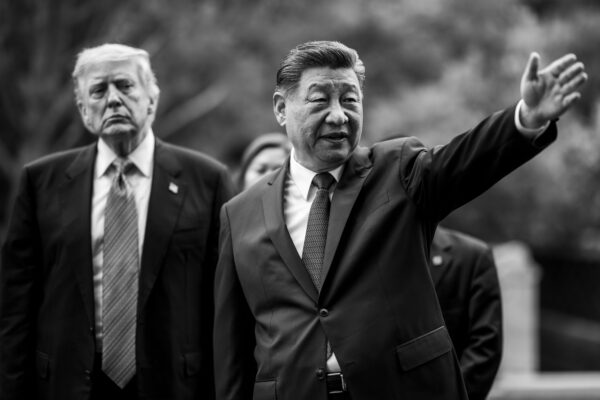
As U.S. President Donald Trump and his Chinese counterpart, Xi Jinping, met in Beijing this week for what many have called a “superpower summit,” countries of the Global South, such as Pakistan, watched closely, examining the meeting’s outcomes and the implications for themselves. These countries are hoping that improved cooperation between China and the United States could benefit not only the world’s two largest economies, but also smaller and middle powers that are trying to navigate an increasingly turbulent international landscape.
The summit came at a particularly difficult time as violent conflicts in West Asia, maritime disruptions in the Strait of Hormuz, and longstanding differences over Taiwan have created a volatile mix of security and economic risks.
Trump’s visit to China was originally planned for April 2026 but was deferred due to the Israel-U.S. war on Iran.
With a fragile ceasefire between the United States and Iran now holding, the Beijing summit was able to go ahead. The agenda of Trump’s visit to China expanded to cover other pressing regional issues, such as the reopening of critical maritime routes and a lasting resolution of the Iran dispute. Unlike previous engagements between Washington and Beijing, the just-concluded summit’s agenda was reshaped by the war in Iran and the resulting economic shocks that have forced these issues to the forefront for everyone in the region and beyond.
China’s Ministry of Foreign Affairs described Trump’s state visit to Beijing as a landmark moment that “injected much-needed stability and certainty into the world.” Moreover, both sides have agreed to strengthen communication and coordination on international and regional issues and to handle mutual concerns “in a proper manner.”
For many in the Global South, this provides reason for cautious optimism. The statement and meeting represent more than bilateral diplomacy, as they could stabilize the situation in West Asia and prove beneficial to smaller powers like Pakistan.
For instance, the Iran-U.S. conflict and the associated closure of parts of the Strait of Hormuz have imposed real costs on countries like Pakistan, India, Sri Lanka, and others in South Asia. With trade via the Strait of Hormuz facing uncertainty, energy prices have soared. Countries have had to source oil from elsewhere. Moreover, Islamabad, in particular, has had to balance relations with the United States, China, Iran, and Gulf states simultaneously. These pressures have compounded existing economic and geopolitical difficulties.
For Pakistan, a reduced confrontation between the U.S. and China can potentially lessen the burden of constant balancing. In turn, this could allow Islamabad and other regional states to focus more on development priorities rather than crisis response.
Pakistan views this summit through the lens of its own diplomatic history as a bridge between Washington and Beijing.
In 1971, Pakistan, then under President Yahya Khan, served as a trusted intermediary and logistical channel that facilitated the historic China-U.S. rapprochement. This effort paved the way for Henry Kissinger’s visit to Beijing in July 1971 and subsequently U.S. President Richard Nixon’s historic trip to China in 1972. That breakthrough ended decades of hostility between the United States and China and reshaped Cold War geopolitics.
It seems Pakistan is once again trying to leverage its unique geopolitical position as a trusted intermediary to reprise its 1971 role. While this role may not match the scale of 1971, Islamabad has indirectly helped facilitate the U.S. and China summit.
Last month, Islamabad played a central diplomatic role in brokering and extending a two-week ceasefire between the U.S. and Iran. Pakistan’s Prime Minister Shehbaz Sharif personally urged Trump to agree to a ceasefire to facilitate its hosting of peace talks in Islamabad. Trump, on his part, has publicly acknowledged Pakistan’s constructive efforts.
Meanwhile, China has urged Pakistan to increase its diplomatic mediation efforts in facilitating dialogue between Iran and the United States.
It is worth noting that this mediation took place within the context of Pakistan’s robust partnership with China. The relationship has further bolstered these initiatives from Pakistan. Notably, Trump’s visit to China was itself delayed due to the active hostilities with Iran.
Like much of the Global South, Pakistan hopes that improved China-U.S. cooperation will contribute to ending conflicts, stabilizing the global economy, and creating space for multi-alignment without forcing countries to make binary choices that compromise their core interests. Arguably, an improved China-U.S. dynamic would offer Global South nations like Pakistan valuable breathing room in many ways.
For instance, countries that are deeply involved in China’s Belt and Road Initiative (BRI), the China-Pakistan Economic Corridor (CPEC), and the Shanghai Cooperation Organization (SCO) often face implicit pressure when Washington and Beijing are locked in confrontation.
In this context, reduced tensions between Washington and Beijing could allow countries like Pakistan to advance practical cooperation, such as CPEC’s next phase projects in agriculture, technology, and connectivity, while sustaining business ties with the U.S. as well. Moreover, better great power relations could accelerate joint ventures in agricultural modernization that Pakistan is pursuing with Chinese partners.
In today’s fragmented global order, such space can enable middle powers and countries in the Global South to pursue pragmatic interests rather than ideological alignments.
With the conclusion of the Trump-Xi summit, Pakistan and other Global South countries will be watching to see whether the outcomes of the meeting deliver the stability they and the world urgently need.
