

A Quwa Defence Uncut panel discussion covering cruise missiles, attack helicopters, fighter evolution, and why training infrastructure may matter more than fifth-generation jets.
Pakistan’s armed forces are pressing ahead with a conventional strike and deterrence build-up that spans cruise missiles, attack helicopters, fighter avionics, and data link architecture — a programme whose breadth has few precedents in the country’s post-nuclear history. But as the individual threads advance, the harder question is taking shape: where does all of this converge, and what trade-offs will define the next decade?
In the latest episode of Defence Uncut, Quwa’s flagship English-language Pakistan defence podcast, hosts Bilal Khan and Arslan Khan unpacked five interconnected modernization threads — and argued that Pakistan’s most consequential investment may not be a weapons platform at all, but the training ecosystem that makes every other platform effective.
The Fatah 4 Test: Pakistan’s Conventional Cruise Missile Comes of Age
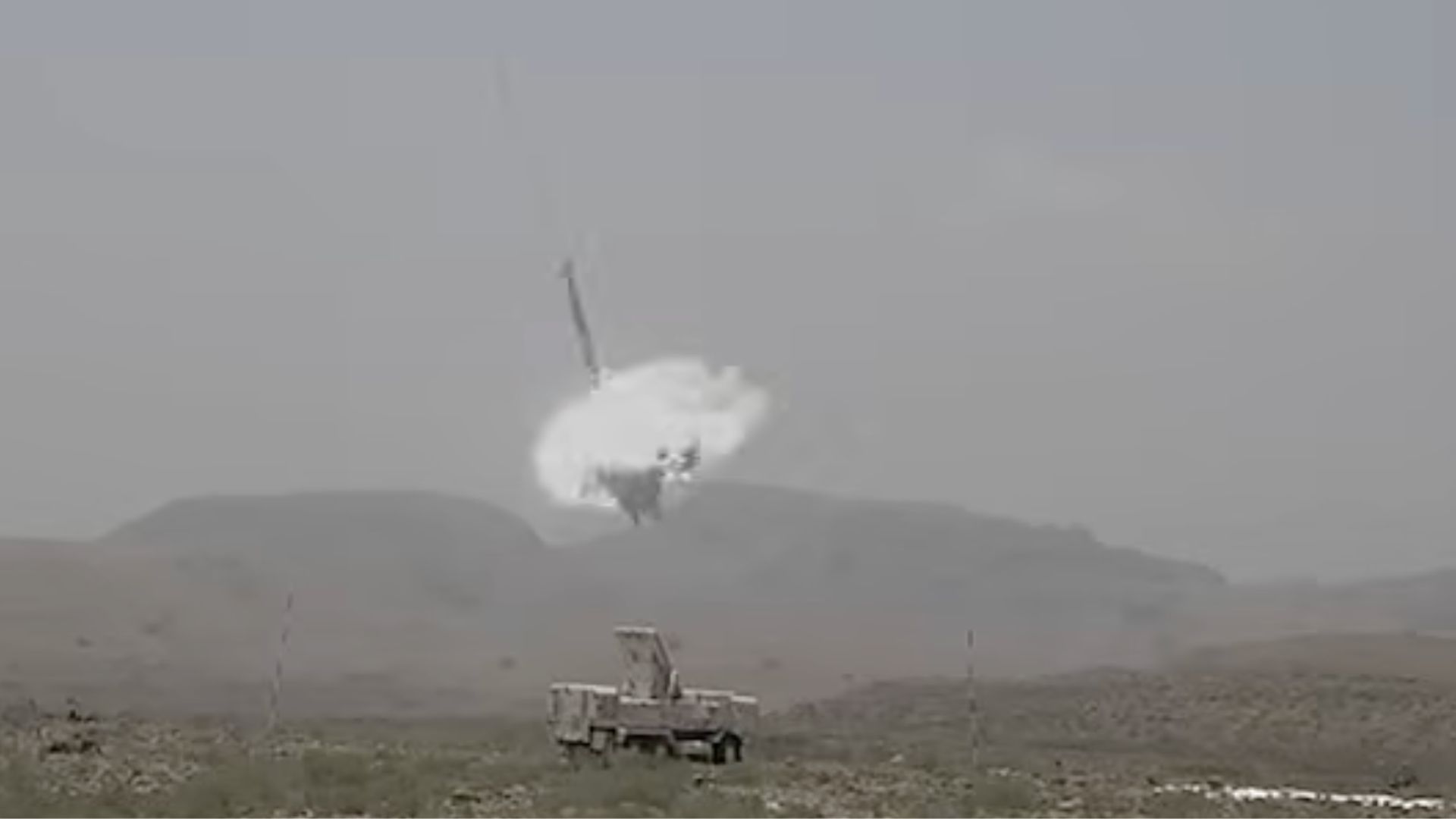
The Pakistan Army Rocket Force Command (ARFC) has test-fired the Fatah IV ground-launched cruise missile with an air burst warhead — the first time Pakistan’s armed forces have publicly demonstrated this warhead configuration in a missile test. The target was an inflatable decoy of a Gravestone radar associated with the S-400 air defence system, and the near-direct hit suggested a tighter circular error probable (CEP) enabled by a new imaging infrared (IIR) terminal seeker.
The panel situated the Fatah IV within a broader shift. Rather than a clean-sheet design, Arslan Khan argued it is more accurately a derivative of the Harba naval cruise missile — a platform that stripped out the costly TERCOM and DSMAC terrain-matching guidance of the strategic Babur series in favour of lower unit cost and higher production scalability. The redesigned air intake, resembling the Block IV Tomahawk configuration, is consistent with radar cross-section reduction — a survivability improvement rather than a range extension.
What matters most for the modernization trajectory, both hosts agreed, is the production tempo. Pakistan has conducted more ARFC missile tests this year than in any comparable prior period — across the Fatah IV, the Fatah II tactical ballistic missile, and the Taimur series — a cadence that signals scaled-up manufacturing rather than one-off demonstrations.
The underlying industrial logic is standardization. NESCOM is converging on common inputs across the cruise missile family: the same IIR seeker for the Fatah IV, the Ra’ad air-launched cruise missile, and the Taimur series; the same domestically produced miniature turbojet engine; and common electronic countermeasure hardening, as shown at IDEAS 2024. The panel framed this as the industrially mature approach — amortize R&D across a family, drive down unit costs, and build a stockpile deep enough to expend missiles for training without depleting war reserves.
Extended Range: Not Yet, and Here’s Why That’s Fine
On the question of whether the Fatah IV will eventually reach the 1,000+ kilometre ranges achieved by Turkey’s Tayfun or India’s Nirbhay, both hosts were measured. The constraint is propulsion: Pakistan’s domestically produced miniature turbojet is functional but not fuel-efficient enough to match the range-per-kilogram of a turbofan like the one powering the Tomahawk. No miniature turbofan in the right thrust class is readily available for export, though Ukrainian and Chinese options may eventually materialize.
But Arslan Khan pushed back on the assumption that range is the priority. Survivability — through lower radar cross-sections, electronic attack hardening, IIR terminal seekers, and intelligent flight profiles — delivers more operational value per dollar than incremental range extension. The ARFC’s immediate operational goal, Bilal Khan added, is to contest India’s northwestern military infrastructure out to roughly 750 kilometres, forcing Indian strike and high-value assets further east and creating defensive depth for Pakistan. For that mission, the current range envelope is sufficient.
A longer-range variant, both agreed, will likely arrive when a turbofan engine becomes accessible — possibly through Chinese or Turkish collaboration — at which point the current conventional Fatah IV production line would continue running while a limited-production strategic variant enters service in parallel.
Z-10ME: Army Aviation Recalibrates Before It Commits
A video surfaced showing a Pakistan Army Z-10ME attack helicopter equipped with a millimetric wave (MMW) radar — the first time the Pakistan Army Aviation Corps has been seen operating a radar-equipped rotary-wing platform. The Z-10ME also brings capabilities the army has never had from a helicopter: cruise missile launch, network-centric data integration, and top-attack engagement profiles.
Yet the panel noted a conspicuous absence: no follow-on order has been publicly announced despite the platform being in Pakistani hands for over a year. Both hosts interpreted this as institutional recalibration rather than dissatisfaction.
Bilal Khan drew a parallel to the US Army, which is rethinking its attack helicopter doctrine in light of the Russia-Ukraine war: away from mass anti-armour operations and toward high-value, niche, rapid-response roles. Pakistan’s Army Aviation, he argued, is undergoing a similar conceptual reset — figuring out what the concept of operations should be before committing procurement dollars. That includes unresolved questions about manned-unmanned teaming, ground-facing synthetic aperture radar, and whether the attack helicopter should function as a command node for drone swarms.
Arslan Khan offered an additional theory: the army’s unusually public showcasing of the Z-10ME could partly function as a pressure tactic to secure the release of the T-129 ATAK helicopters from Turkey, or to signal to multiple vendors that Pakistan is an active customer worth competing for.
The deeper structural issue, Bilal Khan noted, is fleet commonality. Pakistan’s current army aviation fleet — ageing Puma transports, Bell 412s from the war-on-terror era, Mi-171 heavies — comprises multiple types in small numbers with limited supply-chain overlap. The lesson from programmes like the US Marine Corps’ AH-1Z/UH-1Y (85% commonality) or the Turkish engine standardization programme is that attack and utility helicopters should share a common engine and airframe lineage. Companies like Leonardo (AW149/AW249) and Chinese manufacturers (Z-20/Z-21) are beginning to offer exactly this. The panel’s advice: be patient, because the market is moving in Pakistan’s favour.
JF-17: Block 3 Is Interim — Block 4/PFX Alpha Is the Real Destination
The Pakistan Air Force has laid out its next procurement steps, and the JF-17 Thunder remains central to the roadmap. But the panel assessed that the JF-17 Block 3 — with production at approximately 30 units and purported higher serial numbers assessed as not genuine — is an interim solution rather than the platform’s final form.
Arslan Khan expects a Block 4, likely what the PAF is calling PFX Alpha, to represent the JF-17’s definitive configuration: significantly more domestic avionics, including a locally developed airborne AESA radar (building on the KLJ-7A selection for Block 3), new electronic warfare systems, domestically produced sensors, and a new engine — the WS-21, which has reportedly completed evaluations. This Block 4 would serve as the basis for a midlife update of older Block 2 aircraft, while Block 1 airframes would likely be retired rather than upgraded, given their hybrid flight control systems and other compromises made to accelerate initial induction.
The role specialization between Pakistan’s two primary fighter types is crystallizing. The JF-17 has become the primary strike platform: virtually all new standoff munitions — the Taimur cruise missile series, the Ra’ad series, the AZB glide bombs — are integrated onto it. The J-10CE, by contrast, is optimized for air-to-air operations, mirroring how China’s PLA Air Force employs the type and consistent with how Pakistan deployed it during the May 2025 air operations.
A critical subtext the panel raised: operating costs for single-user platforms are rising. As China’s interest in the JF-17 programme wanes — the PLA never ordered the type despite an original commitment to 200 units — Chengdu has less incentive to keep production facilities dedicated to it, and sustainment costs are climbing. This dynamic, paradoxically, narrows the cost gap between the JF-17 and J-10, and makes the case for deeper localization through PFX Alpha even more urgent.
The Training Gap: Why LIFT May Be Pakistan’s Most Important Defence Decision
Perhaps the panel’s most pointed analysis concerned the PAF’s training pipeline. By the end of this decade, the PAF’s fighter fleet will be composed almost entirely of 4th-generation or 4.5-generation platforms — most with AESA radars, tactical data links, BVR missiles, and precision strike weapons. The training fleet that must prepare pilots for these aircraft? T-37s dating to the 1960s and K-8 Karakorums that bear almost no resemblance to the cockpit environment of a JF-17 Block 3 or J-10CE.
Bilal Khan framed the contradiction sharply: the PAF cannot claim “the man behind the jet” is its competitive advantage while operating a training stack that forces operational conversion units (OCUs) to compensate for what basic and advanced training failed to deliver. Pilots are spending disproportionate time at JF-17 and F-16 OCUs learning fundamentals that should have been mastered on a proper Lead-In Fighter Trainer (LIFT).
The LIFT requirement, first articulated under Air Chief Marshal Sohail Aman, called for an AESA radar, tactical data link integration, BVR capability, and precision strike — effectively a lightweight fighter. Candidates evaluated included the Chinese L-15B, the Korean T-50, and even the Italian M-346. But both hosts converged on an alternative: repurpose the JF-17 itself as a LIFT platform.
The logic is compelling. The JF-17 already has the airframe, the domestic support infrastructure, and the industrial base. A LIFT variant would strip down systems and incorporate live-virtual-constructive (LVC) training environments — work well within NESCOM’s existing capabilities. Pilots trained on a JF-17 LIFT would transition to frontline JF-17 units seamlessly. And the cost savings over procuring a dedicated foreign LIFT type could fund the simulators, LVC infrastructure, and ground systems the PAF needs to build a genuinely modern training ecosystem.
Bilal Khan went further: the money Pakistan would spend on even half a squadron of J-35 fifth-generation fighters could rebuild the entire training pipeline. It is a question of sequencing and priorities.
Link 17 Data Link: What Pakistan Has, What It Doesn’t, and What’s Coming
An audience question sparked a debate: Can the PAF’s airborne early warning aircraft guide PL-15 beyond-visual-range missiles via the Link 17 data link?
Bilal Khan traced the claim to a semi-official Chinese industry source who stated the PL-15 is capable of third-party guidance — but only via China’s XS3 high-bandwidth tactical data link, a system not exported to Pakistan. The PAF itself, in interviews conducted by journalist Alan Warnes after the May 2025 operations, described its data link architecture as “near real-time” — language both hosts interpreted as acknowledging latency constraints incompatible with real-time missile guidance from an AWACS node.
The capability is on offer. A reported Chinese package comprising 40 J-35 fighters, the HQ-19 air defence system, and the KJ-500E AWACS would bundle the export-grade high-bandwidth data link. But that represents a future procurement decision, not a current capability.
What the PAF does have, the panel assessed, is effective interoperability between the ZDK-03 Karakoram Eagle AWACS and its fighter fleet — track handoff, situational awareness sharing, and enough integration for J-10s and JF-17 Block 3s to conduct cooperative engagements using their own fire control radars. The upgraded Link 17 Skyguard variant is a meaningful improvement over the original Link 17 architecture, but a generational leap in data link capability — one comparable to what only the US and China currently field — remains a development priority, potentially in collaboration with Turkey, whose own next-generation data link programme is advancing alongside the Kızılelma UCAV.
The Bigger Picture: Modernization Is Real, but the Hardest Choices Remain
The episode’s audience Q&A reinforced a consistent theme. On BrahMos countermeasures, Bilal Khan outlined a three-pillar response: densified short- to medium-range air defence (through the FAS programme and surface-launched active-radar missiles), distributed air operations (including JF-17 motorway operations), and redundant surface-based strike via the ARFC’s missile inventory. On PAF fleet size, both hosts projected a future force of 300–400 multi-role fighters — smaller than Cold War-era ambitions, but reflecting how precision munitions, loitering munition swarms, and the ARFC have absorbed roles once assigned to manned aircraft. On J-35 induction, they cautioned that weapons qualification and NESCOM munitions integration alone could take years — and that the Chinese themselves are still completing the J-35’s development cycle.
On PFX — Pakistan’s most speculated-about defence acronym — Arslan Khan offered a pointed reminder: the illustration the PAF uses for the programme is actually a 2010-era artist’s concept of the JF-17 Block 3. No one outside the PAF knows what PFX is. His assessment, and the panel’s consensus, is that it is most likely a JF-17 upgrade rather than a clean-sheet fifth-generation fighter. If Pakistan wants indigenous next-generation capability, the panel argued, the more achievable path runs through stealth UCAVs and loyal wingmen — leveraging NESCOM’s cruise missile design heritage — rather than attempting to replicate a crewed fighter development programme that has taken Turkey’s TF-X/Kaan over a decade and billions of dollars.
Pakistan’s defence modernization is not in question. The missiles are flying, the production lines are scaling, the avionics are being localised. The question the panel posed — and left deliberately open — is whether the institutional framework around those systems is keeping pace: the training pipelines, the fleet commonality logic, the industrial collaboration strategy, and the willingness to sequence investments rather than chase every capability simultaneously.
Defence Uncut is published by Quwa, the first English-language Pakistan defence analysis publication with over 50,000 monthly readers. New episodes release weekly on YouTube, Spotify, and Apple Podcasts.
Questions: [email protected] | [email protected]
