

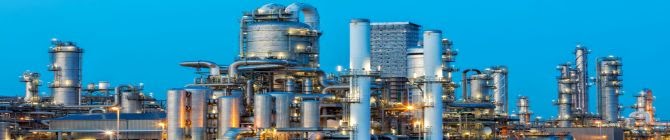
India has approved a ₹37,500 crore coal gasification scheme to convert 75 million tonnes of coal and lignite annually into syngas, fertilisers, synthetic fuels, and chemicals.
The initiative is expected to mobilise ₹2.5–3 lakh crore in investment, generate 50,000 jobs, and significantly reduce India’s import bill for LNG, urea, ammonia, and methanol.
The Union Cabinet’s decision marks the largest single push for coal gasification in India’s history, building upon the National Coal Gasification Mission of 2021 and superseding the earlier ₹8,500 crore scheme approved in January 2024.
The program is central to India’s target of gasifying 100 million tonnes of coal by 2030, leveraging the country’s vast reserves of 401 billion tonnes of coal and 47 billion tonnes of lignite.
Coal gasification involves feeding coal into high-temperature gasifiers, where it reacts with steam and limited oxygen to produce synthesis gas, or syngas. This versatile fuel can be used to manufacture fertilisers such as urea and ammonia, chemicals including methanol and olefins, clean fuels like synthetic natural gas and dimethyl ether, and even hydrogen for industrial applications.
Syngas also supports electricity generation through integrated gasification combined cycle plants, offering higher efficiency compared to conventional coal combustion.
The scheme provides financial incentives of up to 20 per cent of plant and machinery costs, capped at ₹5,000 crore per project, ₹9,000 crore per product category, and ₹12,000 crore per corporate group.
Incentives will be disbursed in four instalments linked to project milestones, with projects selected through a transparent competitive bidding process. Importantly, the government has extended coal linkage tenure to 30 years, offering long-term supply certainty and de-risking investments.
Major public and private sector companies are expected to play a pivotal role. Coal India Limited is already engaged in joint ventures with Bharat Heavy Electricals Limited (BHEL), GAIL, and SAIL for projects in Odisha, West Bengal, and Durgapur.
BHEL has secured one of the largest coal gasification orders in India’s history, worth ₹5,400 crore, for the Lakhanpur plant. Other firms such as Deepak Fertilisers, Rashtriya Chemicals and Fertilisers, Gujarat State Fertilisers and Chemicals, and NLC India are also poised to benefit.
The economic rationale is compelling. India’s import bill for LNG, urea, ammonia, methanol, and related commodities stood at approximately ₹2.77 lakh crore in FY2025.
By substituting imports with domestically produced syngas and downstream products, India aims to insulate itself from global price volatility and supply chain disruptions, particularly amid geopolitical tensions in the Middle East and rising domestic electricity demand.
The scheme is projected to create nearly 50,000 direct and indirect jobs across 25 projects, particularly in coal-bearing regions. It also aligns with the government’s broader objectives under Atmanirbhar Bharat and Make in India, encouraging indigenous technologies and reducing reliance on foreign contractors.
By diversifying coal usage beyond electricity generation, India is positioning its reserves as a strategic industrial resource, strengthening long-term energy security.
This initiative represents a strategic transition: rather than reducing coal dependence outright, India is repurposing its coal reserves to produce cleaner fuels and industrial feedstocks.
The coal gasification push is therefore both an economic and geopolitical response, aimed at securing energy independence while supporting industrial growth.
Agencies
