

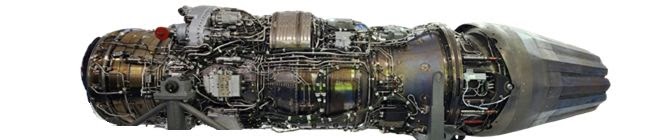
India’s consideration of the 177S engine for the Su-30MKI upgrade path, with potential commonality across the Su-57 fleet, represents one of the most pragmatic proposals in its current defence modernisation debate.
The move would unify engine logistics, reduce maintenance complexity, and provide a generational leap in thrust and efficiency compared to the ageing AL-31F engines.
The Su-30MKI fleet, numbering over 260 aircraft, remains the backbone of the Indian Air Force. However, its AL-31FP engines, derived from 1980s technology, are increasingly seen as a liability due to poor fuel efficiency, limited service life, and costly overhaul cycles.
Russia has offered India two upgrade options: the AL-41F1S (117S), already proven in the Su-35, and the more advanced 177S, which borrows technology from the Su-57’s AL-51 engine. While the AL-41 provides a low-risk, short-term fix, the 177S offers a deeper generational leap, making it the more forward-looking choice.
The 177S delivers dry thrust of around 9,500–9,800 kgf and afterburner thrust of 15,000–15,200 kgf, compared to the AL-31’s 12,500–12,800 kgf. It also improves specific fuel consumption to 0.63–0.65 in cruise and 1.85 in afterburner, extending endurance and reducing operating costs.
Service life is expected to reach 6,000 hours, with mean time between overhauls of 1,200–1,500 hours, doubling the sustainability of India’s frontline fleet. These improvements would allow Su-30MKIs to carry heavier payloads, operate more effectively at high altitudes, and maintain competitiveness against China’s J-20 and Pakistan’s upgraded F-16s and JF-17s.
For the Su-57, Russia’s long-awaited engine upgrade program, known as Product 177, has already achieved success in flight trials. The engine delivers 16,000 kgf of afterburning thrust, enabling sustained supercruise between Mach 1.8 and Mach 2.0 without afterburner use.
This reduces the aircraft’s thermal signature, enhancing stealth and survivability. Advanced materials, next-generation thermal coatings, and modern manufacturing techniques have been incorporated, improving efficiency and extending service life. If India acquires even a small number of Su-57 fighters, standardising around the 177 family would simplify logistics and ensure operational synergy.
Interestingly, Russia itself is unlikely to adopt the 177S widely, having prioritised the AL-51 for its Su-57 fleet. This makes India the prime candidate to bankroll full-scale development and certification of the 177S, effectively shaping the future of the engine.
If Moscow can be convinced to offer the 177S independently of Su-57 acquisitions, India could secure a powerful upgrade for its Su-30MKI fleet without committing to large-scale purchases of the stealth fighter.
Strategically, this proposal aligns with India’s Super Sukhoi program, which aims to upgrade avionics, radars, electronic warfare suites, and weapons integration across the fleet. Pairing these upgrades with the 177S engine would extend the Su-30MKI’s service life by at least 15 years, while ensuring it remains a credible deterrent in the evolving regional airpower environment.
Moreover, commonality between Su-30MKI and Su-57 engines would reduce training, spares, and maintenance burdens, offering long-term cost savings and operational efficiency.
The decision is not purely technical but also political. India must weigh the benefits of deeper reliance on Russian technology against its ambition for strategic autonomy.
Yet, in practical terms, the 177S proposal stands out as one of the few options that simultaneously enhances combat capability, reduces logistical complexity, and future-proofs India’s airpower.
Agencies
