

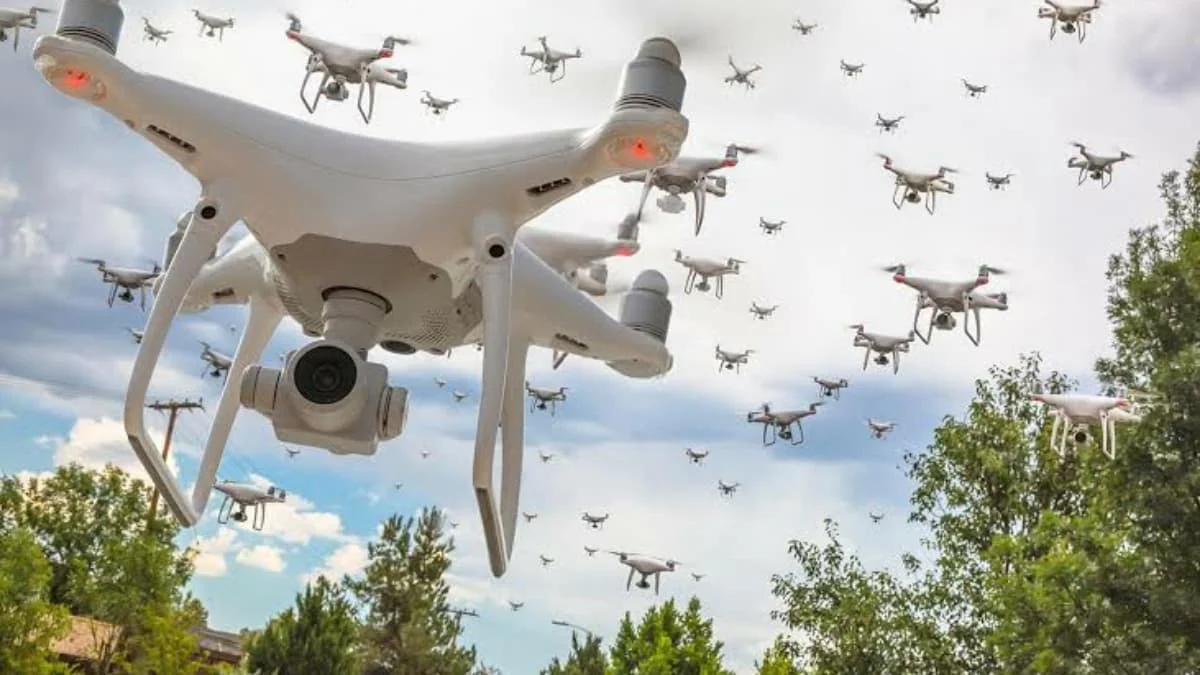
In Part 1, we explored how the Indian Army is rapidly embracing autonomous warfare through FPV kamikaze drones, high-altitude ISR swarms, VTOL strike UAVs, loiter munitions, and AI-enabled battlefield sensing systems. These technologies highlighted a clear shift in military doctrine from manpower-centric warfare toward intelligent, networked, and highly autonomous battlefield ecosystems.
But surveillance and reconnaissance are only one side of the transformation.
The next phase of India’s defence modernization focuses on something even more disruptive: autonomous combat engineering, AI-driven radar neutralisation swarms, electronic warfare resilience, and large-scale indigenous defence-tech ecosystems capable of supporting future wars.
From drone-based demolition systems capable of remotely neutralizing enemy infrastructure to intelligent swarm drones designed to overwhelm sophisticated air defence networks, the Indian Army’s future roadmap reveals how India is preparing not just to observe the battlefield but to dominate it through machine-speed warfare, distributed intelligence, and autonomous precision strike capability.
Equally important, these operational requirements are now driving a massive defence innovation ecosystem involving startups, AI companies, aerospace firms, semiconductor developers, and deep-tech manufacturers under initiatives such as iDEX, ADITI, DISC, and Make-I/II programs.
In this article we explores how India is now entering the next stage of its autonomous warfare revolution where AI, swarms, electronic warfare, and indigenous defence technology converge to redefine the future battlefield.
Drone-Based Wireless Demolition Systems: The Future of Combat Engineering
Modern combat engineering operations increasingly require precision, speed, stand-off capability, and enhanced troop safety. Traditional demolition systems still expose soldiers to major risks during explosive deployment and detonation tasks. To address this challenge, the Indian Army is exploring drone-based wireless demolition and detonation systems capable of remotely deploying explosive payloads and conducting secure stand-off detonation operations.
The Operational Challenge
Conventional demolition systems face several limitations:
- Physical wiring requirements
- Close troop proximity to targets
- Time-consuming preparation
- Vulnerability to enemy observation and fire
Wireless systems improve mobility but still struggle with:
- Limited operational range
- Signal interruption
- Terrain masking
- Electronic interference
Why Drone-Based Demolition Matters
Drone-enabled demolition systems fundamentally transform combat engineering by allowing forces to:
- Conduct aerial reconnaissance
- Deliver explosive payloads remotely
- Provide live video surveillance
- Maintain stand-off positioning
- Execute secure wireless detonation
This dramatically improves:
- Troop survivability
- Operational flexibility
- Tactical surprise
- Precision deployment
Key Operational Requirements
The Army’s envisioned system includes:
- Stability-optimized multirotor drones
- Payload capacity up to 300 grams explosive
- High-altitude operations at 4500–5000m AMSL
- Minimum 4 km operational range
- Encrypted communications
- Real-time ISR integration
Tactical Applications
Such systems could support:
- Bridge demolition
- Bunker neutralization
- Route denial operations
- Infrastructure targeting
- Special forces missions
- Counter-terror operations
Strategic Importance
Developing indigenous drone-based demolition systems would require advances in:
- Autonomous flight systems
- Secure wireless detonation
- Payload stabilization
- High-altitude propulsion
- Encrypted battlefield communications
This opens major opportunities for:
- Indian drone startups
- Defence electronics firms
- Aerospace manufacturers
- AI developers
One of the most advanced concepts identified by the Indian Army is the development of AI-enabled swarm drones capable of autonomous radar neutralisation and Suppression of Enemy Air Defence (SEAD) missions.
This reflects India’s growing focus on:
- Autonomous warfare
- Electronic attack capability
- Swarm intelligence
- AI-driven combat systems
Why Radar Neutralisation Matters
Modern air defence networks combine:
- Surveillance radars
- Fire-control radars
- Surface-to-air missile systems
- Electronic warfare assets
- Networked command systems
These systems are heavily defended and increasingly difficult to neutralize using traditional methods.
Limitations of Conventional SEAD
Traditional radar suppression approaches involve:
- Manned aircraft strikes
- Cruise missiles
- Stand-off precision weapons
However, these methods face:
- High operational cost
- Risk to pilots
- Limited saturation capability
- Predictable attack profiles
Swarm warfare changes battlefield economics completely.
Instead of relying on a few expensive platforms, swarm systems deploy:
- Large numbers of autonomous drones
- Distributed intelligence
- Adaptive attack behaviour
- Coordinated electronic warfare
What Swarms Can Do
A coordinated swarm can simultaneously perform:
- Reconnaissance
- Electronic interference
- Decoy operations
- Radar saturation
- Target identification
- Kinetic attack coordination
This creates operational overload for enemy air defence systems.
The Army’s requirement reflects a broader transition toward:
- Distributed autonomous systems
- Human-machine teaming
- AI-enabled targeting
- Collaborative machine intelligence
In such systems, each drone acts as:
- A sensor
- A communication node
- A mission executor
- A decision contributor
The swarm behaves like:
“A distributed intelligent organism.”
Multi-Platform Launch Capability
The Army wants swarms deployable from:
- Vehicles
- Aircraft
- Canisters
This provides:
- Tactical mobility
- Rapid deployment
- Saturation attack flexibility
Distributed Swarm Intelligence
Instead of centralized control, drones autonomously:
- Share information
- Reallocate tasks
- Adapt to drone losses
- Coordinate attack behaviour
This ensures:
- Mission resilience
- Faster battlefield adaptation
- Greater survivability under EW attack
AI-Based Radar Detection
The swarm should autonomously:
- Recognize radar emissions
- Classify threats
- Prioritize targets
- Adapt attack routes dynamically
Secure Communications
Future swarm systems must resist:
- GPS jamming
- Signal interception
- Swarm fragmentation
- Cyber intrusion
This requires:
- Encrypted networking
- Anti-jamming capability
- Adaptive frequency management
- Distributed communications
These Army problem statements are not just theoretical concepts. Most directly align with ongoing Ministry of Defence modernization initiatives including:
- iDEX (Innovations for Defence Excellence)
- ADITI
- Defence India Startup Challenge (DISC)
- Army Design Bureau innovation programs
- Emergency drone procurement initiatives
- Make-I / Make-II projects
The policy direction is clear:
AI + Autonomous Systems + Drone Warfare + EW + Swarm Intelligence are now major funding priorities.
iDEX & ADITI Funding
The Indian government is aggressively funding defence startups.
| Program | Approx Funding |
|---|---|
| DISC Challenges | ₹1.5 crore |
| iDEX PRIME | Up to ₹10 crore |
| ADITI Deep-Tech | Up to ₹25 crore |
| DRISHTI Projects | ₹10–25 crore+ |
The government allocated approximately:
₹449.62 crore to iDEX & ADITI for FY 2025–26.
This is a strong signal that autonomous warfare technologies now have serious institutional backing.
Based on current trends, the strongest traction exists in:
| Technology Area | Funding Priority |
|---|---|
| Loitering Munitions | Very High |
| Swarm Drones | Very High |
| High-Altitude ISR | Very High |
| EW-Resilient Drones | Very High |
| AI-enabled ISR | Very High |
| Counter-Drone Systems | Extremely High |
| Mesh Networking | High |
| FOPEN Radar Drones | Medium-High |
Several strategic developments accelerated this shift.
1. Lessons from the Russia-Ukraine War
The war demonstrated:
- Cheap drones can destroy expensive systems
- Loiter munitions are battlefield game changers
- Swarms can overwhelm air defence systems
- EW resilience is critical
This fundamentally changed military thinking worldwide.
2. India-China Border Dynamics
China is heavily investing in:
- HALE drones
- AI-enabled ISR
- Autonomous logistics
- Swarm systems
- EW-integrated warfare
India’s Army problem statements directly reflect concerns regarding:
- Surveillance gaps
- High-altitude ISR limitations
- Inter-valley communication challenges
- Rapid reaction capability
3. Recent Drone Warfare Experiences
Recent operational lessons accelerated Indian interest in:
- FPV drones
- Tactical loiter munitions
- Drone swarms
- EW-resistant UAVs
- Counter-drone systems
The focus has now shifted from prototypes to:
“deployable battlefield capability.”
One major reality in India’s defence ecosystem is:
Grant funding does not guarantee procurement.
Many startups receive:
- Prototype grants
- Trial opportunities
- Testing support
But later struggle because of:
- Changing GSQRs
- Procurement delays
- Budget shifts
- Bureaucratic transitions
The real breakthrough occurs when systems enter:
- Emergency procurement
- Limited series production
- Fast-track acquisition
The Indian military is increasingly shifting toward:
“Affordable autonomous mass warfare.”
Instead of depending entirely on:
- Expensive fighters
- Heavy missile systems
- Large UAV platforms
Future doctrine increasingly emphasizes:
- Autonomous swarms
- FPV drones
- Distributed ISR
- Loitering munitions
- AI-enabled networking
This is exactly why swarm systems and autonomous drones are receiving major attention.
If even a fraction of these projects move toward induction, India’s defence drone ecosystem could become a multi-billion-dollar market.
Estimated Opportunity Areas
| Segment | Estimated Market |
|---|---|
| Loiter Munitions | ₹10,000–20,000 crore |
| Swarm Drones | ₹8,000–15,000 crore |
| Counter-Drone Systems | ₹15,000+ crore |
| Tactical ISR UAVs | ₹5,000–10,000 crore |
| EW & Mesh Networking | ₹5,000+ crore |
| High-Altitude Drone Systems | ₹8,000+ crore |
These domains are likely to remain strategically funded for the next decade.
Across all these problem statements, the Ministry of Defence appears to prioritize:
Indigenous Core Technologies
- Flight controllers
- Navigation systems
- AI stacks
- Secure communications
- EW resilience
Modular Open Architectures
Systems that can:
- Upgrade rapidly
- Support multiple payloads
- Integrate into swarms
Battlefield Survivability
- Anti-jamming capability
- GPS-denied operations
- Secure mesh networking
Scalable Manufacturing
The Army increasingly wants:
“Mass-producible systems, not boutique prototypes.”
India’s Autonomous Warfare Revolution Has Begun
These problem statements collectively represent far more than isolated technology requirements. They form a blueprint for India’s future battlefield architecture.
India is now actively building:
- Indigenous autonomous warfare ecosystems
- AI-enabled battlefield networks
- Swarm combat capability
- Tactical deep-strike drone infrastructure
- Persistent ISR systems
- Next-generation electronic warfare capability
The convergence of:
- Artificial Intelligence
- Swarm intelligence
- Drone autonomy
- Secure communications
- Advanced sensors
- Electronic warfare
- Indigenous semiconductors
is laying the foundation for a new era of Indian military transformation.
For Indian startups, MSMEs, aerospace firms, semiconductor companies, AI developers, and defence innovators, this may become the largest defence-tech opportunity India has seen in decades.
The future battlefield will be:
- Autonomous
- Intelligent
- Networked
- Data-driven
- AI-enabled
India has now clearly signalled its intent to become a major player in that future. The coming years are likely to witness the rise of:
- Indigenous combat drone ecosystems
- AI-enabled battlefield networks
- Autonomous surveillance grids
- Swarm warfare capabilities
- Next-generation electronic warfare systems
- Deep-tech defence manufacturing at scale
This is not simply defence modernization.
It is the beginning of India’s autonomous warfare revolution and for Indian innovators willing to build, collaborate, and scale transformative technologies, this may become the defining defence-tech opportunity of the 21st century.
