

However, the force has also drawn firm red lines directly linked to the aircraft’s combat capability, particularly its missile firing functionality and the performance of its electronic warfare systems.
These red lines are non-negotiable, as the IAF insists it cannot induct an aircraft that would be ineffective in combat if deployed shortly after entering service.
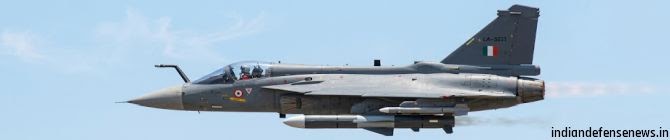
Hindustan Aeronautics Limited’s new chairman and managing director, Ravi Kota, widely known in aerospace circles as the ‘LCA Man’, has made the TEJAS MK-1A delivery his top priority.
Despite this, the program is now expected to miss even the June–July timeline earlier estimated by ThePrint. Kota recently briefed senior IAF leadership on revised timelines and the status of pending integration work, acknowledging that crucial tasks remain incomplete.
Sources indicate that while the IAF is willing to accept temporary compromises in areas linked to pilot convenience and ease of operation, it will not compromise on combat-critical systems.
For example, if automation of certain flying aspects is delayed, the IAF is prepared to accept manual operation by pilots for the time being. Some of these pending works may only be completed a year from now, but the force is prepared to accommodate such delays provided the aircraft’s core combat capability is intact.
The concessions now being discussed are an expanded version of exemptions agreed upon earlier in February. At that time, deficiencies were categorised as ‘minor’, ‘major’, and ‘not acceptable’. Sources reveal that the IAF is now willing to accept some deficiencies previously labelled as ‘major’, reflecting the urgency of inducting the jets into service.
The earlier schedule outlined by former HAL CMD D. K. Sunil included a critical review meeting on 9 May 2026, by which HAL was expected to complete major pending works.
Kota has since informed the IAF that essential integration tasks, including linking the Israeli AESA radar with weapon firing controls and the electronic warfare suite, remain unfinished.
This has pushed back the timeline for aircraft acceptance trials, which typically take about a month once integration work is confirmed complete.
The repeated revision of delivery timelines by HAL’s previous leadership has created frustration within the defence establishment.
There is now a growing perception that earlier public assurances were aimed more at maintaining HAL’s stock price than reflecting the true state of the program.
This has eroded confidence in HAL’s ability to meet its commitments, even as the company continues to cite delays in engine deliveries as the principal reason behind slippages.
However, reports suggest that the problems run deeper than engine supply issues. The delays are rooted in wider integration and systems-related challenges, with the engine issue serving as a convenient explanation for more complex shortcomings.
ThePrint earlier highlighted that these systemic problems have been masked by the visibility of engine delays, which became the most publicly acknowledged bottleneck.
The IAF is expected to begin aircraft acceptance trials only after HAL confirms completion of critical integration work at the next review meeting. Until then, the induction of the TEJAS MK-1A remains uncertain, with timelines slipping further despite concessions and compromises.
The situation underscores the tension between HAL’s assurances, the defence ministry’s contractual obligations, and the IAF’s operational requirements, as India seeks to strengthen its shrinking fighter squadron strength with indigenous aircraft.
Agencies
