

India’s Medium Transport Aircraft (MTA) program is entering a decisive phase, with the Indian Air Force (IAF) set to acquire 60–80 aircraft in the 18–30 tonne payload class to replace ageing An-32s and reduce reliance on Il-76s.
The contest has narrowed to Embraer’s C-390 Millennium and Lockheed Martin’s C-130J, with Airbus’s A400M seen as capable but too costly for routine missions.
The IAF’s MTA initiative is designed to create a leaner, more efficient transport fleet that bridges the gap between lighter C-295s and heavy C-17 “Globemasters”. The new fleet will form the backbone of India’s tactical and strategic airlift capability, enabling rapid troop deployment, logistics support, humanitarian relief, and operations in high-altitude regions such as Ladakh. This modernisation drive is critical to improving operational flexibility and reducing maintenance challenges posed by Soviet-era platforms.
The program valued at around ₹1 trillion ($11 billion), will follow the “Buy and Make (Indian)” route. Twelve aircraft will be acquired in fly-away condition, while the remaining 48–68 will be manufactured in India through partnerships with domestic industry.
Companies such as Tata Advanced Systems, Hindustan Aeronautics Limited (HAL), and Larsen & Toubro are expected to play key roles in licensed production and assembly, strengthening India’s aerospace ecosystem under the Make in India initiative.
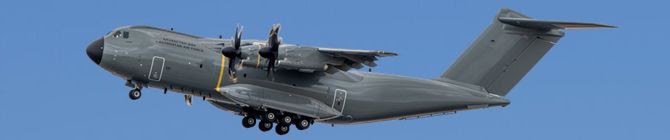
Among the contenders, the Airbus A400M Atlas stands out for its hybrid strategic-tactical capability, with payloads of up to 37–40 tonnes. It can transport heavy assets such as light tanks and artillery in a single lift, but its high unit cost of $200–220 million makes it economically challenging. Deploying such a platform for routine logistics missions is considered overkill, and budgetary realities may limit its induction to a handful of units if at all.
The Embraer C-390 Millennium has emerged as a strong candidate due to its twin-jet design, offering cruise speeds of around 870 km/h. This enables faster mission turnaround and efficiency in long-distance logistics, a significant advantage for India’s vast geography. The C-390 also boasts multi-role capability, including aerial refuelling, cargo transport, and medical evacuation, making it a versatile option for the IAF.
The Lockheed Martin C-130J Super Hercules, already in service with 12 units in the IAF, offers proven battlefield versatility and established logistics support. Its induction would streamline training and infrastructure requirements. However, its lower payload capacity compared with the C-390 and A400M may limit its role in heavier lift operations, though its reliability and existing ecosystem remain strong advantages.
Operational experience in Ladakh and other high-altitude regions has sharpened the requirement for a modern medium transport fleet. The new aircraft will allow the IAF to rationalise its transport operations across different weight classes, ensuring seamless integration between tactical and strategic missions.
This procurement also reflects India’s broader push to build indigenous sustainment and manufacturing capacity, moving from “Make in India” to “Maintain in India.”
The MTA program is therefore more than a fleet renewal—it is a strategic investment in India’s long-term aerospace and defence autonomy. By embedding advanced manufacturing partnerships and modernising its transport fleet, the IAF will significantly enhance its ability to respond to military, humanitarian, and disaster relief missions across diverse terrains
Agencies
