

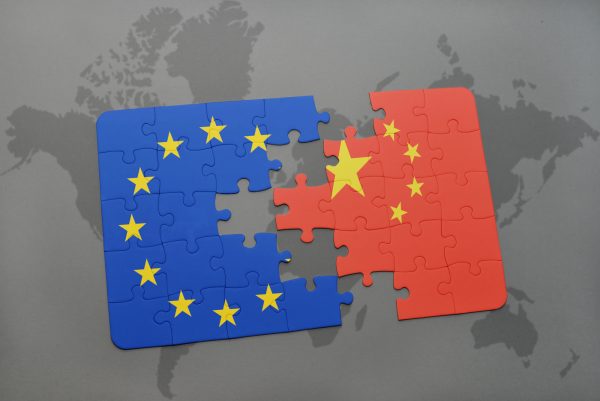
Europe’s China policy is stuck in a strategic dead end. Instruments aimed at reducing asymmetric dependencies, strengthening competitiveness, and building economic resilience either already exist or are currently developed. But the impression is building that these policy measures are too little, too late. At the same time, the European Commission lacks a sustained strategic engagement with China at the highest political level. Instead, Europe’s approach to Beijing is increasingly defined by ad hoc reactions.
A fragmented and sporadic policy that fails to focus on the bigger picture is ill-suited to the strategic challenge posed by China – particularly when China represents the only power alongside the United States that has the capacity to shape the international order of the 21st century. Too often, Brussels’ diplomacy toward Beijing still appears driven primarily by crisis management.
This dynamic has generated growing frustration. Because European interests often fail to gain meaningful traction in China, disappointment has spread across EU institutions, reinforcing a broader reluctance among European policymakers to engage with Chinese counterparts at all.
Yet this stands in stark contrast to the level of political attention the relationship requires. The problem runs much deeper than Brussels often acknowledges. It is not simply about trade deficits, industrial subsidies, or export controls. At its core, the current impasse is also about symbols and language: Europe and China have, in many ways, forgotten how to speak to one another.
These communication problems were once again on display during a recent conference organized by the European Commission in Beijing, where European and Chinese officials met for discussions. The exchanges revealed with remarkable clarity how much time both sides spend trying to convince the other of the correctness of their own interpretation of the relationship.
Since the European Union officially labeled China simultaneously a “partner, competitor, and systemic rival,” much of the diplomatic conversation has revolved around which language remains politically acceptable. Chinese officials continue to push for a return to the rhetoric of partnership. European policymakers, by contrast, increasingly view the relationship through a zero-sum lens rather than one of “win-win” cooperation and insist on a more realistic, risk-oriented framing.
The result has been a spiral of communicative escalation. Instead of finding a shared language, both sides increasingly resort to mutual threats and coercive rhetoric.
What Brussels often underestimates is the central importance of symbolic communication in China’s foreign relations. For Beijing, which increasingly operates with imperial self-confidence issues of face, positive future narratives, and the legitimacy of a relationship itself carry enormous weight. This does not mean conflicts disappear, nor that structural differences or diverging interests should be ignored. But public language, diplomatic performance, and political rituals shape the atmosphere within which disagreements can be managed and negotiated.
This is precisely why U.S. President Donald Trump’s recent visit to Beijing was revealing. Regardless of the profound political differences between Washington and Beijing, China once again demonstrated how strongly it responds to positive and constructive symbolism. Friendly rhetoric and demonstrative respect help stabilize relations, even when negotiations behind closed doors remain intensely confrontational. Despite an ongoing economic conflict with the United States, Xi Jinping still characterized Sino-American relations through the formula of “constructive strategic stability.”
Brussels, however, has moved in the opposite direction over recent years: toward public confrontation, security-driven narratives, and growing skepticism about whether meaningful dialogue with Beijing is even worthwhile.
From the Chinese perspective, Europe’s discourse increasingly resembles a fundamental break with the previous foundations of the relationship. Unsurprisingly, resistance from Beijing has intensified. And this, in turn, undermines the effectiveness of Europe’s de-risking agenda. If Europe wants to reduce security vulnerabilities in its economic relationship with China, it must embed those policies within a strategically positive narrative.
Europe should therefore pursue a form of narrative de-escalation without reverting to political naivety. European decision-makers must learn to distinguish between public symbolism and concrete interest-based negotiations. Behind closed doors, Europe can and should negotiate firmly over supply chain security, export controls, industrial subsidies, currency policy, market access, critical infrastructure, and growing technological dependencies. Publicly, however, Europe needs a strategic language that presents stable relations with China as a desirable objective.
Without a positive vision for the future, the EU’s growing toolbox of economic security instruments, including initiatives such as the proposed Industrial Accelerator Act, risks fueling a cycle of mistrust, retaliation, and mounting economic costs.
Paradoxically, China is offering Europe an opportunity. In conversations with Chinese officials, one message repeatedly emerges: Beijing holds significantly higher expectations for its relationship with the European Union than for its relationship with the United States. While “peaceful coexistence” is increasingly seen as the best achievable outcome in China-U.S. relations, China expects more from Europe: more cooperation, more ambition, and greater political autonomy as an independent pole in a multipolar world order.
The EU has so far failed to strategically leverage this perception to its own advantage. Doing so first requires a fundamental shift in perspective.
At the conference in Beijing, one Chinese representative invoked a classic proverb: Europe should avoid becoming “the frog at the bottom of the well,” trapped by a narrow view of the world. Instead, both sides should focus on “the bigger picture” and on shaping a shared future.
Possible starting points for such a shift would be for Europe to propose any kind of high-level, future-orientated negotiation framework. One example could be to open a process toward a free trade agreement with China that goes beyond and is different from the 2020 agreement in principle on Comprehensive Agreement on Investment (CAI). A new framework could give more political significance to existing exchanges on technological questions. In Brussels, any idea reflected something remotely similar to the CAI is regarded as politically dead. In Beijing, however, there remains a willingness to reopen a negotiation process.
As uncomfortable as discussions about a potential free trade agreement may be for many in Europe, they could create the stable negotiating framework with Beijing that is currently missing. Such a dialogue would create a distant target that could allow both sides to open a new three- to four-year negotiating horizon. Further, free trade agreement talks would allow both sides to revisit key disputes, including investment conditions, industrial policy, technology transfer, market access, joint ventures, and economic security concerns.
Without such a narrative adjustment combined with a diplomatic reset, relations between Europe and China are likely to deteriorate further. Pressure from Beijing on the EU is already increasing. The European Chamber of Commerce in China recently warned of a renewed escalation in Chinese export controls.
China is a great power operating on equal footing with the United States. It is time for Brussels to adjust its language and symbolism accordingly, not as a concession to Beijing, but as a prerequisite for making Europe’s de-risking strategy viable at all.
