

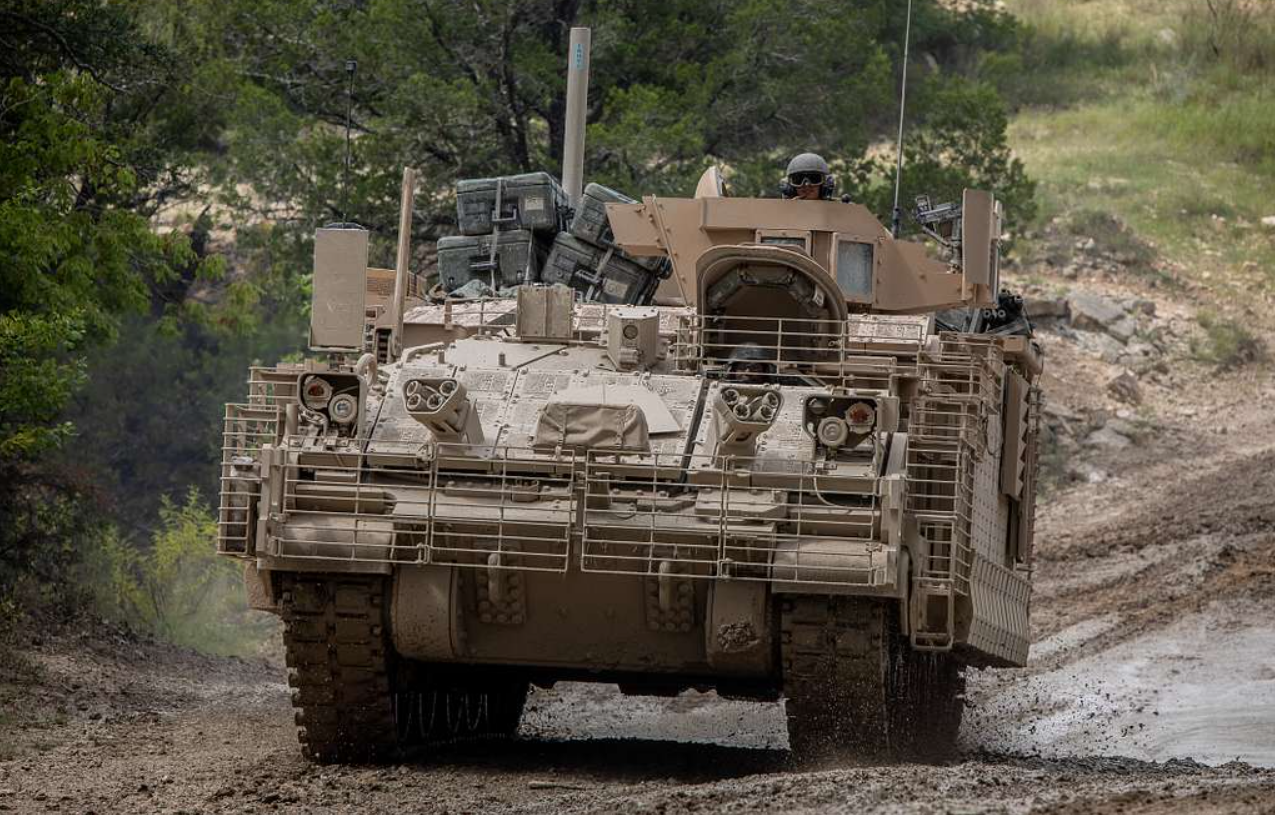
As geopolitical tensions reach a boiling point in 2026, the modern battlefield bears little resemblance to the conflicts of the past two decades. The era of uncontested GPS dominance is over. Today, the “war of signals” and the rise of counterspace threats are fundamentally redefining how armies maneuver, target, and survive.
The GNSS paradox: a strength turned vulnerability
GNSS jamming and spoofing capabilities are no longer confined to major powers: they are now routine features of the tactical environment, including in lower-intensity conflicts. The maps below tell the story of an increasingly systematic use – defensive as well as offensive – of GPS jamming and spoofing in well-identified conflict regions. It also appears before and during more localized flare-ups, such as in 2025 events in southeast Asia. Everywhere, electronic warfare applied to navigation is evolving rapidly, driven by an AI-enabled arms race of measures and countermeasures.

But viewing navigation warfare as limited to electronic warfare would be restrictive: some actors have gradually acquired the means to upend the GPS satellite architecture itself. Counterspace capabilities, and the widely assumed ability of near-peer adversaries to degrade or neutralize geostationary satellites, put the foundations of global positioning increasingly at risk. In the words of General B. Chance Saltzman, the head of U.S. Space Operations, the speed at which these adversaries are deploying counterspace capabilities is “mind-boggling”.
Our response to these threats needs to be multi-layered. Efforts to harden the GPS constellation through M-Code, next-generation satellites, and more discerning GPS receivers are necessary and will improve resilience in contested environments. However, all of these still rely on a physical satellite infrastructure that remains vulnerable to targeting and degradation, if our adversaries deem the stakes to be high enough for such drastic measures.
The consequences on operational effectiveness can hardly be overstated. A unit that, for lack of external signals, cannot determine its orientation cannot dependably maneuver, synchronize effects, or deliver precision fires. In practical terms, it is combat ineffective.
The imperative of precise orientation and resilient navigation
Now more than ever, any positioning and navigation solution must include sensors that are infrastructure-independent, and will provide workable data without the need for any external signal. Such solutions can include visual recognition, through terrain mapping or star trackers. But their bedrock, now more than ever, is high-performance inertial navigation.
Unlike RF-based systems, an inertial navigation system (INS) is fully passive: it emits no signals, receives none, and is inherently immune to jamming and spoofing. It functions as the platform’s internal reference – its “source of truth”. Depending only on constants such as gravity, rotation of the Earth, and the laws of physics, it ensures continuity of operations when external signals fail.
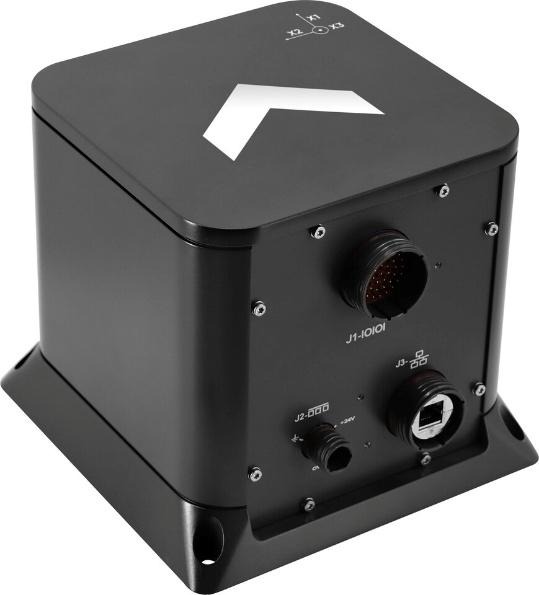
Fiber Optic Gyros (FOG): restoring autonomy to the modern battlefield
Among available technologies, the Fiber Optic Gyroscope (FOG) stands out as the most operationally relevant solution for high-intensity conflict. Its advantages are threefold:
- High-end stability for extended autonomy: While earlier inertial technologies often struggle to maintain accuracy once satellite signals are lost, FOG technology offers superior long-term stability. By providing the high-end bias stability necessary to maintain precise orientation over extended durations, these systems allow platforms to rely on “dead reckoning” for significantly longer periods. This effectively bridges the gap during GNSS-denied operations with minimal cumulative error.
- Instantaneous North-seeking: A robust land navigation system must be capable of determining True North autonomously, whether the platform is stationary or maneuvering on rugged terrain. FOG technology provides this “gyrocompassing” capability with unmatched speed and reliability, ensuring an immediate operational readiness without needing external movement or signal reference.
- Durability and lifecycle value: Unlike legacy mechanical gyros, FOGs have no moving parts. This results in exceptional robustness against the shock and vibration of modern combat and, crucially, near-zero maintenance requirements. It represents the optimal intersection of high-performance capability and cost-effective lifecycle management.

Securing the independent edge
Prioritizing FOG-based inertial navigation is no longer a niche technical choice. It is a strategic requirement. By leveraging advances in photonics and inertial sensing, FOG-based navigation is enabling assured navigation, resilient maneuver, and precision engagement, independent of external infrastructure. The adoption of advanced physics to ensure reliable navigation allows the defense industry to provide more than just high-end hardware; it delivers operational resilience, regardless of the state of the skies. In the warfare of tomorrow, signals may fail, but physics never lies.
