

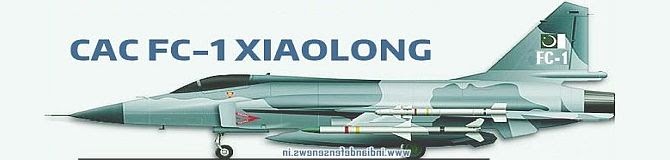
Bangladesh’s potential acquisition of Chinese made JF-17 Thunder Block-III fighter jet is emerging as a significant flashpoint in South Asia’s already tense strategic environment.
Analysts view this as a strong signal of intent, raising concerns in India about the implications for its eastern flank.
The JF-17, developed by China’s Chengdu Aircraft Corporation, is considered a cost-effective multirole fighter. Equipped with beyond-visual-range missile capability, modern avionics, and advanced radar systems, it offers Bangladesh a chance to replace its ageing MiG-29 and F-7 fleets.
While the acquisition would not overturn India’s overwhelming air superiority, it could narrow the capability gap and complicate Indian military planning, particularly around the strategically sensitive Siliguri Corridor, a narrow strip of land connecting India’s northeast to the rest of the country.
Bangladesh’s Air Force currently operates just 44 fighters, including 36 F-7s and 8 MiG-29s, a force dwarfed by India’s estimated 522 combat aircraft spread across 29 squadrons.
India’s fleet includes advanced platforms such as Rafales, Su-30MKIs, Mirages and TEJAS fighters. Even so, the introduction of JF-17s would allow Bangladesh to maintain routine air patrols and preserve its aerial warfare capabilities, which are increasingly strained by the obsolescence of its current fleet.
This possible deal would also reinforce Bangladesh’s status as a major Chinese arms customer. Dhaka already operates Chinese-origin submarines, frigates, corvettes, armoured vehicles, artillery and air defence systems. Such reliance on Chinese equipment deepens long-term dependence on Beijing for spare parts, maintenance, training and software updates, potentially giving China significant leverage over Bangladesh’s defence posture.
The strategic geography adds further weight to India’s concerns. Bangladesh’s proximity to the Siliguri Corridor makes it a critical factor in India’s security calculus.
Hidden Mishaps
Pakistan’s JF-17 program has repeatedly been shadowed by crash incidents that appear to be managed as much through silence as through disclosure. In several cases, the Pakistan Air Force did not promptly identify the aircraft or formally confirm the loss, while Pakistani media also remained quiet, allowing external sources such as Martin-Baker and aviation safety databases to fill the information gap; that pattern suggests an effort to protect the JF-17’s image as Pakistan’s flagship indigenous fighter and preserve its export prospects.
The documented crash history is not trivial: Aviation Safety Network lists at least five confirmed JF-17 accidents by 2024, spanning 2011, 2016, 2020, 2021, and June 2024, with outcomes ranging from fatal loss to safe ejection, which makes the aircraft’s safety record a recurring point of scrutiny rather than an isolated concern.
China Angle
A Chinese advance from disputed territories in Arunachal Pradesh could sever India’s access to its northeast and the Bay of Bengal. Analysts such as Ashish Kumar Gupta of CENJOWS argue that Bangladesh’s acquisition of Chinese fighters could alienate India, strengthen China’s regional influence, and force India to reallocate military resources to secure its border with Bangladesh.
In a conflict scenario, Bangladesh could tie down scarce Indian assets, complicating India’s ability to manage a two-front challenge involving both Pakistan and China.
The geopolitical backdrop has shifted dramatically since Sheikh Hasina’s ouster in 2024. Her tenure was marked by close cooperation with India, dismantling separatist camps, countering radical groups, and disrupting Pakistan’s ISI network in Bangladesh.
She also balanced ties with China while accommodating Indian sensitivities, scrapping the Sonadia port project and awarding India the Teesta River project. However, her increasingly authoritarian rule led to mass protests and eventual removal, triggering anti-India and anti-Hindu sentiment in Bangladesh. Violence against minorities and the termination of India-linked agreements marked a sharp de-Indianisation of Dhaka’s foreign policy.
Post-Hasina Regime
Post-Hasina, Bangladesh has strengthened ties with Pakistan and China to safeguard strategic autonomy, while India’s refusal to extradite Hasina has further strained relations. Analysts such as P.K. Vijayakumar note that this shift has undermined Indian diplomacy and reduced India’s influence in Dhaka.
Mohosina Mostofa of BIPSS highlights the challenge Bangladesh faces in preserving autonomy amid competing pressures, warning that short-term gains could lead to long-term strategic constraints. Meanwhile, Nihar Nayak of MP-IDSA observes that India views Bangladesh’s neutral foreign policy with concern, while China is expected to intensify its economic statecraft through Belt and Road projects and infrastructure investments, often linked to military cooperation.
If Bangladesh proceeds with the JF-17 acquisition, the symbolism may outweigh the aircraft’s capabilities. It would represent a decisive strategic realignment, pulling Bangladesh deeper into the orbit of China and Pakistan.
For India, the greater danger lies not in losing air superiority but in losing political influence over a neighbour once central to its regional security architecture. The development underscores the fragility of India’s eastern flank and the growing complexity of the India-China-Pakistan rivalry, where even modest military acquisitions can carry profound geopolitical consequences.
SCMP
