

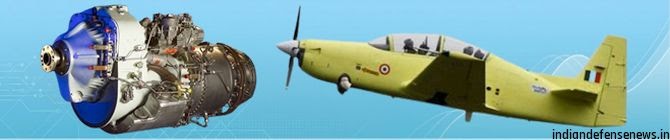
The delivery marks the first batch of engines under a $100-million contract signed nearly four years ago, which covers 88 engines and kits.
Officials confirmed that the engines have reached HAL’s Bangalore facility, with Honeywell assuring timely supplies going forward. HAL aims to fast-track aircraft deliveries as engine availability stabilises. The HTT-40 platform is vital for the Indian Air Force (IAF), serving as the initial step for rookie pilots to develop essential flying skills before progressing to advanced training stages.
The IAF placed an order for 70 HTT-40 trainers worth ₹6,838 crore three years ago. HAL was originally scheduled to deliver 12 aircraft in fiscal 2025–26, but none have been handed over due to engine shortages.
Under the contract, Honeywell will supply 16 engines directly, while HAL will manufacture the remaining units through technology transfer. The US firm was supposed to deliver the first engine in September 2025, but delays pushed the timeline back.
The remaining engines are expected to arrive at a rate of two per month. Currently, two series production HTT-40s are flying with used ‘Category B’ engines that powered prototype aircraft.
HAL’s production capacity has been strengthened with new facilities. In October 2025, Defence Minister Rajnath Singh inaugurated dedicated production lines for the HTT-40 and the TEJAS MK-1 fighter in Nashik.
HAL now has the capability to produce up to 20 HTT-40s annually across its Bengaluru and Nashik factories. This expansion is expected to accelerate deliveries once engine supplies are regularised.
The tandem-seat HTT-40 features an air-conditioned cockpit, modern avionics, hot refuelling capability, and zero-zero ejection seats, ensuring safety even at low speeds and altitudes. The aircraft currently incorporates 56% indigenous content, which is projected to rise above 60% as more components and subsystems are localised. This aligns with India’s broader defence indigenisation goals under the “Aatmanirbhar Bharat” initiative.
At present, Stage-I flying training for all rookie pilots is conducted on Swiss-origin Pilatus PC-7 MK-II trainers. After Stage-I, pilots are streamed into fighter, transport, or helicopter tracks. Fighter stream cadets continue with Stage-II training on PC-7 MK-II and Kiran MK-1A jet trainers, followed by Stage-III on British-origin Hawk advanced jet trainers before graduating to supersonic fighters. Transport and helicopter stream cadets undergo separate progression paths.
The HTT-40 is intended to replace the Pilatus fleet, which has faced procurement hurdles. In July 2019, the defence ministry suspended business dealings with Pilatus Aircraft Limited for one year after alleged violations of a pre-contract integrity pact in a ₹2,900-crore deal for 75 trainers. Plans to acquire 38 additional Pilatus aircraft under a follow-on clause were also shelved due to corruption investigations.
The arrival of Honeywell engines is therefore a critical milestone, ensuring that HAL can finally move forward with deliveries of the indigenous HTT-40. The program is expected to reduce dependence on foreign trainers, strengthen India’s aerospace ecosystem, and provide the IAF with a reliable, locally manufactured platform for its pilot training pipeline.
Hindustan Times
