

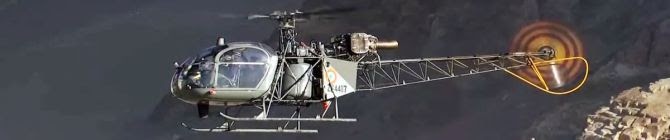
These light helicopters, derived from the French Aérospatiale Allouette‑III and Lama designs and manufactured under licence by Hindustan Aeronautics Limited since the 1960s and 1970s, have been indispensable for sustaining troops in remote forward areas, including the Siachen Glacier.
For six decades, they have served faithfully, but their airframes have long exceeded their operational lifespans, resulting in high accident rates and severe maintenance fatigue. While other air forces phased them out years ago, India continues to rely on them in some of the world’s most hostile flying terrains.
The Print report also mentioned that the attempt to modernise this fleet has been marred by repeated procurement delays, policy shifts, and the challenges of indigenous defence manufacturing. The Advanced Light Helicopter (ALH) was conceived in 1979 as a replacement, initially envisioned as a 2,500 kg single‑engine helicopter.
However, evolving requirements transformed it into a 5,500 kg twin‑engine machine, which proved unsuitable for extreme high‑altitude operations such as Siachen. Recognising this, India sought to procure light helicopters through global tenders to replace over 400 Chetak and Cheetah aircraft.
Yet, these multi‑billion‑dollar programs were repeatedly derailed by technical shortcomings, bureaucratic hurdles, and allegations of corruption.
The Reconnaissance and Surveillance Helicopter (RSH) tender for 197 helicopters was cancelled in 2007 at the final stage due to procedural deviations and a single‑vendor situation. A subsequent tender in 2008 saw Eurocopter (now Airbus) and Russia’s Kamov undergo rigorous trials, but this too was scrapped in 2014 amid corruption allegations and a strategic pivot toward domestic manufacturing under the ‘Make in India’ initiative.
In 2015, India pursued a Government‑to‑Government agreement with Russia to manufacture 200 Kamov Ka‑226T helicopters, with the balance requirement to be met by HAL’s Light Utility Helicopter (LUH). However, disagreements over technology transfer and localisation stalled the deal, leaving the program in limbo.
HAL pressed ahead with the LUH, a 3‑ton class single‑engine helicopter designed for high‑altitude operations. While the project has progressed reasonably well by HAL’s standards, it has faced technical glitches that remain unresolved.
The Indian Army and Air Force have jointly pursued procurement of 12 helicopters, but the process is still stuck at the Contract Negotiation Committee stage, awaiting approval as per Preliminary Joint Staff Qualitative Requirements. In its current state, the LUH is unlikely to satisfy operational demands without significant corrective measures.
These cumulative failures have created a massive capability gap, forcing the Armed Forces to continue operating sub‑optimal, high‑risk assets. The Indian Army has even resorted to hiring civil helicopters to support air maintenance, though these cannot fulfil critical operational roles.
The shortfall has severely affected the Army and Air Force’s ability to sustain operations in high‑altitude forward areas across the northern and eastern sectors. In certain locations, no other helicopter in India’s inventory can operate, leaving the military with no choice but to persist with the ageing fleet.
The way forward requires urgent action. Procurement of modern light helicopters must be fast‑tracked to bridge the operational and technological gap. A phased approach could be adopted: first, urgently acquire light helicopters to replace the Cheetahs deployed in high‑altitude regions, where the need is most critical.
Subsequently, the remaining Chetak and Cheetah helicopters operating at lower altitudes could be replaced by HAL’s LUH once it matures. The global market offers several viable options in both single and twin‑engine configurations, and India must act decisively to ensure its forces are no longer dependent on outdated and dangerous machines.
Agencies
