

Foreword: This is not a news report but a piece of analysis. The reporting cited here is drawn from public sources, but the forward-looking assessments and inferences are the perspective of the author, not authoritative fact.
On 25 May 2026, US President Donald Trump publicly called on eight states (Saudi Arabia, the United Arab Emirates, Qatar, Pakistan, Türkiye, Egypt, Jordan, and Bahrain) to sign onto the Abraham Accords, framing their accession as a “mandatory” component of any settlement to the war between the United States, Israel, and Iran.1
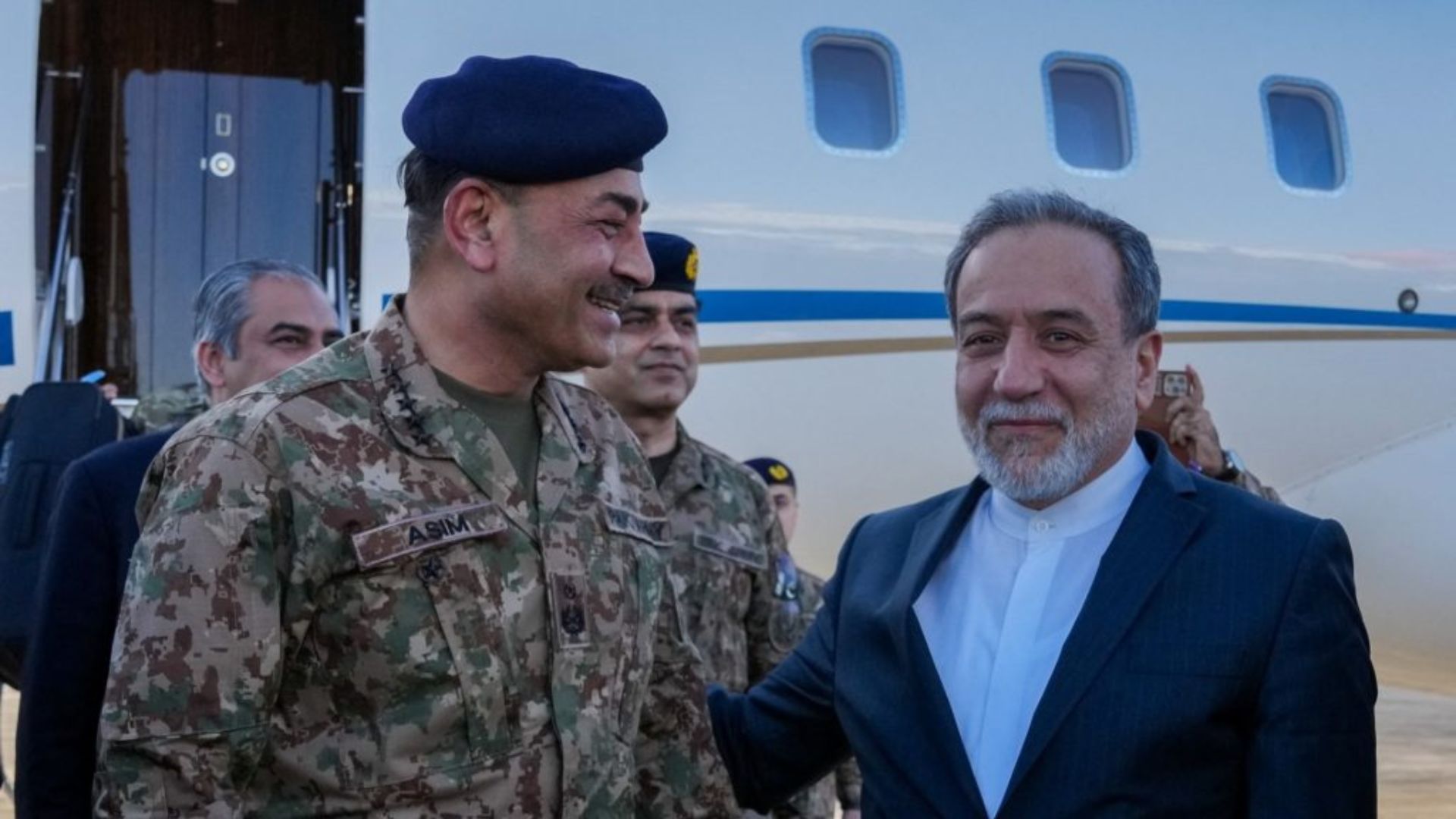
Pakistan was the first of those states to refuse in public, with Defence Minister Khawaja Asif telling a domestic broadcaster that recognizing Israel “clashes with our fundamental ideologies” and noting that the Pakistani passport still excludes Israel as a valid destination.2 The demand would be significant in its own right, but it is doubly so because it arrived in the middle of Pakistan’s most consequential diplomatic undertaking in years, the mediation effort that Field Marshal Asim Munir has led between Washington and Tehran since the spring.
The Mediation and Its Ceiling
The war itself began on 28 February 2026, when US and Israeli strikes killed Iran’s Supreme Leader, Ali Khamenei, during active negotiations over Iran’s nuclear program, with his son Mojtaba Khamenei subsequently installed in his place.3
Pakistan moved quickly into the resulting vacuum, brokering the initial two-week ceasefire, hosting the first round of the Islamabad Talks in April (with the US delegation led by Vice President JD Vance), and dispatching Munir to Tehran on more than one occasion, even as Secretary of State Marco Rubio characterized the process as showing no more than “slight progress.”4, 5
On its face, this represents a considerable diplomatic achievement for a state that, until very recently, sat at the periphery of the region’s principal security conversations.
This author’s assessment from the outset, however, has been that the viability of these talks was always contingent on a single variable: whether the United States, working through Pakistan, could establish a serious channel to the emergent crop of Islamic Revolutionary Guard Corps (IRGC) leaders who now hold the initiative in Tehran.
These figures are considerably more hawkish than the legacy negotiators, and they have ample reason to be. From their vantage point, it was the United States and Israel that opened a war in the middle of diplomacy and killed the Supreme Leader, and it would be naive to expect such an act to generate trust toward the administration responsible for it.
Consequently, the emergent leadership does not necessarily endorse the positions that Foreign Minister Abbas Araghchi and other legacy figures have signalled, and it has shown little appetite for committing to a durable agreement with the present US administration.
That reluctance, moreover, follows a coherent reading of the recent record. It was a Democratic administration that delivered the original nuclear agreement, Trump, who withdrew from it during his first term, and Trump again, who initiated hostilities in his second. One can therefore see why the emergent leadership would prefer to wait for a more malleable future administration (of either party) rather than expend its leverage on a president it has little reason to trust.
What that leadership appears to want, in any case, is something larger than a narrow nuclear settlement: a framework in which Washington treats Iran as the lead power in the region, with entitlements to toll traffic through the Strait of Hormuz, a meaningful say in the Gulf’s security architecture, and an end to sanctions.
Whether Tehran would still concede on the nuclear question inside such a framework is unclear, but its best odds of extracting one almost certainly rest with a future administration rather than this one.
