

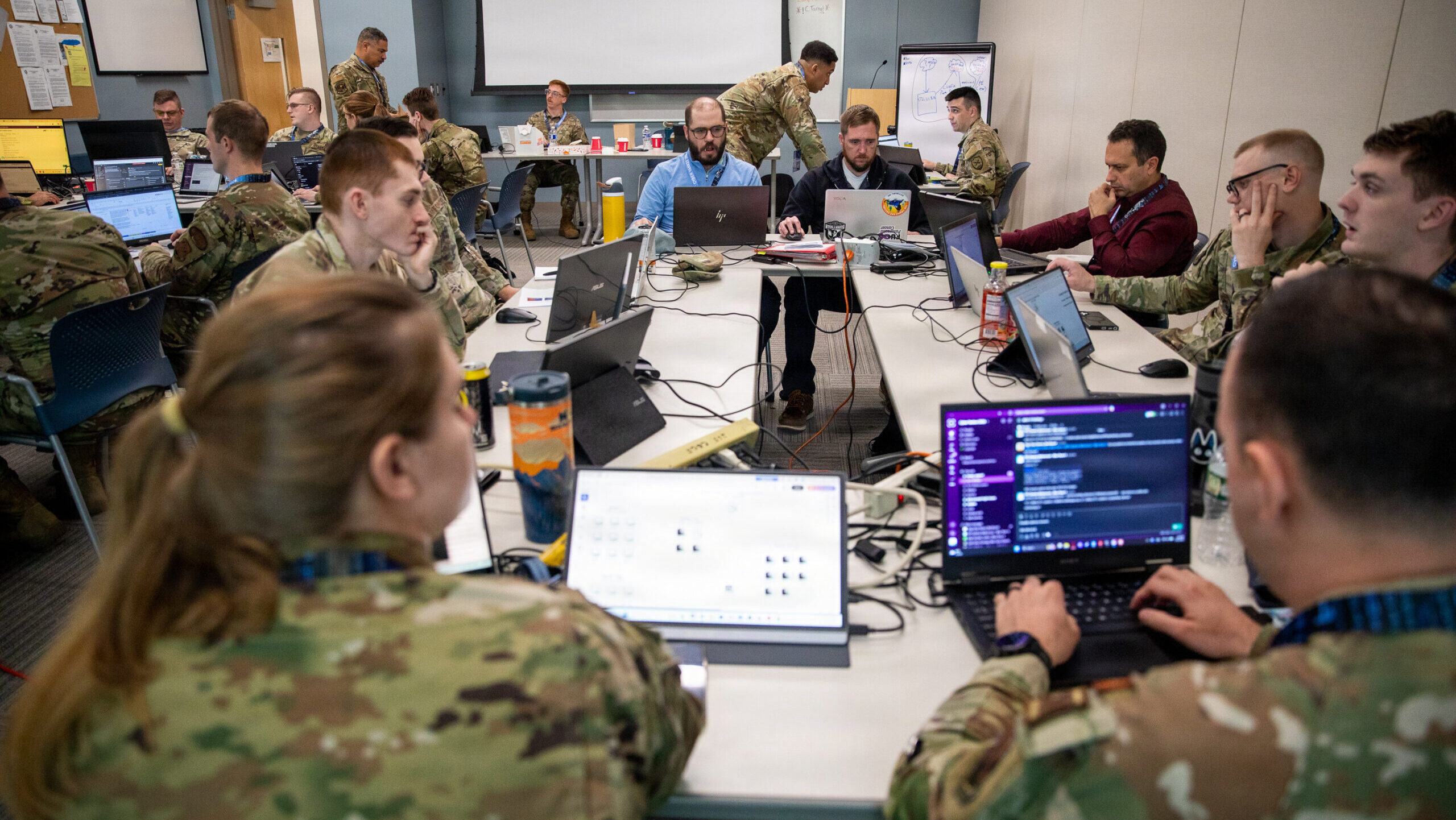
BALTIMORE — The Pentagon’s newest cyber organization, the Defense Cyber Defense Command (DCDC), is working to build out a framework for how to respond to cyberattacks against critical infrastructure in the homeland, according to a military official.
“I’m currently assigned there to build out a [Joint Task Force Defense of Critical Infrastructure] framework and command and control footprint, because the most important thing, besides understanding the technology, the people, the processes, is who’s in control, who’s executing, what’s the common rail amongst all the authorizations that we have between CISA, FBI, Coast Guard, Department of War writ large,” Col. Adolph Rodriguez, director of Defense Critical Infrastructure at the DCDC, said here at the TechNet Cyber conference Wednesday.
DCDC, formerly the Joint Force Headquarters-DoD Information Network, was elevated to a sub-unified command under US Cyber Command in May 2025.
“How do we continue to operate before, during, and after the attack,” Rodriguez said, articulating one of the problems they’re looking at.
He explained the team is working to develop what he termed “digital green zones,” similar to the physical spaces set up in Iraq and Afghanistan, that will examine what exactly needs to be secured and what data leaders need to look for to ensure they know what good and bad data is.
Defense of critical infrastructure has become a key priority in recent years given the importance of those systems not only to everyday civilian life — from power to water — but also to military installations.
Chinese hackers dubbed Volt Typhoon have been found lurking in these systems in recent years, which intelligence and cyber officials say is to map networks in order to cause disruption, stymie and deter possible US response to a Beijing feint against Taiwan.
What has particularly alarmed US officials about this, is the paradigm shift of Chinese threats moving from espionage and intellectual property theft to holding critical infrastructure at risk.
A key way Rodriguez and his team plan to protect infrastructure is by applying existing and defined roles between civil, federal and defense teams, similar to how Northern Command operates with civil authorities over homeland defense.
For instance, during a natural disaster or terrorist attack, there is no question regarding authorities or command and control lines between local, state and federal partners. But if there was a cyber attack, those distinctions are not yet there.
“Why don’t we build a cyber campaign plan that’s enduring that we can utilize those NORTHCOM authorities with Cyber Command’s authorities, build out the sectors very similar to FEMA so this way we don’t have to change any of the infrastructure and now execute that muscle memory of training, assessments, and then identify where the key infrastructure is,” he said.
