

This milestone coincides with the Defence Ministry’s issuance of Requests for Proposal (RFPs) to three shortlisted consortia, marking a decisive step in India’s indigenous fifth-generation fighter program.
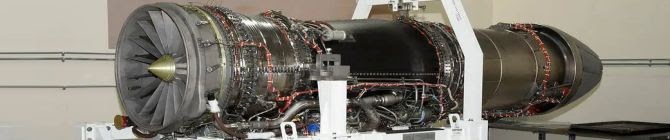
Hindustan Aeronautics Limited (HAL) has finalised the technical parameters for the GE-414 turbofan engines, specifically the INS6 variant tailored for Indian requirements.
These engines, in the 22,000-pound thrust class, incorporate advanced Full Authority Digital Engine Control (FADEC) systems, ensuring reliability and performance for the AMCA MK-1 prototypes. With technical discussions concluded, HAL and GE are now engaged in commercial negotiations to secure the propulsion package, a critical component for the program’s timely progress.
The Defence Ministry issued RFPs around ten days ago, with a 60-day response window closing by the end of July. The shortlisted bidders include Larsen & Toubro-Bharat Electronics Ltd., TATA Advanced Systems Ltd., and Bharat Forge-BEML Ltd.
The winning consortium will collaborate with the Aeronautical Development Agency (ADA) to manufacture five prototypes and one structural test specimen. These will be assembled and tested at a newly sanctioned aerospace hub in Andhra Pradesh, which is expected to become operational within a year.
Defence Minister Rajnath Singh recently laid the foundation stone for the ₹2,000 crore Core Integration & Flight Testing Centre at Puttaparthi, which will serve as the dedicated site for prototype evaluation.
The AMCA is envisioned as a stealth-enabled, fifth-generation multirole combat aircraft. It will feature stealth shaping, internal weapons bays, advanced AESA radar, sensor fusion, artificial intelligence-enabled systems, electronic warfare capabilities, and the ability to operate alongside unmanned “loyal wingman” drones. The aircraft is designed to deliver long-range strike capabilities and supercruise performance, positioning it as India’s flagship indigenous fighter jet project.
The Defence Ministry has earmarked an indicative outlay of ₹15,000 crore for the prototype development phase. The first prototype flight is targeted for 2032, with the Indian Air Force expected to place an initial order for up to 120 AMCA jets.
Deliveries are likely to begin around 2035, aligning with India’s strategic goal of fielding a cost-effective, fifth-generation fighter fleet. This program also represents a structural transformation in India’s aerospace ecosystem, as private-sector-led consortia take centre stage in prototype development, reducing reliance on HAL’s traditional monopoly.
By fast-tracking engine negotiations and prototype contracts, India aims to avoid bottlenecks that have historically delayed indigenous fighter projects. The AMCA program is not only a technological leap but also a cornerstone of the Atmanirbhar Bharat vision, fostering domestic expertise in metallurgy, avionics, composites, robotics, and precision manufacturing.
If executed as planned, the AMCA will stand as a landmark achievement in India’s defence modernisation drive.
Agencies
