

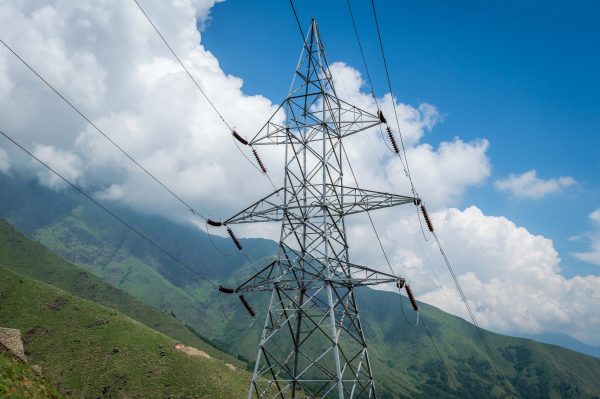
For decades, the ASEAN Power Grid has remained one of Southeast Asia’s most ambitious and challenging integration projects. But as energy demand rises, decarbonization pressures intensify and governments seek greater energy security, cross-border electricity trade is moving from a long-term aspiration to an urgent regional necessity.
Recent analysis by the ASEAN Centre for Energy, supported by consultations undertaken by the U.N. Nations Economic and Social Commission for Asia and the Pacific (ESCAP) and partners under the ASEAN Power Grid Advancement Programme, suggests that smaller sub-regional power trading arrangements may offer the most practical path toward broader ASEAN electricity integration in the near term.
Building on the successes of the Laos-Thailand-Malaysia-Singapore Power Integration Project (LTMS-PIP), which was officially launched in 2022, there are now compelling reasons to begin developing new sub-regional multilateral power trade arrangements.
There are myriad potential combinations of ASEAN member states that could come together to develop beneficial new sub-regional multilateral power trading arrangements. In identifying a potential pilot grouping, ESCAP and partners have considered factors including existing and planned interconnections, regulatory readiness, experience with cross-border power trade, and nations’ broader relevance to ASEAN-wide integration efforts. Based on these criteria, there is particular promise in pursuing multilateral power trade between Vietnam, Thailand, Malaysia, and Singapore, or VTMS for short.
In December, during an ASEAN Power Grid consultation meeting, the ASEAN Center for Energy and the VTMS countries agreed to move forward with a proposed power trading pilot, with support from ESCAP and other development partners.
The pilot will serve as a practical test of how to translate the recommendations from the recently completed ASEAN Interconnection Masterplan Study III and the Study on the Roadmap for Multilateral Power Trade in ASEAN into action-oriented solutions for subregional integration. The VTMS concept has already received recognition in recent ASEAN energy-sector ministerial statements, suggesting that there is a growing regional momentum behind the creation of a multilateral electricity trade.
Why Vietnam, Thailand, Malaysia, and Singapore?
The case for VTMS is compelling because it aligns commercial, technical, and energy-transition interests across all four countries.
In October 2023, Singapore’s Energy Market Authority announced that it would grant conditional approval for the import of 1.2 GW of clean electricity into Singapore directly from Vietnam via a subsea interconnector approximately 1,000 kilometers in length.
Last month, however, officials from Malaysia, Singapore, and Vietnam signed a Joint Development Agreement to assess the feasibility of a multilateral trading arrangement under which power would be transported by subsea cable from Vietnam to Peninsula Malaysia, then transported using existing grid infrastructure to Singapore.
Compared to a direct link between Vietnam and Singapore, the benefits of such an arrangement are numerous.
First, and most importantly, the subsea infrastructure required would be approximately 40 percent of the length needed for a direct Vietnam-Singapore connection. This would significantly reduce costs, technical complexity, and supply chain concerns, while remaining well within the range of the subsea interconnector distances already built in Europe.
Second, the jurisdictions involved would be the same as negotiating complex maritime-territorial questions that would inevitably be posed, making agreement on these points more likely. Third, given the abundance of Vietnam’s potential in wind energy, such an arrangement would allow Malaysia to benefit from some offtake of generated clean electricity, while sending the required allocation on to Singapore.
Finally, the participation of additional parties that benefit from trade may lead to mutually beneficial cost-sharing arrangements for a highly capital-intensive project, potentially under a project of common interest” modality.
Adding Thailand to this trading bloc would bring a series of additional benefits.
Thailand, Malaysia, and Singapore are already interconnected through the LTMS-PIP backbone, and there is considerable opportunity for enhanced multilateral and multidirectional trade among these countries, especially given plans to upgrade and expand the interconnection between Thailand and Malaysia. This arrangement would also allow Thailand to benefit from imports of clean power generated in Vietnam, while adding an additional market for this power that serves to build the business case for a Vietnam-Malaysia interconnector.
The Contours of a VTMS Power Trade Pilot
Beginning later this year, the pilot aims to establish the technical building blocks for a VTMS multilateral power trade, while providing a space for partner countries to discuss key policy, regulatory, and infrastructure challenges.
Through technical assistance and capacity building activities, the initiative can help drive cross-country consensus around market development, grid code harmonization, wheeling charges, common use financing options and considerations for subsea infrastructure development.
To demonstrate the benefits and potential of VTMS multilateral power trade, the pilot will start with cost-benefit analyses that set out the value of such an arrangement to the countries involved.
The pilot will also bring in activities at the regional and national levels. At the regional level, the pilot will seek to assist in the implementation of the enhanced ASEAN Power Grid memorandum of understanding, while activities related to national power market development will be defined with countries to enhance their ability to engage in deepened multilateral power trade.
Finally, the VTMS pilot is expected to generate practical lessons for future sub-regional initiatives, thus accelerating progress toward the implementation of the broader ASEAN Power Grid vision.
