

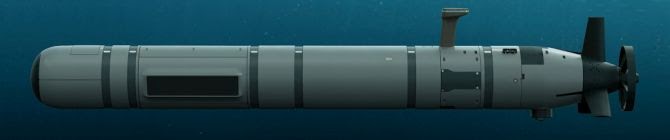
Mumbai-based GoFloat is developing the indigenous Pralay Autonomous Underwater Vehicle (AUV), a pioneering system designed to disable vessels without causing structural damage.
The innovation represents a major stride in India’s maritime defence technology, combining stealth, control, and non-lethal intervention.
GoFloat’s Pralay AUV is engineered to operate underwater with complete stealth. It navigates undetected towards a target vessel and positions itself near the propeller. Once in place, the AUV releases a specially formulated biodegradable hydrogel that coats the blades.
This reduces their efficiency, causing the vessel to gradually slow down and eventually stop. The process is entirely non-destructive, ensuring that ships can be immobilised without suffering permanent damage.
The system is particularly valuable in scenarios where vessels are suspicious, non-compliant, or potentially hijacked. In such cases, destruction is not always the most effective solution.
Instead, the ability to safely take control of a vessel without harming it offers the Navy a smarter and more versatile tool. This capability enhances maritime security by providing a controlled response to threats, reducing risks to both crew and infrastructure.
The Pralay AUV is being developed under the iDEX–Defence Innovation Organisation framework, which supports start-ups and innovators in creating indigenous defence technologies. GoFloat’s work aligns with India’s broader push towards self-reliance in defence manufacturing under the Aatmanirbhar Bharat initiative. By focusing on indigenous design and production, the company is contributing to reducing dependence on foreign systems while fostering innovation in underwater robotics.
The hydrogel technology used by Pralay is a unique feature. It is biodegradable, ensuring environmental safety, and it works by altering the hydrodynamic properties of the propeller blades.
This approach avoids mechanical damage and allows vessels to be restored to full functionality once the hydrogel dissipates. Such non-lethal intervention methods are increasingly important in modern naval operations, where precision and restraint are as critical as deterrence.
Pralay’s operational concept also reflects a shift in maritime strategy. Traditional naval power has often emphasised destructive capability, but modern operations demand tools that can enforce compliance without escalation. The AUV provides exactly that balance, offering the Indian Navy a means to assert control in contested waters while avoiding collateral damage.
The development of Pralay also highlights India’s growing ecosystem of defence start-ups. Mumbai-based GoFloat joins a wave of innovators across the country who are working on autonomous systems, unmanned vehicles, and AI-driven platforms. Together, these efforts are reshaping India’s defence landscape by introducing advanced technologies tailored to local requirements.
The Pralay AUV is expected to play a role in coastal security, anti-piracy operations, and safeguarding strategic maritime zones. Its ability to immobilise vessels without confrontation makes it suitable for diverse missions, from intercepting suspicious cargo ships to preventing unauthorised entry into restricted waters.
This project demonstrates how indigenous innovation can redefine naval operations. By combining stealth, autonomy, and non-lethal control, GoFloat’s Pralay AUV represents a new chapter in India’s maritime defence capabilities.
Agencies
