

China’s arms export ambitions remain constrained despite decades of investment, with Pakistan as its overwhelmingly dominant client. While Beijing ranks among the top five global arms sellers, its weapons remain largely untested in modern warfare, limiting credibility compared to Western rivals.
China has invested heavily in its defence industry, building advanced technology and offering low-cost systems with few political conditions. Yet its share of global arms exports has grown only modestly. The lack of combat testing is a major handicap. Unlike the United States, Russia, or France, China has not fought a major war in nearly fifty years, leaving its equipment unproven in contemporary battlefields.
The 2025 clash between India and Pakistan was the first real test of Chinese systems. Pakistan claimed its Chinese-made J-10C fighters shot down Indian aircraft supplied by France. India confirmed losing at least one aircraft, but the four-day conflict offered limited evidence of durability or quality. Even so, the episode thrust Chinese arms into the spotlight.
Attention has also turned to China’s support for Iran in its confrontation with the United States and Israel. While no direct deployment of Chinese weapons has been confirmed, Beijing has supplied dual-use technologies such as missile and drone components, and Iran may be using China’s satellite navigation system.
However, most of this support predates the current hostilities, with Beijing’s role largely economic rather than military.
Analysts argue that China’s reluctance to commit militarily to partners undermines its export ambitions. Countries buy not just equipment but long-term security relationships. Beijing’s hesitancy to back allies such as Iran and Venezuela when challenged by Washington has limited its appeal to new buyers.
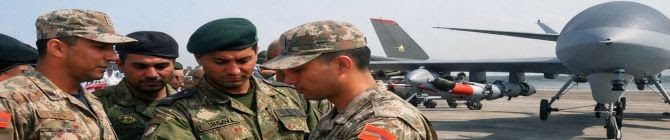
Pakistan remains the cornerstone of China’s arms trade. Between 2021 and 2025, 80% of Pakistan’s imports came from China, up from 73% in the previous five years. This reflects Islamabad’s rivalry with India and its deteriorating ties with Washington, which once supplied nearly equal shares of Pakistan’s arsenal.
China has filled the vacuum, providing fighter jets, missiles, radars, and air defence systems. Last year, Beijing even admitted its personnel supported Pakistan during the confrontation with India. Following the clash, Islamabad raised its defence budget by 20%, boosting sales for AVIC Chengdu Aircraft, maker of the J-10C.
Beyond Pakistan, China’s client base is thin. Of its top ten customers, only Saudi Arabia ranks among the world’s twenty largest importers, and Riyadh receives just 1% of Chinese exports.
Its deep partnership with Washington limits further expansion of ties with Beijing. Other buyers in Africa, Southeast Asia, and Latin America remain small-scale and often face operational issues with Chinese systems, such as drone crashes and tank defects.
China’s potential should not be dismissed. It possesses one of the few comprehensive defence industries outside the United States, capable of producing end-to-end systems. Yet its exports lag behind its dominance in sectors like cars, ships, and batteries. Without combat validation, its weapons remain less attractive to mainstream buyers.
To improve credibility, China must expand joint military exercises and showcase its equipment at international defence exhibitions. More importantly, it must offer deeper strategic relationships, not just hardware. Until then, its arms trade will remain concentrated, with Pakistan as the anchor and modest gains elsewhere.
Agencies
