

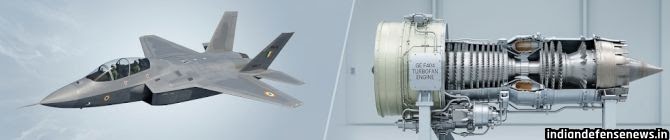
India’s negotiations with General Electric over the F414 engine have reached a critical juncture, with prices rising from the expected ₹70–80 crore per unit to over ₹200 crore.
This escalation threatens both the TEJAS MK-2 and AMCA programs, raising questions about the reliability of India–US defence ties and prompting consideration of alternatives from France and Britain.
The F414 engine was selected to power India’s TEJAS MK-2 and the Advanced Medium Combat Aircraft. Initially, the cost was projected at seventy to eighty crore rupees per unit, but recent developments show the price has surged to more than two hundred crore rupees.
This sharp increase has placed affordability at the centre of negotiations, with Indian officials concerned about the long‑term sustainability of such procurement.
Commercial discussions have expanded beyond pricing. They now include localisation commitments, production arrangements, and technology transfer. General Electric has reportedly sought significant investment to establish a dedicated assembly line in India, which would support future requirements for the TEJAS MK-2, AMCA MK-1, and the Twin Engine Deck‑Based Fighter. India has already approved substantial funding for prototype development, but the new financial demands complicate the path forward.
The AMCA program alone requires fifteen F414 engines for five flying prototypes. Beyond this, India’s projected requirement exceeds two hundred units, factoring in future needs across multiple platforms.
Negotiators have explored reducing the initial order quantity to ease the financial burden, but pricing remains unresolved. The deadlock is particularly sensitive given India’s urgent need to address its fighter squadron shortfall, with only twenty‑nine squadrons operational against a sanctioned strength of forty‑two and a half.
Changing the engine at this stage is considered impractical. The F414 has already been integrated into the designs of both the TEJAS MK-2 and AMCA MK-1. Any shift to a new engine would require fresh integration, software work, testing, and certification, potentially delaying the program by years.
Nevertheless, India is examining alternative technologies from France’s Safran and Britain’s Rolls‑Royce, both of which have expressed interest in future collaborations for more powerful engines in the 110–120 kN class.
The broader context of these negotiations highlights India’s strategic dilemma. On one hand, the partnership with the United States offers proven technology and potential co‑production benefits.
On the other, the steep price increase raises doubts about the reliability of US defence commitments, especially when contrasted with India’s long‑standing efforts to diversify suppliers and pursue indigenous engine development. The Gas Turbine Research Establishment’s Kaveri 2.0 program is seen as a long‑term solution, though it remains years away from operational readiness.
India’s defence planners are acutely aware of regional dynamics. Reports suggest Pakistan is moving closer to inducting China’s J‑35 stealth aircraft, which could enter service before the AMCA.
This adds urgency to India’s need for a credible fifth‑generation fighter capability. The outcome of the GE negotiations will therefore shape not only the timelines of the TEJAS MK-2 and AMCA but also India’s broader aerospace ambitions and its trust in US defence ties.
The situation underscores the challenges of balancing cost, technology transfer, and strategic timelines. India’s decision will determine whether it continues to rely on American technology or pivots towards European alternatives, while simultaneously accelerating indigenous development to secure long‑term autonomy in combat aviation.
Agencies
