

MELBOURNE — Australia has released a new strategy in its latest effort to grow its sovereign defense industrial base, kicking off reforms to how it will develop and acquire platforms in coming years.
The Defence Industry Development Strategy (DIDS) released today is the third top-level Australian defense document put out this year, following the release of the National Defence Strategy (NDS) and Integrated Investment Plan (IIP) in April. Those previous documents focused on potential threats and Australia’s potential responses, along with the country’s expected budgets to meet defense commitments.
Australian Minister for Defence Industry Pat Conroy said the DIDS recognizes the vital role the defense industry plays in the country’s national security by deepening and strengthening the government’s partnership with Australian industry.
“The case for a strong Australian sovereign defence industrial base has never been clearer,” Conroy said in a statement. “We must ensure Australia can manufacture, sustain and scale the capabilities the Australian Defence Force needs, when and where they are required.”
Among the key features of the strategy is targeted investment to support the growth of the industry, with the announcement of an additional $80 million Australian dollars ($55.4 million USD) to be provided to Australian small- and medium-sized businesses developing defense-related capabilities through 2030 via the Defence Industry Development Grants Program.
This will bring total investment in the program to $250 million Australian dollars ($173.5 million USD), “enabling Australian businesses to innovate, expand production, and create jobs,” according to Australian defense authorities. “This investment is designed to help industry scale its capabilities and respond more effectively to Defence requirements.”
The DIDS also reforms and relaunches Australia’s $3 billion fund ($2.06 billion USD) that seeks to “provide more flexible and timely support” for the defense industry in efforts to secure overseas contracts, which the department said has been “underutilised” since it was established in 2018.
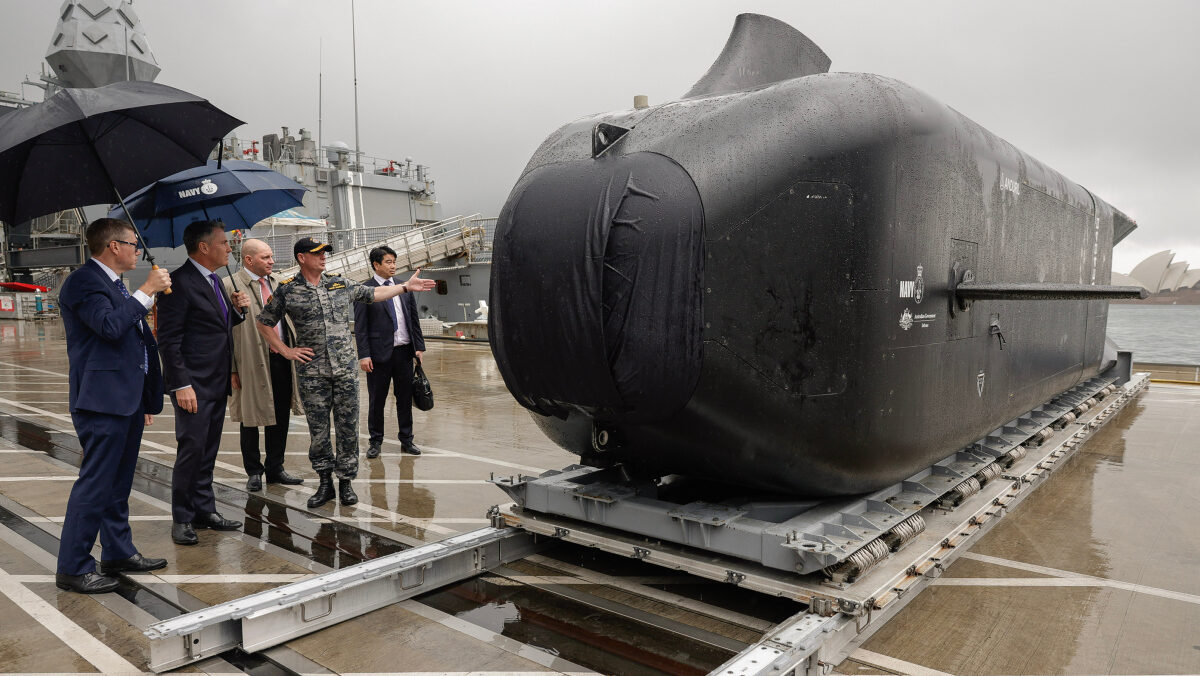
A further effort to boost Australia’s defense exports will see the addition of the Australian-built Anduril Ghost Shark, an extra large autonomous underwater vehicle, as a “priority export capability for the Australian Defence Strategic Sales Office.”
Other initiatives announced in the DIDS include mandating that defense prime contractors commit to growing the defense industry workforce within Australia, with a focus on apprenticeships.
Also announced today was the establishment of Australia’s Defence Delivery Group. The group’s remit is to “provide independent, evidence‑based advice to Government” on the delivery of defense projects.
In a year, the group is slated to become the Defence Delivery Agency, which will consolidate Australia’s existing Capability Acquisition and Sustainment Group; Guided Weapons and Explosive Ordnance Group; and Naval Shipbuilding and Sustainment Group as the government seeks to reform a system that has faced “longstanding systemic challenges that have resulted in major Defence projects being delivered late, over budget, and below expectations.”
Australian Defence Minister Richard Marles said the reforms seek to build “a more agile, disciplined and strategically focused Defence organisation, one that is capable of responding to the strategic challenges we face and safeguarding Australia’s security into the future.”
“We are rebuilding a defence capability system that is disciplined, accountable and focused on outcomes. This is what Australia’s security environment demands, and what the Australian people expect,” he added.
