

India’s Defence Acquisition Council, chaired by Defence Minister Rajnath Singh, has granted Acceptance of Necessity worth approximately ₹52,000 crore for a wide range of procurement proposals.
These approvals are intended to significantly bolster the operational capabilities of the Indian Army, Navy and Air Force, covering air defence, anti-tank, electronic warfare, surveillance and naval systems.
The Akash Tarang electronic warfare system has been approved for the Indian Army. This anti-unmanned aerial vehicles system is designed to provide effective protection against hostile drones, ensuring that army formations remain secure against the growing threat of UAVs in modern battlefields.
The indigenous Man Portable Anti-Tank Guided Missile system has also been cleared. Developed by the Defence Research and Development Organisation, this system will strengthen the Army’s ability to counter mechanised threats, including enemy armoured vehicles and tanks.
The approval includes 100 launchers, 2,300 missiles and five simulators, enhancing the infantry’s capacity to neutralise adversary armour.
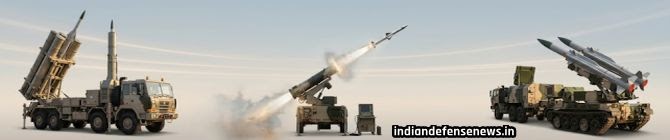
The Medium Range Surface-to-Air Missile weapon system has been sanctioned to provide medium-range air defence against a variety of stand-off aerial threats. This system will form a critical part of India’s layered air defence network, protecting formations from hostile aircraft and missiles.
The Very Short Range Air Defence System has been approved to enhance short-range air defence capability. Equipped with multi-spectral sensing, the V-SHORADS is intended to improve resilience against countermeasures, ensuring effective protection against low-flying aerial threats such as helicopters, drones and close-range aircraft.
Beyond these systems, the DAC has also cleared proposals for jet-based kamikaze drones. These unique unmanned systems are designed to deliver precision strikes against high-value targets, providing the Army with enhanced tactical flexibility in offensive operations.
For the Indian Air Force, approvals include fixed-wing high-altitude pseudo satellites. These long-endurance unmanned aircraft, capable of operating in the stratosphere, will provide persistent intelligence, surveillance, reconnaissance, telecommunication and remote sensing. Their deployment will greatly expand the IAF’s ability to maintain continuous situational awareness over vast areas.
The Indian Navy has received approvals for multi-influence ground mines, naval shipborne unmanned aerial systems and a land-based testing facility for electric propulsion systems. The ground mines will deny manoeuvre freedom to adversaries, while the shipborne UAS equipped with advanced sensors will enhance maritime situational awareness.
The testing facility will support the Navy’s transition towards advanced propulsion technologies, ensuring sustainable and efficient naval operations.
Together, these acquisitions represent a comprehensive strengthening of India’s defence posture across land, sea and air.
By focusing on indigenous systems, unmanned technologies, advanced air defence and naval capabilities, the DAC has reinforced India’s trajectory towards military modernisation and self-reliance in defence production under the Atmanirbhar Bharat vision.
Agencies
