

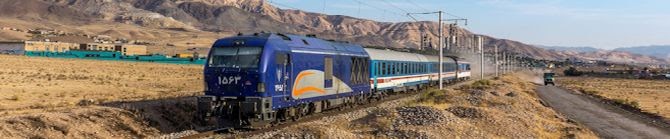
Unconfirmed reports suggest that India is accelerating plans to revive the 700‑km Chabahar–Zahedan rail corridor in Iran, aiming to strengthen trade access to Central Asia and Eurasia while capitalising on easing US sanctions on Tehran.
The project is seen as a strategic counterweight to China’s Gwadar Port and a vital link in the International North‑South Transport Corridor.
India is reportedly preparing to restart work on the Chabahar–Zahedan railway line, which will connect Iran’s Chabahar Port on the Gulf of Oman with Zahedan near the Afghanistan border.
Once completed, the line will integrate the port into Iran’s national rail network and the International North‑South Transport Corridor, providing India with a shorter and more cost‑effective trade route to Afghanistan, Central Asia and Russia.
The renewed push follows the recent peace agreement under which the United States agreed to ease sanctions on Iran and permit the export of crude oil and petroleum products.
This breakthrough has revived hopes of regular Iranian crude supplies to India after a gap of nearly seven years, enhancing the commercial viability of the Chabahar route and boosting India’s energy security.
The rail corridor is expected to significantly improve cargo movement through Chabahar, deepening India’s trade ties with Central Asian economies such as Uzbekistan, Kazakhstan and Tajikistan. It will also bypass Pakistan and the China‑Pakistan Economic Corridor, offering India a strategic alternative route to the region. Analysts view the project as a crucial counterbalance to China’s growing influence, particularly through its investments in Gwadar Port.
The project was initially estimated to cost around $1.5 billion, with Iran expected to provide the bulk of the funding. India is likely to contribute between $400–500 million over the coming years, along with engineering expertise. Discussions between Indian and Iranian officials are anticipated soon, though no formal dates have been announced.
Experts highlight that the Chabahar–Zahedan rail link is a missing piece in India’s long‑term strategy to develop Chabahar as a gateway to Eurasia. By linking the port to the INSTC, India will gain faster access to European and Russian markets via Iran, reducing transit times and costs compared to traditional maritime routes. This corridor is expected to reshape regional logistics and enhance India’s strategic footprint.
The revival of the project also aligns with India’s broader objective of diversifying trade routes and reducing dependence on traditional shipping lanes. Improved regional stability has created an opportunity for New Delhi to restart stalled infrastructure cooperation with Tehran, which had slowed due to sanctions and geopolitical uncertainty.
Iranian ministers have recently visited New Delhi for multilateral engagements, signalling renewed momentum in bilateral infrastructure discussions. The corridor is expected to play a pivotal role in India’s connectivity ambitions, while also facilitating oil exports and strengthening economic partnerships across Eurasia.
Agencies
