

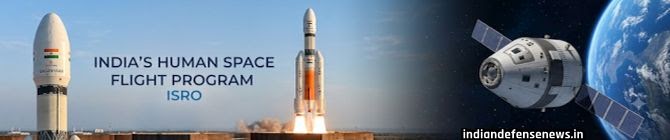
India’s first crewed space mission, Gaganyaan, has been in development since 2018 and was originally scheduled for August 2022 to mark the 75th anniversary of independence.
The Covid‑19 pandemic caused the first delays, but subsequent setbacks have stemmed from technical preparations, the demanding process of human‑rating systems, erratic fund flows, and inadequate recruitment of scientists and engineers.
Last month ISRO chairman V Narayanan announced that the first uncrewed mission, Gaganyaan‑1 (G1), may now slip to the third quarter of 2027, pushing the crewed flight to 2028 or beyond.
On 3 July 2026 ISRO successfully completed the first ground test of the Sub‑Orbital Launch Vehicle for Experiments (SOLVE), designed to carry a mock crew module to over 100 km altitude before releasing it for descent. Ten parachutes must deploy in sequence to ensure safe landing.
This marks another milestone, but only the rocket has been tested so far. Earlier, in November 2025, Narayanan had declared that nearly ninety per cent of subsystem progress was complete, with integrated testing and verification to follow. At that time G1 was scheduled for December 2025, but the timeline has shifted again.
ISRO plans at least three uncrewed test launches, G1, G2, and G3, before the human mission H1. Each will carry Vyommitra, a robotic humanoid, to monitor the environment. The original plan envisaged a three‑member crew conducting experiments for a week.
Now the mission is more modest: perhaps a single crew member completing a few orbits. Human spaceflight is inherently difficult, and delays are common worldwide, as seen with NASA’s Artemis programme and SpaceX’s Starship. Safety takes precedence over speed.
The transformation from cargo launches to human transport requires rigorous human‑rating. ISRO has upgraded the Second Launch Pad at Sriharikota with emergency escape systems, including NASA‑style slide‑wires and blast‑protected bunkers.
A “white room” is under construction for final astronaut preparations. An Astronaut Facility has been built to isolate crew before launch, with medical rooms, briefing spaces, and secure transport. Additional facilities include the Orbital Module Preparation Facility and Gaganyaan Control Centre.
The launch vehicle is not entirely new. ISRO has adapted its proven LVM-3, nicknamed Bahubali, into the Human Rated LVM3 (HLVM-3). It retains core architecture but with upgrades: HS200 boosters, an improved L110 core stage, and a C32 cryogenic upper stage carrying 32 tonnes of propellant. Human‑rating involves extra safety margins and redundancy.
For instance, the CE20 cryogenic engine was tested for 8,810 seconds, far beyond the required 6,350. The HS200 boosters were validated during the OneWeb India‑2 mission in March 2023.
A crucial addition is the Crew Escape System (CES), akin to an ejection seat for the entire capsule. The first abort test, TV‑D1, succeeded in October 2023, with the crew module splashing down safely in the Bay of Bengal. Further abort missions TV‑D2 to TV‑D4 remain. SOLVE will validate the parachute deployment sequence under near‑real conditions. Integrated parachute air‑drop tests have been conducted, but more are pending. ISRO must also demonstrate recovery in rough seas and adverse weather.
The spacecraft comprises the Crew Module and Service Module. The Crew Module offers eight cubic metres of habitable space, with seats engineered for extreme G‑forces, porthole windows, and a dashboard of controls. Due to payload limits, some features may be absent in H1, including a full waste disposal system.
ISRO is planning a Next Generation Launch Vehicle (NGLV) with greater capacity for future missions. The maiden crewed flight may carry a solo astronaut for one day, completing 16 orbits, to test the Environmental Control and Life Support System (ECLSS). This system regulates temperature, pressure, oxygen, and carbon dioxide, recycling resources efficiently. Its engineering design is complete, but fabrication and testing are ongoing.
There is uncertainty about whether G1 will carry Vyommitra or only a dummy module. Vyommitra would have assessed seat functionality and turbulence, but plans appear revised.
Re‑entry, descent, and landing remain the most dangerous phase. Splashdown near the Andaman Islands will require flawless parachute deployment. Two integrated tests have been completed, but more are needed. A full orbital re‑entry can only be tested with G1, G2, and G3.
Budget reductions noted by the Parliamentary Standing Committee have further hampered progress. The mission has faced repeated delays, but ISRO continues to build infrastructure and conduct tests. The journey to India’s first human spaceflight is advancing, though slowly. Better delays than disaster, as spaceflight demands uncompromising safety.
Agencies
