

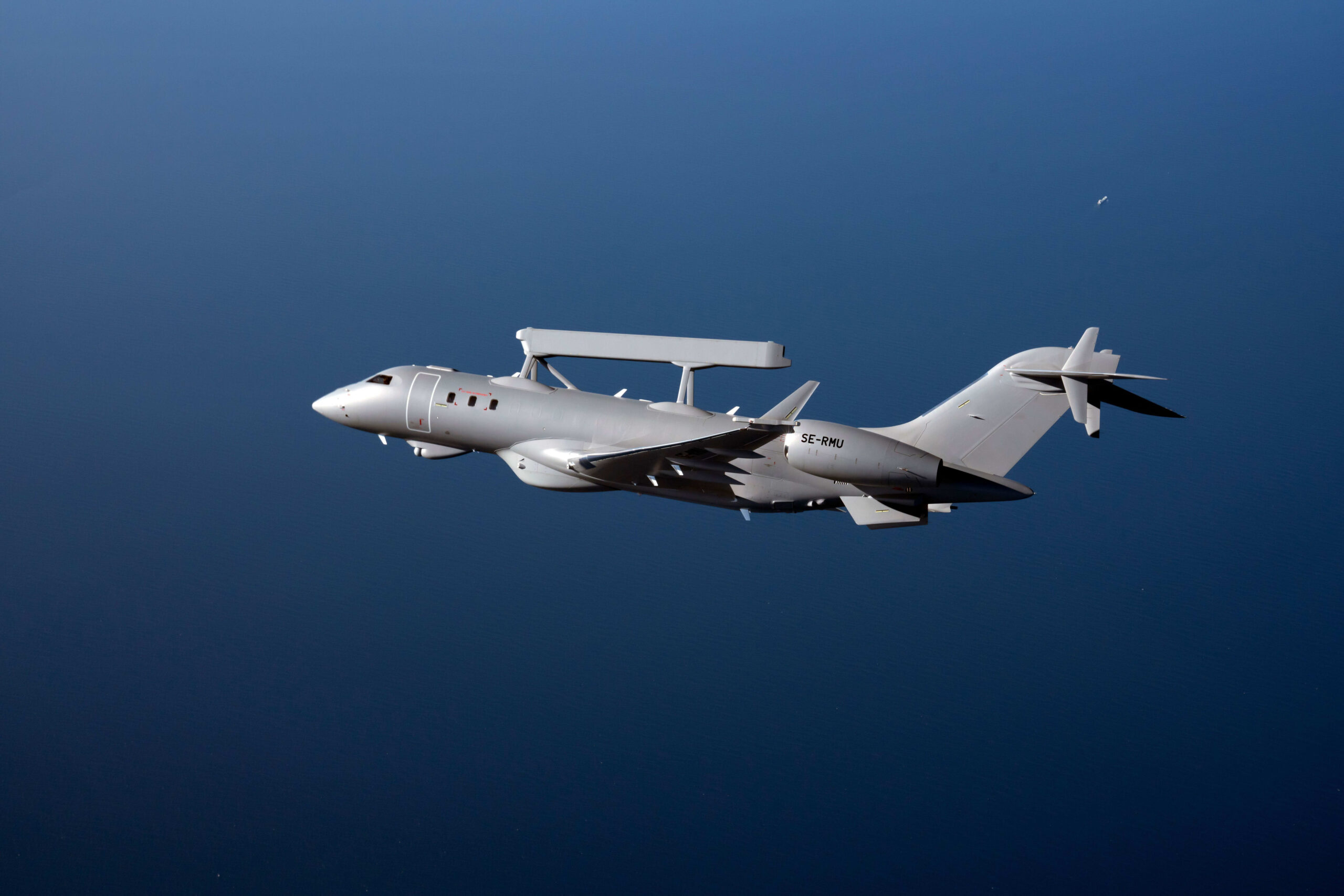
NATO will open negotiations with Saab for up to 10 GlobalEye aircraft to replace part of its ageing E-3 AWACS fleet, Mark Rutte announced at the Ankara summit.
NATO will open negotiations with Saab to buy up to 10 GlobalEye airborne early warning and control aircraft, replacing part of its ageing E-3 Sentry fleet. Secretary General Mark Rutte announced the joint procurement by 11 allies on 7 July 2026, on the opening day of the alliance’s summit in Ankara.
Belgium, Canada, Denmark, Germany, Latvia, Lithuania, Luxembourg, the Netherlands, Norway, Romania and Sweden are the eleven members behind the purchase. No contract has been signed, and Saab must still negotiate with NATO’s procurement agency.
Swedish Prime Minister Ulf Kristersson called it a great day for the country’s defence industry. Saab chief executive Micael Johansson said he was confident GlobalEye was the right choice for the alliance.
NATO had chosen the Boeing E-7 Wedgetail in 2023, but dropped that plan in 2025 after the United States cancelled its own E-7 buy, which had underpinned the fleet’s economics. With the competition reopened, the GlobalEye became the only in-production jet-powered Western contender left, as the turboprop E-2D fills a different niche. The reversal left the alliance searching again for a jet to succeed a fleet it has flown since the 1980s.
The choice ends nearly four decades in which NATO’s early-warning fleet came only from Boeing, and NATO called the project an example of transatlantic cooperation led by European and Canadian industry. The GlobalEye’s freedom from United States export controls has added to its pull for buyers wary of ITAR restrictions.
The aircraft pairs a Canadian-built Bombardier airframe with Saab’s Erieye Extended Range radar and can stay airborne beyond 11 hours. NATO says the platform provides multi-domain surveillance across air, land and sea, tracking drone swarms, ballistic missiles and cruise missiles from a single aircraft.
Flying higher and longer on a business jet than the E-3 it replaces, the GlobalEye passes a fused air, sea and land picture to fighters, ships and ground units. That shortens the time between spotting a threat and acting on it, against smaller and lower-signature targets than the E-3 was built to catch.
Sweden, France and the United Arab Emirates have already ordered or fielded the GlobalEye, and a NATO buy would join that widening base. France’s two-aircraft deal in December ran to about $1.3 billion, a rough gauge of the price. Canada opened talks for six in May, while Germany and Poland have signalled interest.
Saab has said it could field the aircraft for NATO around 2031, before the E-3 leaves service, and is investing to build more each year from its Swedish hub. Canada has said that as much as a third of any future GlobalEye fleet could be built on Canadian soil. Each new order widens a shared fleet that can pool training, spares and software across its operators.
The replacement is not one-for-one: NATO flies fourteen E-3s, now 41 to 45 years old, against a planned fleet of up to ten. The purchase sits within a broader surveillance overhaul unveiled at an Ankara summit that is set to carry tens of billions in fresh defence contracts.
Quwa Pro
See Where Demand, Vendors, and Defence Priorities Are Shifting
Get clearer visibility into what procurement teams are looking for, how suppliers are positioning themselves, and where military requirements are evolving across EMEA.
Featured & Trusted By
