

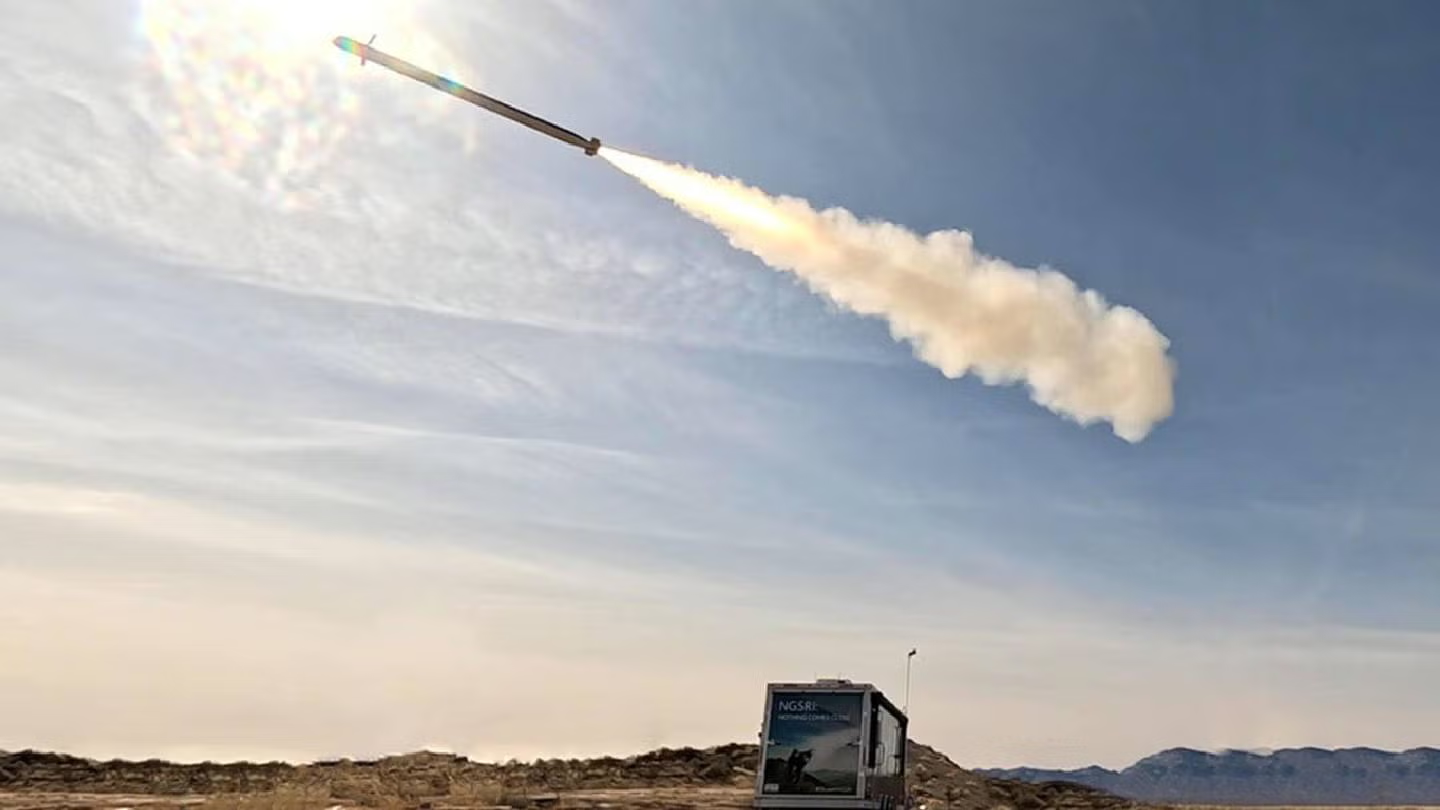
RTX’s Raytheon has announced the successful demonstration of its Next Generation Short Range Interceptor (NGSRI), a new missile system intended to replace the Stinger surface-to-air missile for the US Army.
The demonstration involved multiple guided missile launches using Raytheon’s soldier-portable Command Launch Assembly (CLA), with each missile reportedly achieving detection, tracking, and destruction of simulated aerial threats.

Discover B2B Marketing That Performs
Combine business intelligence and editorial excellence to reach engaged professionals across 36 leading media platforms.
Raytheon said the demonstration validated the interceptor’s ability to achieve direct hits and eliminate targets.
The system’s performance relies on a combination of the CLA and a missile seeker equipped with precision optics, as well as a solid rocket motor developed by Northrop Grumman.
According to Raytheon, these technologies provide the NGSRI with an engagement range that surpasses current systems.
The NGSRI offers improved target acquisition, longer engagement ranges, and increased lethality compared to the Stinger missile, which has been in widespread service with the US Army and allies for decades.
The NGSRI is designed for compatibility with both shoulder-launched and vehicle-mounted systems, and Raytheon is working to ensure it will operate with current and future launcher platforms.
Raytheon Land and Air Defense Systems president Tom Laliberty said: “Raytheon’s NGSRI saw farther and locked faster, demonstrating superior target acquisition, longer range and greater lethality than Stinger – which is already the world’s most in-demand and shoulder-fired air defence system.
“Our NGSRI solution builds on Stinger’s historic global success by being easier to build and field, resulting in a more capable, affordable and rapidly producible weapon.”
The NGSRI programme is part of US Army efforts to modernise its short-range air defence capabilities amid increasing demand for effective countermeasures against drones and other aerial threats.
Raytheon, the manufacturer of the Stinger missile system, is leveraging modular system design and automated manufacturing in the development of NGSRI, with the aim of facilitating faster production and deployment.
Over the past year, the company conducted several company-funded tests of the NGSRI and completed two additional demonstrations under contract with the US Army.
In February this year, the company completed a ballistic test that confirmed NGSRI’s ability to launch from a man-portable system and track drone targets.

