

More than 500 people are feared dead following reports of two large shipwrecks off the coast of Myanmar since late last month, the United Nations said yesterday.
The International Organization for Migration (IOM) and the U.N. High Commissioner for Refugees (UNHCR) said that based on “preliminary information,” the two vessels departed from Myanmar’s Rakhine State in late June. They were carrying mostly Rohingya passengers, “reportedly including some who had travelled from refugee camps in Cox’s Bazar, Bangladesh.”
One boat, believed to have been carrying around 250 people, “lost contact shortly after departure,” while a second vessel reportedly carrying some 280 people, “is believed to have sunk off Myanmar’s Ayeyarwady coast on 8 July.”
If verified, the tragedies would add to the nearly 300 people reported to be missing or to have lost their lives in the Andaman Sea and Bay of Bengal so far in 2026, they added. This includes both Rohingya refugees and Bangladeshi nationals.
“While the incidents and casualty figures have yet to be officially confirmed, UNHCR and IOM are gravely concerned by the potentially devastating loss of life,” the agencies said.
Over-ladened vessels have been setting off from Bangladesh and Rakhine State in Myanmar for more than a decade, but have increased markedly since 2017, when an ethnic cleansing campaign by the Myanmar military drove around 740,000 Rohingya civilians from Rakhine State into Bangladesh. Most are seeking sanctuary in other parts of Southeast Asia, particularly in Muslim-majority Malaysia and Indonesia, despite facing an increasingly hostile reception in both nations.
The boats used in such journeys are often ill-suited to the high seas and filled well over capacity. More than 6,500 Rohingya undertook ocean voyages in 2025, and nearly 900 were reported dead or missing, the UNHCR said in April, making last year “the deadliest year on record” for Rohingya sea crossings.
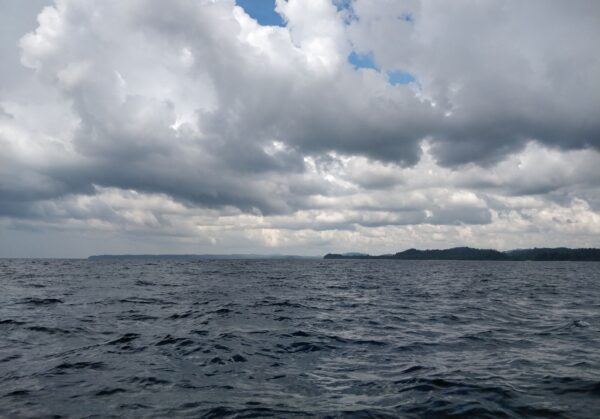
The IOM/UNHCR statement noted that the recent boat journeys took place during the monsoon season, when maritime conditions are even more hazardous. In particular, recent torrential rain and flooding across the region would have significantly increased the risks.
The fact that there is apparently no shortage of people willing to take this chance is a sign of the increasingly desperate conditions in the refugee camps of southeastern Bangladesh, which are home to nearly 1 million people.
Crime is now rampant in the camps, and international agencies have been forced to slash their assistance. The Bangladeshi government, fearing that the camps will become permanent, has banned Rohingya from working, and prevented them from education or travel. At the same time, most Rohingya have a vanishingly small chance of returning to their former homes in Rakhine State, which in recent years has been the focus of an armed conflict between the Arakan Army (AA), a Rakhine nationalist armed group, and the Myanmar military.
“These reports are a heartbreaking reminder of the increasingly desperate choices facing many Rohingya today,” Amnesty International’s Myanmar Researcher Joe Freeman said in a statement. “People do not risk their lives at sea unless the alternatives are even more unbearable. Decades of persecution, statelessness, conflict and severe humanitarian hardship have left many with nowhere safe to turn.”
In its own statement today, the Burmese Rohingya Organisation UK (BROUK), an advocacy group, claimed that the first of the two vessels departed from Pauktaw Township on June 27 and is believed to have sunk “round July 7. The second it believed to have departed from Ponnagyun Township on July 4 and sunk around July 11.
BROUK pointed out that both of these areas of Rakhine State are under the control of the AA, where it said Rohingya “continue to face persecution, violence, and the denial of their fundamental rights.” It alleged that the traffickers responsible for the first of the two boats requested permission from the AA to delay its departure because of severe weather, but that the AA refused and forced the boat to leave.
The AA has previously been accused of committing a host of abuses against the remaining Rohingya in Rakhine State, including forced labor, arson, and killings. It has denied the claims, stating that “the human rights of all communities in Arakan should be equally upheld and protected, without discrimination based on ethnicity, religion, or any other backgrounds.” It has not yet responded publicly to the reports of shipwrecks.
The IOM and UNHCR said that the latest potential tragedy at sea underscored “the devastating impact of protracted conflict and displacement, as well as the continued lack of sustainable solutions for Rohingya communities.”
They added, “Stronger regional and international efforts are needed to prevent further loss of life along one of the world’s deadliest maritime routes, including through enhanced search and rescue efforts, access to asylum and protection, and actions against smuggling and trafficking networks.”
