

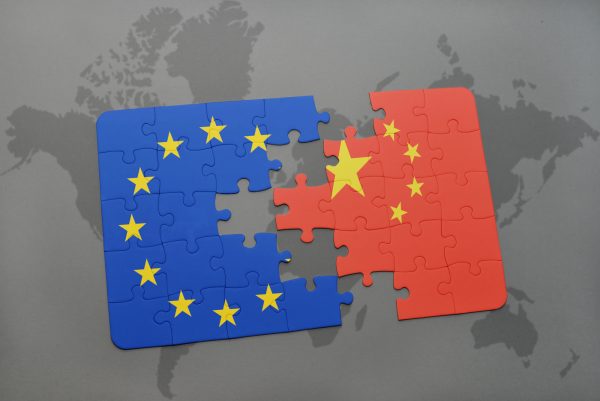
Europe’s China debate has long been shaped by the assumption that China’s power would continue to grow almost automatically and that this rise would lead to liberalization. When this did not happen, Europe thought it could get away with adapting and managing risks.
That’s no longer the case.
China is without question a heavyweight. It is an industrial power, a technology innovator and a geopolitical actor. But it is not the unstoppable giant many in Europe still take it to be. Behind the display of strength lie mounting structural pressures: an ageing society, a shrinking workforce, a deep property crisis, weak consumption, high debt and slowing growth. China’s population is becoming more pessimistic, saving rather than spending.
This vulnerability is not good news for Europe. If anything, China’s fragility is reinforcing political control at home and a more assertive posture abroad. Beijing seeks to reduce its own dependencies while deepening those of others.
This has consequences for Europe. China’s weak domestic demand is pushing excess capacity abroad. Massive state backing, including subsidies, allows Chinese firms to pursue aggressive pricing wars, which threatens the competitiveness of non-Chinese manufacturers globally. As Beijing expands its industrial dominance, it creates dependencies on Chinese technology and innovation. This is not just a trade issue but one of power. A Europe dependent on China in key sectors is more vulnerable to political pressure.
And yet this is not only a story of risks. It is also a story about Europe’s room for maneuver. The EU is vulnerable, but so is Beijing.
China needs Europe more than is often assumed by European policymakers. Access to the European Single Market remains essential for Beijing, especially as the U.S. market becomes more restrictive. Europe is one of the few places where Chinese firms can still sell higher-value goods at attractive profit margins.
European research, technological excellence, and industrial know-how also remain valuable. This latter leverage is, however, limited and shrinking. Europe should not let it slip away unused.
That is why Europe needs a different China policy.
Full decoupling from China is neither desirable nor achievable. China and the EU will remain interdependent. There is no hope for “change through trade”; economics and security cannot be separated. Instead of hope for systemic change, however, Europe should pursue a more interest-driven and leverage-based strategy.
First, Europe should build on its strengths. Not every dependency on China can be eliminated, and reducing risks alone will not be enough. Europe has to protect and expand its technological advantages, especially in areas where China still depends on European capabilities.
Second, diversification should become the default. Reshoring and “Buy European” drives alone will not be sufficient as Europe’s energy and labor costs are too high. The EU needs to diversify supply chains and export markets. For this, it needs to work more closely with partners across the Global South. Europe needs to create conditions that guarantee investors reliable demand in the European market even when they do not produce in China and therefore accept higher costs.
Third, the EU needs credible escalation tools. To be taken seriously, Brussels must be credible when it threatens to use the Anti-Coercion Instrument. If a qualified majority of member states is required to block, rather than approve, its activation, Europe’s deterrence grows.
Fourth, Europe should pursue a genuinely leverage-based diplomacy. Dialogue remains important and should be tied to concrete demands. Europe should use market access, investment, and technological cooperation as bargaining power. In return, Europe should seek concrete concessions from Beijing, including curbs on export surges that undermine European industry, lower exports of dual-use goods to Russia, and tougher localization conditions for Chinese investments in Europe.
Such a course is not cost-free. China will retaliate. But the idea that doing nothing is the cheaper path is a dangerous illusion. The cost of inaction is likely to be higher – the erosion of Europe’s industrial base – and could further weaken confidence in the ability of European democracies to defend our interests.
This is not about breaking with Beijing. Europe’s leaders should rather rethink their assumptions and establish a new diplomacy with China: aiming for concrete progress in priority areas backed by a credible willingness to use unilateral means to defend Europe’s core interests.
Europe must be prepared to defend those interests, within a new and more pragmatic approach to China. Such a different kind of pragmatism could ultimately establish a new relationship with Beijing.
