

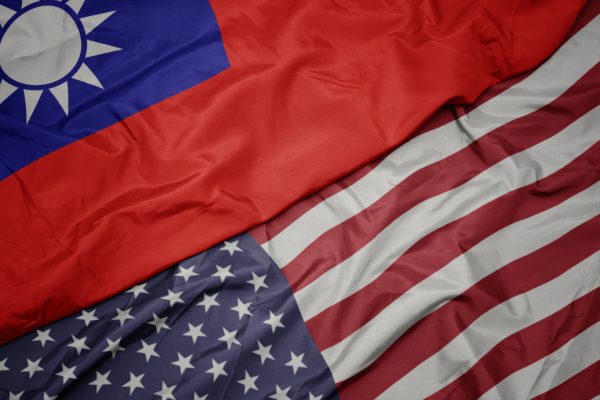
Taiwan has spent much of the past decade strengthening its image as a democratic partner of the United States. From highlighting its democratic resilience to emphasizing shared commitments to freedom, human rights, and the rules-based international order, Taipei has successfully positioned itself as one of Washington’s closest like-minded partners in the Indo-Pacific.
This strategy has yielded tangible results. As China-U.S. competition intensified, Taiwan gained unprecedented bipartisan support in Washington. Political leaders from both major parties increasingly portrayed Taiwan not merely as a strategic partner but as a frontline democracy confronting authoritarian pressure from China.
Yet beneath this apparent consensus, important changes may be emerging within American society and politics. Recent polling suggests that attitudes toward China are beginning to diverge along generational lines. At the same time, American foreign policy discourse is increasingly framed through the language of national interests rather than democratic values.
Taken together, these developments raise an uncomfortable but important question for Taiwan: Is Taipei preparing for the America of the future, or the America of the past?
According to the Reagan Institute’s 2026 Summer Survey, younger Americans consistently express lower levels of concern about China than older generations across a wide range of issues, including national security, economic competition, technological rivalry, and Beijing’s international influence. Older Americans remain significantly more likely to view China as a major threat to U.S. interests, while younger respondents tend to adopt a more nuanced and less alarmed perspective.
“Across the major China concerns, the youngest adults trail the oldest by 20 to 30 points,” the survey report concluded. “The bipartisan consensus on China is real and valuable, but it is aging.”
Similarly, Pew Research surveys over the past few years have consistently found that “younger Americans have more positive views of China than older adults do.”
These surveys do not suggest that Americans are becoming pro-China, nor do they indicate an imminent change in U.S. policy. However, the findings do point to a longer-term trend that deserves attention. As younger generations become a larger share of the electorate and eventually assume leadership positions, their perceptions will increasingly shape the political foundations of American foreign policy.
This generational shift may also reinforce the rise of interest-based foreign policy. Younger Americans tend to prioritize domestic economic concerns, affordability, employment opportunities, and technological competitiveness. If these issues increasingly dominate political debate, future leaders may face stronger incentives to justify international commitments in terms of tangible national benefits rather than abstract ideological principles.
This divide matters because support for long-term strategic competition ultimately depends not only on elite consensus but also on public legitimacy. If future generations of American leaders perceive China as less threatening than their predecessors did, sustaining costly geopolitical competition may become politically more difficult.
For Taiwan, the implications extend beyond the China question itself.
For much of the Cold War and post-Cold War era, American foreign policy was justified through a combination of interests and values. Policymakers regularly invoked democracy, freedom, and human rights as sources of legitimacy for international engagement. Strategic interests remained important, but values helped explain why Americans should care.
Today, however, the political environment is changing. Growing skepticism toward overseas commitments, concerns about economic competitiveness, and domestic political polarization have contributed to a more transactional understanding of foreign affairs. Increasingly, foreign partnerships are evaluated according to what they deliver for the United States rather than what ideals they represent.
No figure illustrates this trend more clearly than President Donald Trump.
In a 2024 interview with Bloomberg Businessweek, Trump argued that Taiwan had “taken about 100 percent” of the United States’ semiconductor industry and suggested that Taiwan should pay for U.S. protection. Similar criticisms have continued to appear in his public remarks, reflecting a broader concern that U.S. industrial and technological advantages have been weakened by globalization and overseas production.
Whether these statements are understood as bargaining tactics or deeply held convictions is ultimately beside the point. More important is what they reveal about a broader shift in American political discourse. In Trump’s rhetoric, Taiwan is rarely discussed as a fellow democracy deserving support because of shared values. Instead, Taiwan is evaluated through the lens of economic competition, industrial policy, burden-sharing, and strategic utility.
Since returning to office, Trump administration officials have repeatedly emphasized reciprocity, burden-sharing, and industrial competitiveness in discussions with allies and partners. This emphasis reflects a broader belief that U.S. foreign policy should generate measurable benefits for American economic and strategic interests.
For much of the past two decades, Taiwan’s democratic identity has been one of its most effective assets in Washington. Yet in an increasingly transactional political environment, shared values alone may no longer be sufficient. The durability of U.S. support may depend less on whether Taiwan is seen as a democratic partner and more on whether it is perceived as advancing American interests.
This shift is not unique to Trump. Rather, it reflects a wider tendency in contemporary American politics to assess international relationships according to their contribution to American prosperity, security, and national power.
And yet much of Taiwan’s international messaging still assumes that shared democratic values constitute the strongest foundation of U.S. support. While this assumption remains partly true, it risks overlooking a fundamental reality: Washington’s commitment to Taiwan has always rested on strategic calculations as much as democratic solidarity.
American support for Taiwan is not merely a function of Taiwan being democratic. It is also a function of Taiwan’s geographic location at the center of the First Island Chain, its role in regional deterrence, its importance to global supply chains, and its central position in advanced semiconductor manufacturing. Taiwan matters not only because it is democratic but because it is strategically consequential.
This is where Singapore offers an instructive comparison.
Taiwan and Singapore face fundamentally different geopolitical circumstances. Taiwan confronts direct military pressure from China and cannot simply replicate Singapore’s approach to foreign policy. Nevertheless, Singapore’s strategic thinking offers useful insights for small and medium-sized states operating amid intensifying great-power competition.
Singapore’s leaders have long recognized that survival requires adaptation rather than ideological rigidity. Former Prime Minister Lee Hsien Loong repeatedly warned that forcing countries to choose between Washington and Beijing would undermine regional stability and prosperity. More recently, Prime Minister Lawrence Wong emphasized that small states cannot control the behavior of major powers but can strengthen their own relevance, resilience, and competitiveness.
Underlying these statements is a consistent strategic philosophy: small states cannot dictate the international environment, but they can increase their value within it.
Singapore’s experience also highlights a distinction that may become increasingly relevant for Taiwan. While values can generate goodwill, long-term strategic relationships are often sustained by mutual utility. Singapore has consistently sought to ensure that major powers view its success and stability as beneficial to their own interests. This mindset has helped the city-state preserve diplomatic flexibility despite dramatic shifts in the international environment.
For decades, Singapore has maintained close security cooperation with the United States while simultaneously preserving extensive economic ties with China. It has supported international law and freedom of navigation while avoiding unnecessary involvement in zero-sum geopolitical confrontations. Throughout changing international circumstances, Singapore has consistently emphasized its usefulness and relevance rather than relying primarily on ideological affinity.
The lesson for Taiwan is not that it should pursue equal distance between Washington and Beijing. Such a strategy would neither be realistic nor desirable given Taiwan’s security environment. The more relevant takeaway from Singapore’s example is that small states must continuously demonstrate why they matter.
As American foreign policy becomes increasingly shaped by interest-based calculations, Taiwan may need to broaden its messaging beyond democratic identity alone. Shared values should remain an important pillar of Taiwan-U.S. relations, but they should be complemented by a more comprehensive articulation of Taiwan’s strategic contributions.
Taiwan’s role in semiconductor manufacturing is well understood. Less frequently discussed is its growing importance to artificial intelligence supply chains, digital governance, maritime security, economic resilience, and broader Indo-Pacific stability. These are areas where Taiwan can demonstrate tangible value not only to policymakers in Washington but also to future generations of American voters.
Engaging younger Americans will become particularly important. If younger generations view China as a less immediate threat, appeals based solely on democracy-versus-authoritarianism narratives may become less persuasive over time. Taiwan will increasingly need to explain how stability in the Taiwan Strait affects global technology networks, economic security, supply-chain resilience, and international prosperity.
The challenge facing Taiwan, therefore, is not simply how to respond to China. It is how to adapt to an America whose own understanding of international leadership may be evolving. Generational shifts in attitudes toward China, combined with the growing influence of transactional approaches to foreign policy, could gradually reshape how Americans think about international commitments – including Taiwan.
In that sense, the greatest strategic challenge facing Taiwan may not be China’s rise alone. It may be the possibility that the United States of the future will tallies the pros and cons of defending Taiwan differently than the United States of the past.
For decades, Taiwan benefited from an America that asked whether Taiwan shared its values. The emerging America may increasingly ask what Taiwan contributes to its interests. Whether Taipei is prepared for that transition could shape the future of Taiwan-U.S. relations as much as any development across the Taiwan Strait.
