

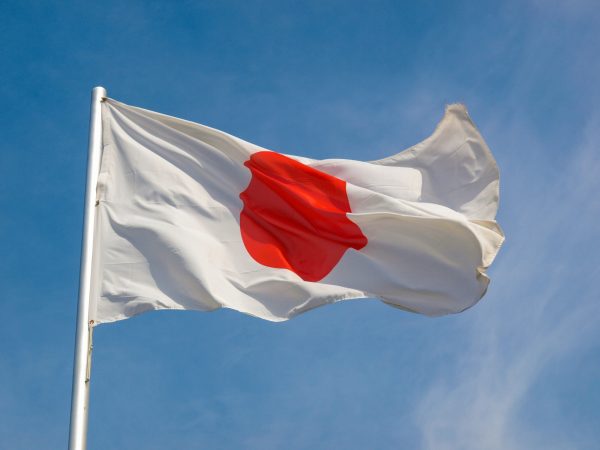
On July 17, Japan’s upper house passed legislation criminalizing the public desecration of the national flag, known as the Hinomaru, after the bill cleared the lower house on June 30. The law provides for up to two years in prison or a fine of up to 200,000 yen for publicly damaging, removing, or defacing a Japanese flag in a manner likely to cause others “extreme discomfort or disgust.” The measure addresses conduct that many people regard as deeply disrespectful, but it also raises a difficult question: how far should the state go in protecting a national symbol from political expression?
Public opinion offers no clear answer to where that line should be drawn. A nationwide public opinion survey conducted by the Social Survey Research Center in April found that 40 percent of respondents supported prohibiting damage to the national flag with criminal penalties. Another 21 percent favored a prohibition without penalties, while 19 percent saw no need for a ban, and 19 percent were unsure. Although a majority supported some form of restriction, the results show no clear public consensus on whether criminal penalties are appropriate, with a substantial share of respondents yet to form a clear view.
Supporters can reasonably argue that deliberate flag burning or trampling can be intended to provoke or insult and that the flag merits legal protection. The law acknowledges the competing concern by requiring consideration for freedom of expression. But that general safeguard does not answer whether the offense is defined clearly enough. Its central test still depends partly on whether an act is likely to cause “extreme discomfort or disgust” among others, making the boundary less predictable than offenses based on property damage, threats, or disruption of public order.
Supporters have also presented the law as a matter of consistency. Japan already criminalizes damaging, removing, or defacing a foreign flag for the purpose of insulting another country. Yet the comparison is incomplete. The foreign-flag offense is part of the Penal Code’s protection of diplomatic relations. It requires a specific intent to insult the foreign state and may be prosecuted only at request of the government of the country whose flag was affected. The domestic offense does not require the same intent. It therefore serves a different and broader purpose: protecting public respect for Japan’s flag.
That difference also matters when assessing whether a separate offense is necessary. Publicized incidents of Hinomaru desecration have been rare, while conduct involving another person’s flag, dangerous fire, trespass, or disruption can already be addressed under existing laws against property damage, fire, trespass, or disruption. A Mainichi editorial similarly questioned the need for a new offense.
As a result, the new provision may be particularly relevant to symbolic protests involving a person’s own flag.
The flag’s history is important to understanding the debate. The red sun motif has roots in ancient sun worship and Japan’s identification as the “land of the rising sun,” although the exact origin of the modern design is uncertain. The Tokugawa shogunate designated the Hinomaru as a maritime ensign in 1854. In 1870, the Meiji government prescribed it for Japanese merchant ships, after which it functioned as the country’s de facto flag. It did not receive full statutory recognition until 1999, when the Act on National Flag and Anthem was enacted.
As the flag became more closely linked to the modern state, it also acquired strong associations with wartime mobilization. Soldiers commonly carried flags bearing messages and signatures from relatives and friends. After Japan’s defeat, the Allied occupation authorities initially restricted its use, and memories of the war continued to shape how some people viewed it. From the 1950s, the education ministry promoted the flag and the anthem, Kimigayo, in schools, with stricter enforcement from the 1980s. Disciplinary action against teachers who refused to participate in ceremonies helped keep both symbols politically contested after 1999.
This divided history helps explain why the Hinomaru carries different meanings today. For many people in Japan, it is an ordinary and positive national symbol displayed at public institutions and sporting events. Others associate it with wartime nationalism or efforts to require patriotic observance in schools. Because these contrasting interpretations remain part of public debate, the state should protect both the freedom to display the flag and the freedom to criticize what it represents.
The parliamentary debate suggests that drawing this line in practice may not always be straightforward. Lawmakers indicated that anime, cartoons, artificial intelligence-generated images, flags depicted within paintings, and the miniature paper flags used to decorate children’s meals would generally fall outside the law. By contrast, livestreaming or uploading footage of cutting or burning a physical flag in a private place could be covered. These examples provide some guidance, but they also show how much enforcement will depend on context.
Context-dependent enforcement does not mean that police or prosecutors will necessarily apply the law broadly. The freedom-of-expression clause, prosecutorial discretion, and judicial review may restrain its use. Still, uncertainty can affect behavior before a case reaches court. Artists, journalists, protesters, and event organizers may avoid borderline uses because the legal consequences are difficult to assess. That possible chilling effect is a practical concern even if prosecutions remain uncommon. Some critics have pressed this concern further, warning that its vague standard could be used to intimidate the public and discourage criticism of the Takaichi government.
For that reason, the constitutional debate deserves careful attention. In July, 148 academics, including specialists in criminal and constitutional law, publicly opposed the bill, arguing that its reliance on public feelings could restrict expression and lead to uneven enforcement. Their objections do not by themselves establish that the law is unconstitutional. That question would ultimately have to be determined by the courts in a concrete case. They do, however, raise credible concerns about whether the scope of the offense is sufficiently clear and whether it can be applied consistently.
International comparisons offer no single model. Germany criminalizes publicly reviling or damaging its federal flag, while the United Kingdom has no specific flag-desecration offense. France restricts insults to the flag or anthem at publicly organized events. In the United States, the Supreme Court protects flag burning as political expression, even if the Trump administration issued an executive order promising to prosecute such behavior. These differences do not resolve Japan’s debate, but they underscore the need to define prohibited conduct and safeguards for political expression clearly.
Encouraging respect for the national flag is an understandable goal. The more difficult question is whether this law defines the prohibited conduct and the protected interest with enough precision. Authorities should issue clear and narrow enforcement guidelines, courts should examine prosecutions closely, and lawmakers should monitor whether the measure deters lawful protest or artistic expression.
National symbols are most durable when citizens respect them voluntarily. Criminal penalties should therefore remain a limited response, reserved for conduct defined with sufficient clarity.
