

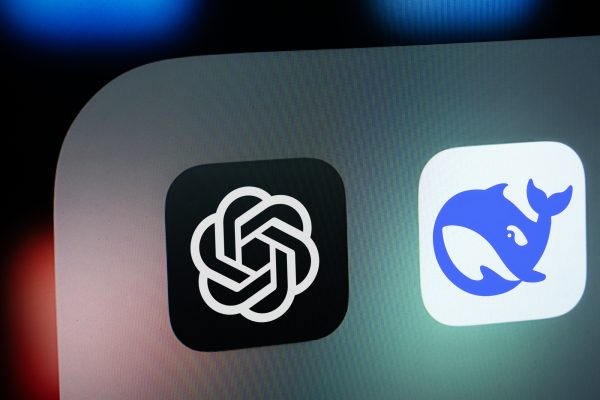
China just fired another shot in the most important technological competition of the 21st century – and Washington should pay attention.
Last week, Chinese startup Moonshot AI unveiled Kimi K3, a powerful open-source AI model that independent evaluators say rivals or even exceeds some of the latest systems from OpenAI and Anthropic. At nearly the same moment, Chinese President Xi Jinping stood before an international audience in Shanghai and proclaimed that artificial intelligence should not be “a solo performance by a single country but a symphony of global collaboration.”
This was no coincidence. China is making a strategic bet that open-source AI – not closed-source – will determine who wins the global technology race.
The United States should be making the same bet.
The geopolitical stakes could hardly be higher. Artificial intelligence is rapidly becoming the defining technology of our era, with implications for economic growth, military power, scientific discovery, and national security. To keep its edge, Washington has focused on restricting China’s access to advanced semiconductors. Yet while the United States fights to maintain its lead in computing power, China is competing on something equally important: adoption.
History shows that the technologies that become global standards are often the ones that are easiest to use, modify, and build upon. Linux became the backbone of the internet. Android dominates the world’s smartphones. Both were open-source software; they created ecosystems rather than customers.
China understands that distinction.
Chinese companies such as Moonshot, DeepSeek, Zhipu, and Alibaba are increasingly releasing powerful open AI models that anyone with the right technical skills can download, modify, and deploy. Every developer, startup, university, and foreign government that builds on those systems becomes part of China’s expanding technological ecosystem.
Meanwhile, the United States’ leading AI firms are moving in the opposite direction.
Ironically, the company called OpenAI is no longer open. Its original charter emphasized broad access and ensuring that artificial intelligence benefits all of humanity. Today its most advanced models are proprietary, accessible only through paid interfaces and cloud services.
Anthropic has adopted a similar strategy, arguing that keeping frontier AI closed is necessary for safety. But commercial considerations appear to be the more compelling explanation.
Safety considerations for such powerful tools deserve rigorous attention. But concentrating the world’s most important technology inside a handful of private corporations creates risks of its own. Artificial intelligence has become increasingly controversial because so much power is being concentrated in so few hands.
Fortunately, this is not the only path forward.
Open-source models are rapidly becoming more efficient. They increasingly require less computing power and cost less to operate. That means lower barriers for startups, universities, hospitals, and manufacturers, and broader participation across the economy.
Open-source models foster competition and innovation while closed-source ones hinder it. Startups can customize open-source models for specialized industries. Researchers can inspect them for flaws. Hospitals can run them securely without transmitting sensitive patient data to outside companies. Defense agencies can audit their behavior rather than relying on the black boxes of closed AI. Security researchers can identify vulnerabilities before adversaries do.
Perhaps most importantly, open-source AI democratizes innovation itself. Some of the internet’s greatest breakthroughs did not come from established technology giants. They came from unexpected innovators building on open foundations. Nobody predicted that Linux would become the operating system powering much of the global internet. Nobody foresaw Android’s dominance when it began as an open-source project. The same generative innovation is possible with artificial intelligence – but only if the underlying technology remains accessible.
This is not simply an economic argument. It is a democratic one. When only a handful of companies control the models, the computing infrastructure, and increasingly the information people consume, transparency becomes more difficult, competition weakens, and public trust erodes. Open systems allow independent experts to examine how models work, identify bias, improve security, and hold developers accountable in ways proprietary systems simply cannot.
The United States still possesses enormous advantages. It leads the world in advanced chips, venture capital, research universities, entrepreneurial talent, and high-performance computing. But those strengths will matter only if they translate into broad national capability rather than remaining locked behind proprietary walls.
If Washington allows short-term corporate incentives to dictate long-term national strategy, it risks repeating a familiar mistake. Closed-source models may maximize revenue for a few companies, but they do little to spread innovation throughout the broader economy. Worse, they create an opening for Chinese open-source models to become the world’s default platform.
China has recognized that global influence comes not merely from building the best AI, but from building the AI that the world chooses to use.
