

Chinese dissident Zhang Xinyan was detained by authorities in Thailand last week while boarding her scheduled flight from Bangkok to Canada for resettlement, despite holding a refugee visa from the United Nations High Commissioner for Refugees and all required approvals from Ottawa.
Human rights groups immediately leapt to her defense, adding there are three more Chinese dissidents – Bai Zhaodong, Tan Yixiang, and Zhou Junyi – currently being held in Thai detention centers who were at risk of being forcibly returned if local authorities bow to pressure from Beijing.
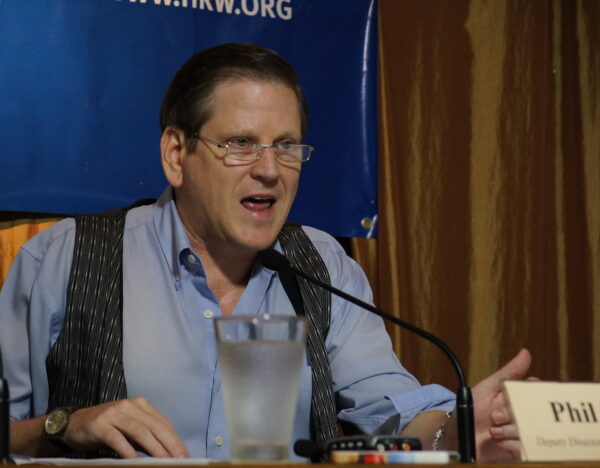
Phil Robertson, director of Asia Human Rights and Labour Advocates, returns to Beyond the Mekong to speak with The Diplomat’s Luke Hunt about their plight and the region-wide issue of transnational repression.
“If they, these four refugees, are sent back, including Zhang and others, they would face persecution, arrest, likely torture and detention, and long prison terms,” he said.
Robertson said Zhang Xinyan’s detention had again raised concerns in the United States, European Union, Australia, and Canada, which was expected to lead diplomatic efforts in securing her release. Their plight was also reminiscent of the 40 Uyghurs that Thailand forcibly repatriated to China last year.
“If Thailand, at the last minute pulls back a case like this, because the autocratic dictatorship [in China] has demanded the return of their people, it raises concerns about whether Thailand has any seriousness in the protection of refugees,” he said.
Bangkok-based Robertson, who has 30 years of experience working in human rights, also speaks about organized crime, human trafficking networks, and scam compounds in mainland Southeast Asia, as well as cross-border relations between Thailand and Cambodia.
He said both countries are suffering, particularly economically, as the border remains shut after they fought a bitter six-month conflict across the frontier last year, ending in a December truce.
But Robertson says Cambodia has not done enough to end the scourge of organized crime – a key plank in the ceasefire – and has failed to hold accountable the country’s business tycoons, some of which have been named and sanctioned by the United States and others for their ties to scam compounds.
“They continue to be too big to touch,” he said, adding the crackdown is selective and Cambodia was trying to create an impression for the international community that it was tackling organized crime while trying to maintain the bigger, well connected scam centers.
“The international community right now is not buying it,” he said.
