

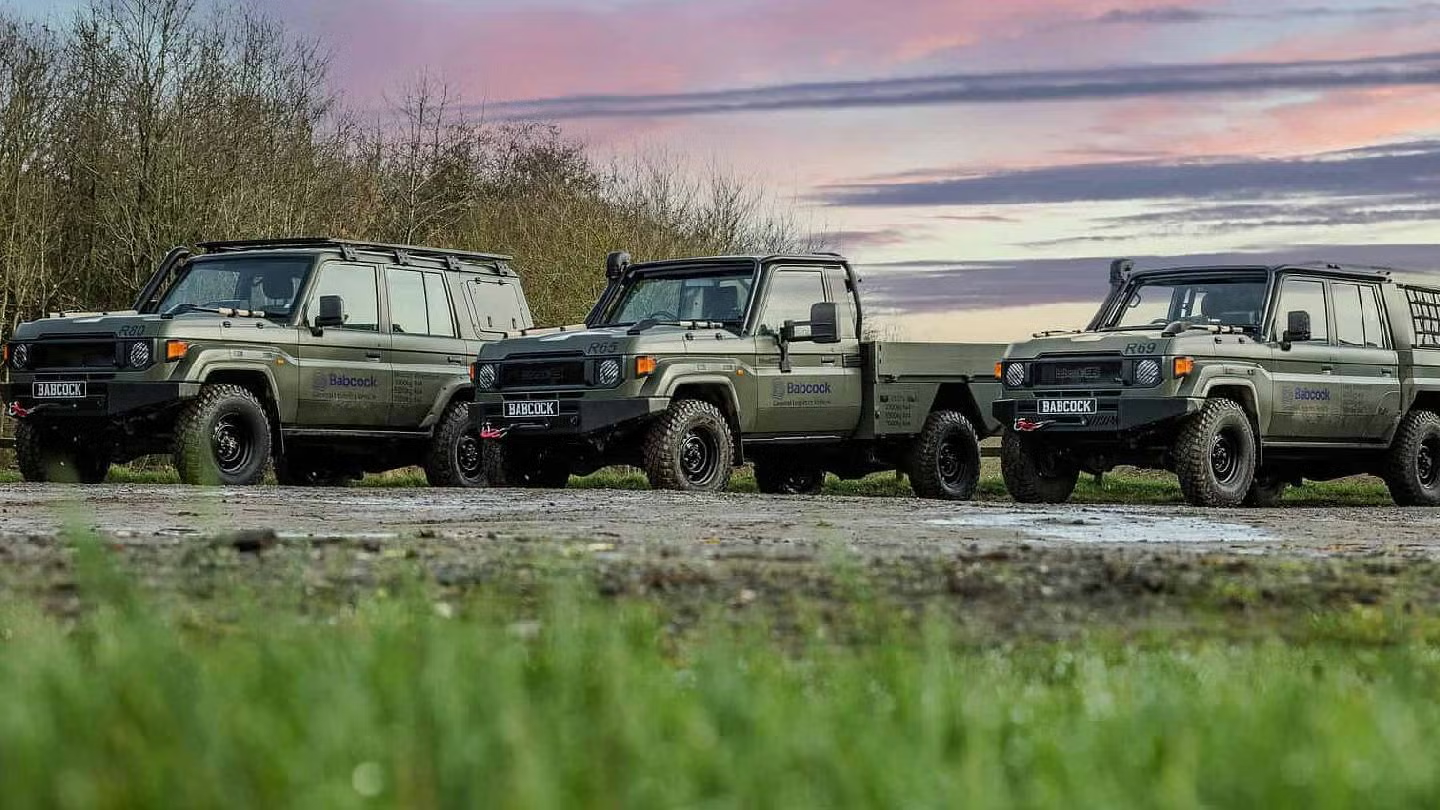
Babcock and Supacat have entered into a Memorandum of Understanding (MoU) to collaborate on a British Army programme aimed at finding a replacement for the current Land Rover fleet.
The agreement forms part of the Army’s Light Mobility Vehicle (LMV) competition, with the goal of modernising mobility platforms under the broader Land Mobility Programme (LMP).

Discover B2B Marketing That Performs
Combine business intelligence and editorial excellence to reach engaged professionals across 36 leading media platforms.
Babcock stated the MoU builds on a longstanding relationship with Supacat, which most recently delivered the Jackal 3 programme earlier in the year.
The collaboration will draw on shared experience to design and deliver a vehicle solution using a UK-based supply chain, both companies said.
The General Logistics Vehicle (GLV) family, developed by Babcock for the LMV requirement, will serve as the basis for the companies’ joint proposal.
This range utilises the Toyota Land Cruiser LC70 as a platform and includes medium wheelbase, long wheelbase, and utility variants.
According to Babcock, the MoU enables both firms to leverage complementary expertise and supports Babcock’s commitment to wider SME engagement in defence programmes.
Babcock’s Land and Mission Systems sector chief executive Louise Atkinson said: “The British Army needs a practical, safe and innovative light mobility vehicle that can deliver dependable capability wherever it is deployed. Our General Logistics Vehicle is built on a proven platform and combines operational effectiveness with affordability, supportability and a strong UK supply chain.
“We are delighted to continue our strategic partnership with Supacat. As two British companies with a shared commitment to supporting the UK’s defence and security, our solution will strengthen sovereign capability, sustain highly skilled jobs and reinforce the UK’s defence industrial base.”
The UK Ministry of Defence (MoD) issued a Request for Information (RfI) for the LMV platform in January 2025, outlining the requirement for production, supply, support, and training.
The Army intends to consolidate vehicle types and modernise roles currently undertaken by Land Rover and Pinzgauer vehicles, seeking a common wheeled utility platform.
Besides Babcock and Supacat, General Dynamics Land Systems–UK also teamed up with Ricardo to develop a competing vehicle for the LMV programme. Their solution is based on the Ford Ranger platform and includes both 4×4 and 6×6 militarised variants, which were displayed at DSEI.
General Dynamics Land Systems stated their proposal integrates off-the-shelf automotive technology to meet the Army’s requirements for payload, mobility, and support.

