

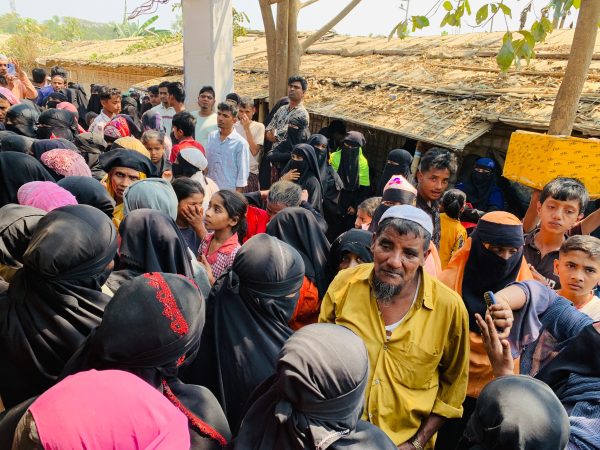
Nearly nine years after the 2017 military crackdown that forced more than 750,000 Rohingya to flee to Bangladesh, the prospect of their repatriation to Myanmar remains as distant as ever. Bangladesh recently took an important institutional step by establishing a national committee to strengthen coordination and develop a comprehensive strategy for the safe, voluntary, and sustainable return of the Rohingya. The initiative reflects Dhaka’s continued commitment to resolving one of the world’s most protracted refugee crises, after hosting more than 1.2 million Rohingya for nearly a decade.
The committee deserves recognition, but better coordination within Bangladesh alone cannot resolve a crisis the roots of which lie across the border. Rohingya repatriation is not primarily a logistical or humanitarian challenge. It is a political, legal, security, judicial, and geopolitical problem that demands structural change inside Myanmar and sustained international engagement. Until the conditions that drove the Rohingya from their homes are fundamentally addressed, large-scale return will remain unattainable.
The first and most essential requirement is the restoration of citizenship. Myanmar’s 1982 Citizenship Law effectively rendered the Rohingya stateless, stripping them of legal recognition and the rights associated with nationality. Citizenship is the foundation of freedom of movement, political participation, access to education and healthcare, property ownership, and equal protection under the law. Returning Rohingya refugees to Myanmar as stateless people, without restoring these rights, would simply recreate the conditions that enabled their persecution in the first place.
Security is equally indispensable. Since the 2021 military coup, Rakhine State has become a fragmented conflict zone divided between the Myanmar military and the Arakan Army. This raises questions that no repatriation plan has adequately answered. Who will guarantee the safety of returning refugees? Who will issue citizenship documents and administer civilian institutions? Who will investigate human rights violations if they recur? Without credible and independently verifiable guarantees from either party, repatriation cannot be considered safe or sustainable.
Justice is another indispensable pillar of any durable solution. The atrocities committed against the Rohingya, including genocide, crimes against humanity, and decades of systematic discrimination, cannot simply be set aside in pursuit of political expediency. Accountability is not separate from repatriation; it is one of the conditions that makes repatriation possible. Without justice, trust cannot be rebuilt, and the structural drivers of persecution are likely to persist.
Equally important is the restoration of homes, land, and livelihoods. Thousands of Rohingya villages have been destroyed or occupied, leaving many refugees with nowhere to return. A meaningful return requires restitution or fair compensation, together with access to housing, education, healthcare, and sustainable livelihoods. Repatriation should enable refugees to rebuild dignified lives rather than merely cross an international border.
Finally, the Rohingya themselves must be at the center of any decision about their future. For too long, discussions have been dominated by governments and international organizations while the voices of refugees have remained marginal. Any repatriation process must be voluntary, informed, and based on genuine consent, free from coercion, political pressure, or declining humanitarian assistance.
Yet even if these conditions are widely recognized, they remain difficult to achieve because of the geopolitical realities surrounding Myanmar.
China remains Myanmar’s most influential international partner, and Rakhine State occupies an important position in the China–Myanmar Economic Corridor under the Belt and Road Initiative. Beijing has repeatedly facilitated dialogue between Bangladesh and Myanmar and promoted repatriation frameworks, but none has produced meaningful progress. China’s overriding priority is regional stability and the protection of strategic infrastructure, including the Kyaukphyu deep-sea port and energy corridors connecting the Indian Ocean with Yunnan Province. Consequently, Beijing has shown little willingness to exert sustained pressure on Myanmar over citizenship, accountability, or ethnic rights, while its position at the United Nations Security Council has frequently shielded Myanmar from stronger international action.
India’s approach has been shaped by similar strategic calculations. Its Kaladan Multi-Modal Transit Transport Project, which links Kolkata to Rakhine State’s Sittwe Port via India’s northeastern states, passes through territory increasingly controlled by the Arakan Army. As fighting has reshaped the political landscape in Rakhine, New Delhi has reportedly engaged with the Arakan Army to protect this vital connectivity project despite growing allegations of abuses against Rohingya civilians. Like China, India has prioritized regional stability, border security, and infrastructure over sustained pressure for structural reforms that would enable the Rohingya to return safely.
Although China and India compete for influence across Myanmar and Bangladesh, neither has consistently used its leverage to advance Rohingya rights. Instead, both have largely treated the crisis through the lens of strategic competition, economic connectivity, and regional security. This convergence has left Bangladesh with limited diplomatic leverage despite bearing the greatest part of the humanitarian burden.
Regional institutions have likewise struggled to respond effectively. ASEAN remains constrained by its long-standing principle of non-interference in the internal affairs of member states. Despite diplomatic initiatives and repeated statements, the organization has been unable to generate meaningful pressure capable of changing realities inside Myanmar.
By contrast, the Organization of Islamic Cooperation (OIC) has pursued one of the most significant legal responses to the crisis. Acting with the support of the OIC, The Gambia filed proceedings against Myanmar before the International Court of Justice in 2019, alleging violations of the Genocide Convention. Meanwhile, the International Criminal Court continues to investigate alleged crimes involving the forced deportation of the Rohingya into Bangladesh. These legal processes represent important steps toward accountability, but they move slowly and have yet to produce changes that improve conditions for refugees contemplating return.
While diplomacy and litigation continue, conditions inside the refugee camps in Cox’s Bazar are steadily deteriorating. More than 1.2 million Rohingya remain dependent on humanitarian assistance, while renewed violence in Myanmar has driven additional refugees into Bangladesh since 2024. Repeated funding shortfalls have resulted in reduced food assistance, cuts to health services, and weakened protection programs. At the same time, camp violence, gender-based violence, trafficking, and criminal activity have become increasingly serious concerns. The absence of education, livelihoods, and long-term opportunities has driven some refugees to undertake dangerous sea journeys in search of safety and work elsewhere in the region.
The consequences extend beyond the camps themselves. Bangladesh’s host communities continue to face significant economic, environmental, and social pressures, while prolonged displacement increases the risk of regional instability and transnational security challenges. Humanitarian assistance remains indispensable, but it cannot resolve a crisis whose underlying causes remain unaddressed inside Myanmar.
Taken together, these realities explain why moves toward repatriation remain stalled. Myanmar has failed to restore citizenship, guarantee security, or ensure accountability. The fragmentation of authority in Rakhine has further complicated negotiations. China and India have prioritized strategic interests over structural reform. ASEAN has proved institutionally constrained. International justice mechanisms continue to move slowly, while donor fatigue has weakened humanitarian support. Each of these factors reinforces the others, creating a cycle in which the crisis is managed rather than resolved.
Bangladesh’s new repatriation committee represents an important institutional initiative and demonstrates the country’s continued commitment to pursuing a durable solution. However, even the most effective national coordination cannot substitute for political transformation inside Myanmar.
The success of repatriation ultimately depends on whether those returning can do so with equal rights, legal protection, personal security, and the opportunity to rebuild their lives in dignity. Until those conditions are met, repatriation will remain more a diplomatic aspiration than a practical reality, leaving more than 1 million Rohingya trapped in prolonged limbo.
