

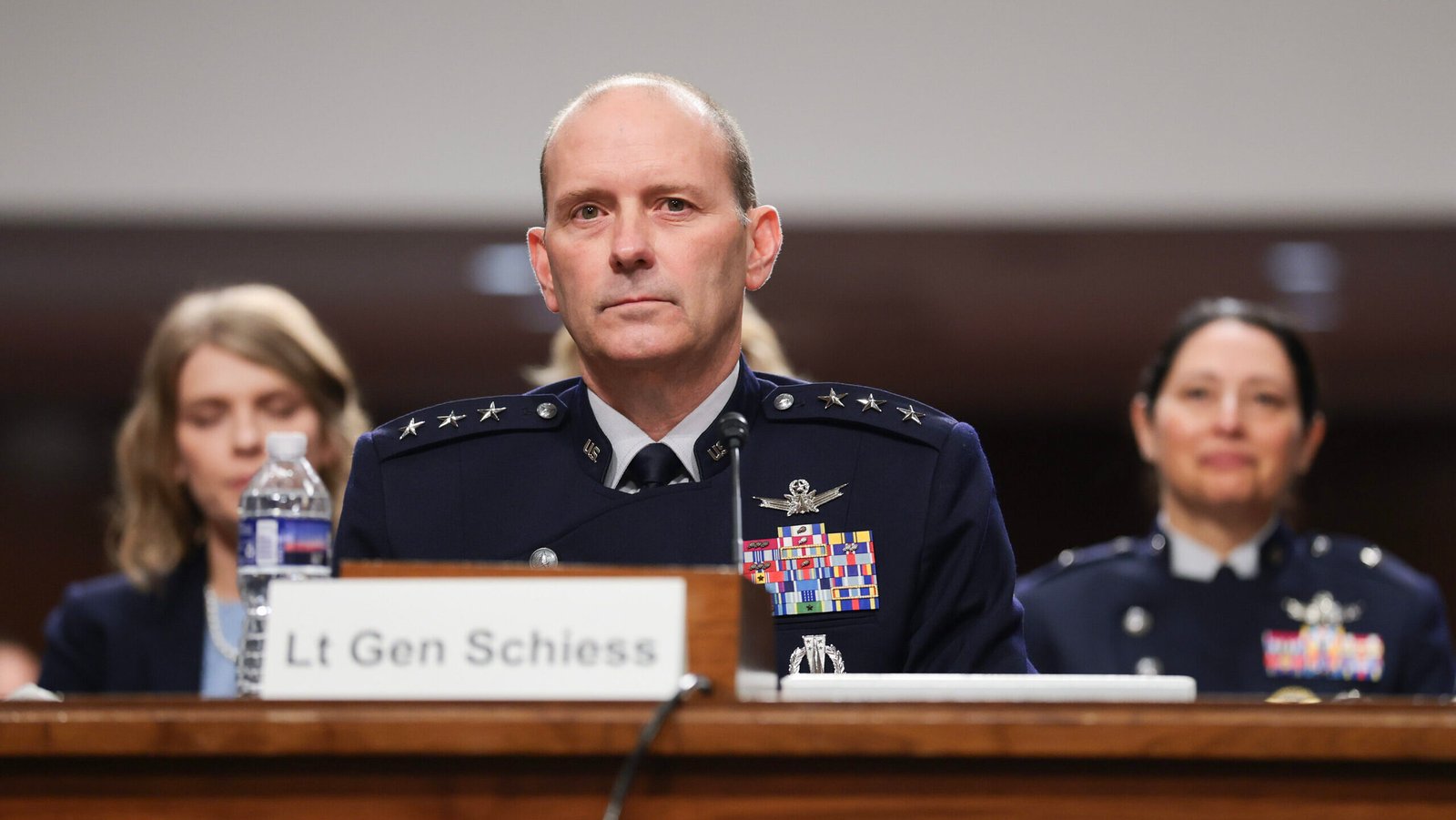
WASHINGTON ― In a unanimous consent vote late on Thursday, the Senate confirmed Lt. Gen. Doug Schiess as the next chief of space operations (CSO) — the third person to pick up the reins of the almost seven-year-old Space Force.
As expected, the confirmation was swift and non-controversial.
Schiess, who currently serves as Space Force deputy, will replace Gen. Chance Saltzman, who is expected to retire in mid-August. Schiess will earn a fourth star and inherit a much larger Space Force in both budget and end strength than what existed when the branch was established in 2019 by the first Trump administration.
In fiscal 2022, when Saltzman took up the CSO post, the Space Force was appropriated $17.4 billion and comprised about 8,700 active duty Guardians, as the branch’s service members are called. The service’s FY27 budget request asks for $71.2 billion, and includes a proposed increase in end strength from today’s 10,657 active forces to 13,200. Further, Saltzman, Schiess and other top Space Force brass have been lobbying for the service to roughly double in size by 2030, to around 20,000 Guardians and civilians.
However, Schiess also will inherit a complex set of acquisition and workforce challenges as the service’s mission and priorities increasingly shift from traditional support functions towards warfighting.
According to a July 14 report by the Government Accountability Office (GAO), the Space Force has yet to determine how many civilians and active duty Guardians its requires as its mission sets and priorities become increasingly geared towards combat roles and its satellite systems morph in response.
“The Space Force has not established a process or guidance to consistently and accurately determine its personnel needs to accomplish its missions,” the congressional watchdog found. “Relatedly, although it has estimated the number of contractor personnel supporting it, the Space Force does not have a process or guidance to accurately measure the number of contractor personnel and the nature of work they perform.”
GAO warned that in the absence of a solid planning process, the service risks failing to properly assign and manage personnel for current and future mission needs, even if it wins congressional approval for a double-digit jump.
Nonetheless, the GAO found that the service is currently facing at least a 25 percent shortfall in personnel, including in the areas of cybersecurity and intelligence.
Further, senior Space Force officials responsible for acquisition are pushing to rapidly rehire civilians following cuts due to the Trump administration’s push to slash federal employees and contractors — and marching orders from Capitol Hill to beef up its acquisition workforce.
