

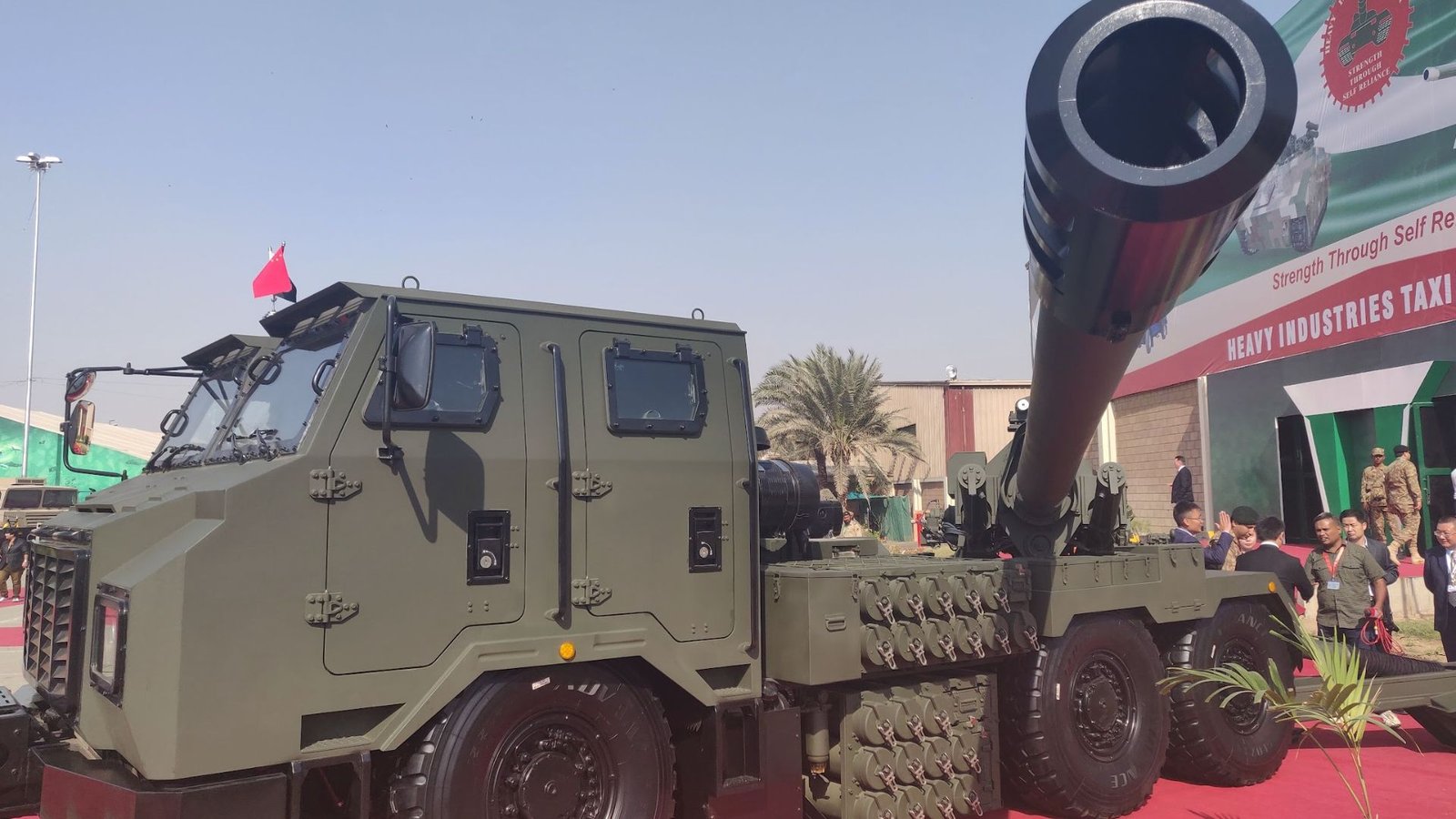
Pakistan was the fifth-largest importer of major arms from 2021 to 2025, and 80% of those imports came from China, according to the Stockholm International Peace Research Institute (SIPRI). The Chinese share stood at 73% from 2016 to 2020.
Though fiscally constrained, Pakistan still runs multi-billion-dollar procurement cycles, and those cycles are predictable. The Pakistan Air Force (PAF) will undertake the next major one in the 2030s, largely to replace its F-16A/B Block-15s and to build its next-generation air warfare system-of-systems.
Supply-side export controls explain part of why those cycles keep landing in China. However, the demand-side habits of the Pakistan Navy (PN), Pakistan Army (PA), and PAF also deter the non-Chinese original equipment manufacturers (OEMs) that are still willing to sell to – and build with – Pakistan.
Those habits recur in three areas. The first is unlicensed maintenance, repair, and overhaul (MRO) work at Pakistan Aeronautical Complex (PAC), including on the Pratt & Whitney Canada PT6 engine line.
The second is running original conversion programs without the airframe OEM, as the PN is doing with the Sea Sultan long-range maritime patrol aircraft (LRMPA) and Embraer’s Lineage 1000E.
The third is a security-control regime that keeps the National Engineering and Scientific Commission (NESCOM) and Pakistan Atomic Energy Commission (PAEC) away from willing partners, among them Turkish Aerospace, Leonardo, and Bombardier.
