

A recent Wall Street Journal article warned that the “[c]lampdown on top U.S. artificial intelligence is fueling concern that Washington is handing Beijing a cyberwarfare advantage.” It went on to note that China’s release of Z.ai by Zhipu AI is on par with Anthropic’s Mythos model in detecting software vulnerabilities. The article, along with a growing body of recent commentary, taps into the prevailing China-U.S. AI race narrative at a time when the United States is deliberating a unified AI policy and reportedly considering banning Chinese open weight models.
The AI race narrative holds that the United States and China are engaged in a zero-sum contest to develop and deploy frontier AI so as to accrue lasting geoeconomic advantage. In a May 2026 article for the Transformer newsletter, Yi-Ling Liu outlined how Silicon Valley’s major companies have themselves pushed this AI race narrative, potentially overstating the extent of the competition. However, the interests of these companies are not uniform, nor are the policies that they advocate. Different firms across the AI value chain have continued to invoke the AI race narrative to advance policy preferences that align with their commercial interests.
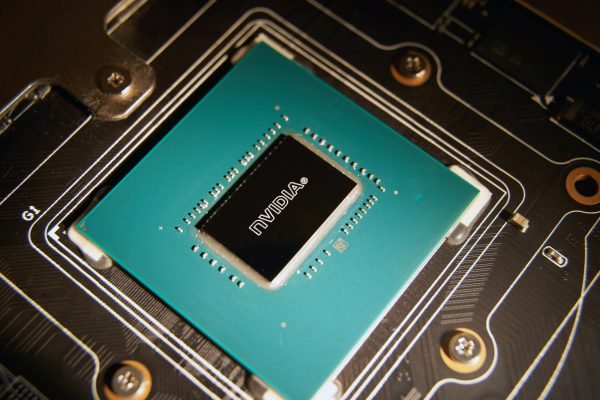
Given the concentrated nature of the global AI supply chain, a select few companies have immense stakes in how policies and regulations on AI evolve and, consequently, strong incentives to shape them. Sitting atop the hardware segment of the AI supply chain is Nvidia, which accounts for over 80 percent of global AI chip sales. Nvidia’s GPUs form the backbone of the compute infrastructure required to train and develop generative AI models. This market position, while enviable, has exposed Nvidia to the broader geoeconomic disruptions that have emanated from the AI race with China.
In April 2025, building on Biden-era export controls, the Trump administration introduced measures that would require Nvidia to secure additional export licenses for the sale of its H20 chips to China, which would result in a $5.5 billion accounting charge. In response, Nvidia CEO Jensen Huang extensively lobbied the administration to reverse this policy and reconsider its broader approach toward the export of AI chips to China.
As part of this effort, Nvidia skillfully invoked the AI race narrative to achieve its objective. In a report presented to the government, the company argued that existing chip restrictions would only accelerate Huawei’s production of indigenous alternatives, increase its market share, and pave the way for the company to eventually become a competitive threat, thus eroding U.S. technological leadership in AI. While the basis for these claims is contested, it proved to be effective in convincing the Trump administration to relax its export control policy, enabling Nvidia to resume sales to China. The Trump administration’s decision to permit H20 exports was reportedly linked to a trade deal for rare earths from China. The subsequent policy shift allowing for the export of more advanced H200 chips, in limited quantities, can be understood as part of Nvidia’s broader lobbying campaign.
Beyond hardware, American companies also currently lead the development and deployment of closed-source proprietary AI models. In contrast, Chinese companies have developed and deployed open-weight models that are fast closing this performance gap and offering lower cost alternatives. This progress is driven by a range of factors, including AI model distillation – a method that involves transferring knowledge from larger AI models to smaller, faster, and cheaper models. Companies such as Anthropic and OpenAI have accused Chinese AI developers of using distillation to reproduce the capabilities of proprietary models. In a recent press release, Anthropic claimed that three Chinese AI labs were involved in an industrial scale campaign to extract capabilities from Claude, necessitating a coordinated response from “industry players, policy makers, and the global AI community.” More notably, Anthropic highlighted its consistent support of “export controls to help maintain America’s lead in AI” and argued that such distillation attempts by Chinese labs “reinforce the rationale for export controls.”
While the legality of distillation is beyond the scope of this article, it is pertinent to examine Anthropic’s framing of the incident. By portraying distillation attempts by Chinese AI laboratories as akin to industrial intellectual property theft, Anthropic has positioned its AI models as strategic assets in the ongoing AI race that require regulatory protection and, if necessary, punitive enforcement by the U.S. government. As Craig Smith aptly noted, “Anthropic’s larger project is to persuade Washington to define the rules of the frontier so that model extraction becomes a sanctionable offense.”
Recent developments in Washington indicate that Anthropic’s efforts for such a policy shift may be gaining traction. In a recent tweet, Director of the White House Office of Science and Technology Policy Michael Krastios referenced Chinese AI Lab Moonshot’s efforts to distill from Anthropic’s Fable to develop its K3 model using sophisticated means. He also reiterated the U.S. commitment to fostering a competitive ecosystem for AI development, while stressing that “large-scale, covert industrial distillation aimed at stealing proprietary U.S. technology and undermining American research is unacceptable” – echoing concerns previously raised by Anthropic. U.S. Treasury Secretary Scott Bessent issued a similar tweet and warned that industrial-scale distillation “attacks” by China could trigger “sanctions and Entity List designations.”
The timing of these statements is noteworthy as it comes during a period when the White House is reportedly weighing bans on Chinese open weight models. While a ban on Chinese open weight models would potentially shield companies like Anthropic from the competitive reach of their Chinese counterparts, it has elicited concern from other industry players. On July 24, Nvidia, Microsoft, Meta, and other companies signed an open letter titled “Open Weights and the American AI leadership” that urged Washington to avoid premature restrictions; cautioned policymakers not to conflate legitimate model-development techniques (distillation) with misappropriation; and advocated for an open-weight AI ecosystem as a path to sustain U.S. technology leadership. While OpenAI and Google subsequently joined the list of signatories, Anthropic remained notably absent, highlighting the divergent interests and perspectives from industry players in different segments of the AI supply chain.
Microsoft is another example where tech companies have invoked the AI race to advocate for policy change. As a provider of AI infrastructure globally, Microsoft, as well as other companies in the AI industry, expressed concerns about the potential implications of the Biden-era AI Diffusion Rule. In short, the AI Diffusion rule was an effort to create “a new global framework for regulating any transactions (the export, re-export, and in-country transfer) of advanced artificial intelligence (AI) model weights and high-performance computing integrated circuits.” The framework also created a three-tiered system for countries that could access this technology, placing certain import restrictions on countries that fell into the second and third tier and potentially impacting business expansion efforts of AI companies across the globe. Microsoft’s Vice Chair and President Brad Smith penned an article in February 2025 where he argued that the AI rule would undermine U.S. leadership in AI, gradually cede advantage to China in the years to come, and restrict access to vital markets. He noted:
The Biden administration’s interim final AI Diffusion Rule caps the export of essential American AI components to many fast-growing and strategically vital markets. As drafted, the rule undermines two Trump administration priorities: strengthening U.S. AI leadership and reducing the nation’s near trillion-dollar trade deficit. Left unchanged, the Biden rule will give China a strategic advantage in spreading over time its own AI technology, echoing its rapid ascent in 5G telecommunications a decade ago.
The Trump administration ultimately rescinded the rule in May 2025 in favor of new regulations, likely in response to pushback from the tech industry.
What stands out in these examples is how the AI race narrative was employed to serve different policy objectives. Whereas Nvidia used the narrative to advocate for modifications to U.S. export controls that would preserve its access to the Chinese market, Anthropic used a similar narrative to build a case for more stringent export controls and punitive measures to prevent Chinese labs from reproducing its AI models through distillation, thereby protecting its technological advantage and market position. Put simply, whereas Nvidia benefits from selling its hardware to multiple players in an open-weight AI ecosystem, companies such as Anthropic, whose revenues rely on the use of their proprietary models, stand to benefit from measures that safeguard their market position. Similarly, Microsoft and other technology companies have invoked this narrative to push back against regulations that impact their ability to access markets deemed crucial for their business operations. Beyond their divergent policy goals, these examples also highlight the lack of consensus among these technology companies on the AI race.
In sum, influential companies in the global AI supply chain have a great interest in influencing and shaping evolving AI policy in the United States and have selectively deployed the AI race narrative to advocate for policies that safeguard their domestic and global market interests. As U.S. AI regulation increasingly acquires extraterritorial influence – evidenced by the recent U.S. directive to suspend access to Anthropic’s Fable 5 and Mythos 5 models – understanding how commercial actors shape these policy debates becomes essential to understanding the future of global AI governance.
