

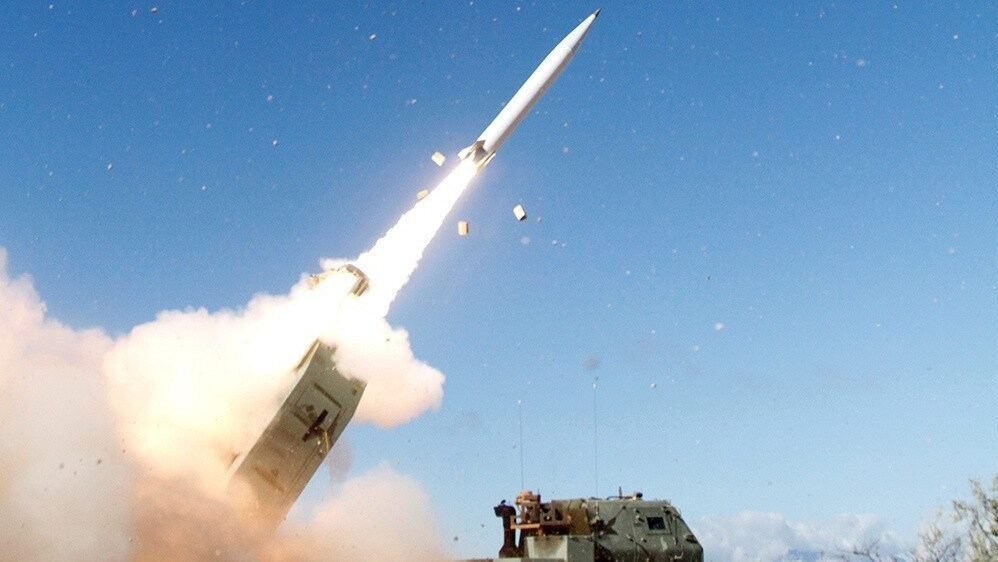
HUNTSVILLE, Ala. — The Army’s new Portfolio Acquisition Executive Fires shop is trying to bridge four key “capability gaps” as it works on 62 programs, according to the one-star general leading the effort.
Brig. Gen. Robert Mikesh, charged with offensive fires under the PAE, detailed the quadruple challenge today at the annual Space and Missile Defense Symposium by pointing towards energetics and propulsion, targeting and seekers, the industrial base and “munitions breadth and depth.”
“Let’s start with this propulsion and energetics,” Mikesh told the audience. “The challenge there is straightforward: high cost, complex manufacturing, limited capacity, and in some areas, constrained resources. Propulsion is foundational to almost everything we do in the missile business.”
When it comes the targeting and seeker challenge, Mikesh said the service is betting that future conflicts will take place in “heavily contested electromagnetic environments” where GPS and networks will be challenged. That requires weapons that are “hardened,” he added.
“That means a multi-mode approach,” Mikesh told the audience. “It means reducing dependency on a single source of information, and it means bringing together data from multiple sensors and domains to move data rapidly, and give the soldier the confidence that that weapon will reach its intended target, even if an adversary is going to do everything possible to prevent that from happening.”
Moving to the industry challenge, Mikesh called on companies to stop proposing weapons that lock the government into a single solution, leaving soldiers unable to make modifications and upgrades. Instead, he reiterated, the Army needs “open architecture and multiple sources.”
Mikesh’s fourth capability gap, munitions breadth and depth, was a recurring theme during this week’s conference in Huntsville, especially at a time of reports of stockpile concerns due, in part, to ongoing military operations against Iran.
Calling it “one of the defining problems of modern warfare,” Mikesh emphasized the increasing need to have a more diverse portfolio of weapons for soldiers to choose from.
“Not every target requires the most exquisite munition, and not every threat should be defeated with our most expensive interceptor,” he added. “We need a balanced mix of affordable mass and exquisite capability.”
Lt. Gen. John Rafferty, who heads up Army Space and Missile Defense Command (SMDC), spoke with Breaking Defense about this very problem Wednesday.
From his vantage point, the future consists of a mix of high-end interceptors that can take down threats like maneuverable ballistic missiles, while soldiers use lower-cost, less capable interceptors for things like non-turbo Shahed drones.
“There’s a range of threats that are in between” those options too, Rafferty added, “from fixed-wing to rotary-wing to other unmanned systems to cruise missiles. And each one of those threats has an optimized effector, and the limiting factor is not having that full range of effectors from cheap and easily produced to very sophisticated and hard to make.”
The services have been asking for such “low cost” options through efforts like the Army’s low cost interceptor program, and industry has apparently been receptive here at the conference.
“My engagements this week with a lot of those producers is like, ‘They heard it loud and clear,’” the three-star general added. “I think we’re moving in the right direction for magazine depth.”
