

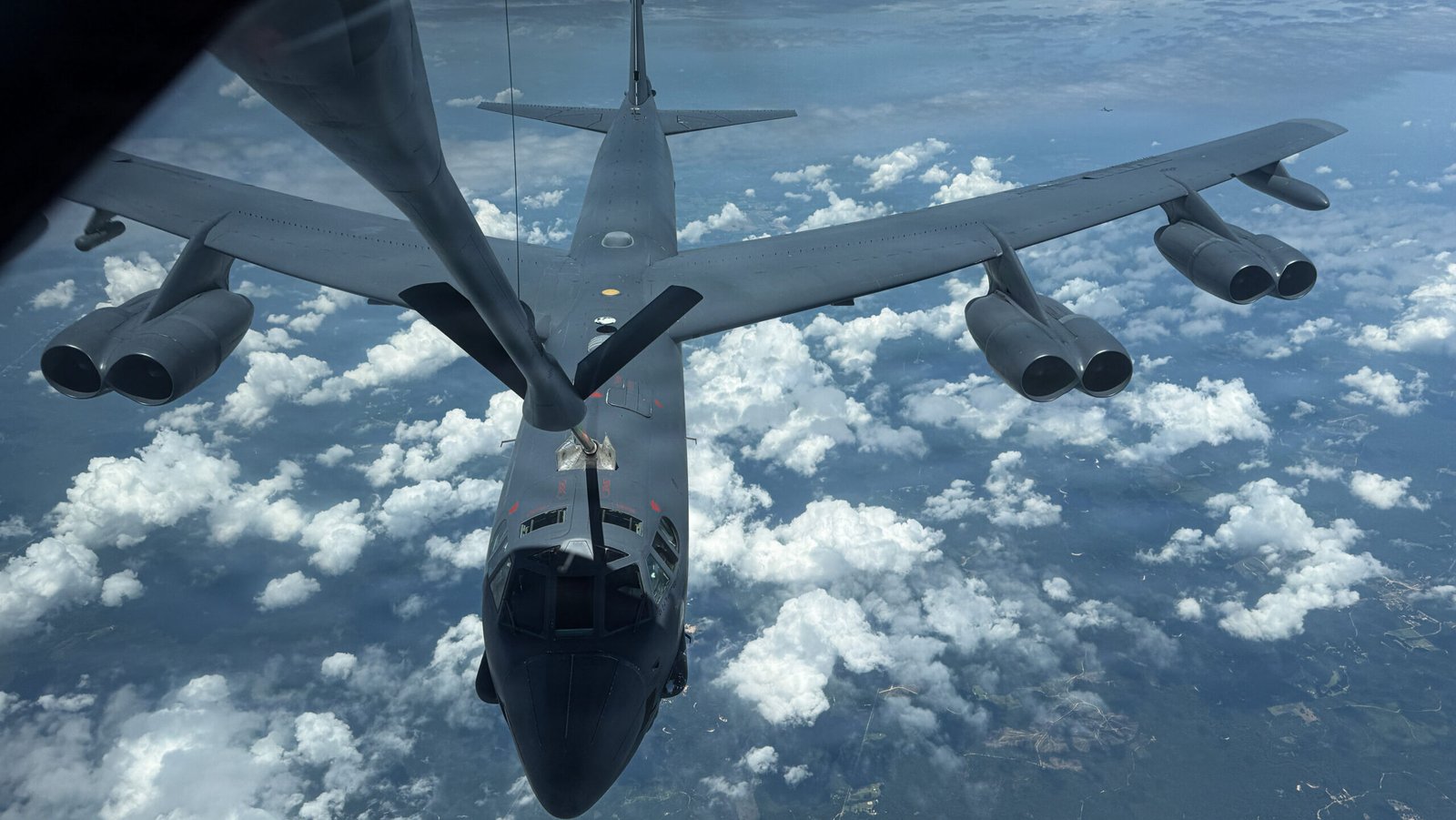
WASHINGTON — The US Air Force has awarded a pair of contracts with a combined value of $766 million to upgrade the radar on the aging B-52 Stratofortress bomber, according to a Defense Department notice.
One award, an indefinite delivery/indefinite quantity contract with a ceiling of $603 million, was issued to defense giant RTX’s subsidiary Raytheon for production and sustainment of new radars, according to Tuesday’s announcement. A second contract with a maximum value of nearly $163 million was issued to B-52 prime contractor Boeing for bomb rack modernization kits, which the DoD announcement says will support the B-52’s Radar Modernization Program (RMP).
RTX and Boeing both referred a request for comment to the Air Force.
Raytheon makes the AN/APQ-188 radar, which will replace the B-52’s older AN/APQ-166 sensor. The radar overhaul is one out of 13 upgrades meant to keep the Eisenhower-era bomber flying through the middle of the century — efforts that are collectively expected to total about $21 billion.
Boeing leads modernization efforts for the B-52, where two key initiatives — RMP, along with a plan to swap out the aircraft’s engines — have faced cost and schedule growth. Those programs are still at risk, according to a recent Government Accountability Office report, which found that the Air Force planned to buy radars directly from RTX to help smooth out depot work.
In particular, the radar upgrade’s budget has ballooned 30 percent to over $2.9 billion, which previously triggered what’s known as a Nunn-McCurdy breach. The Air Force anticipates RMP will be operational in the third quarter of fiscal 2030, three-and-a-half years later than originally expected.
While the Air Force has implemented some cost control measures, the service also removed unspecified performance requirements to field the radar faster. Regarding the changes, GAO noted that “in this case, after contract award, the Air Force will receive less capability while paying more for the program.”
The RMP effort additionally suffered a tragic setback in June when one of two flight test aircraft for the program crashed shortly after takeoff from Edwards Air Force Base in California, killing all eight crew on board. Results from a mishap investigation have not yet been released.
A second aircraft is expected to be modified this year to support flight testing for the radar upgrade, and it’s unclear what impact the crash will have on the program’s overall schedule. In a briefing with reporters July 27, Col. Spencer Turner, the B-52 system program manager, said officials are prioritizing the mishap investigation and that officials will “look at our schedule and adjust as necessary.”
