

By Andre Pienaar
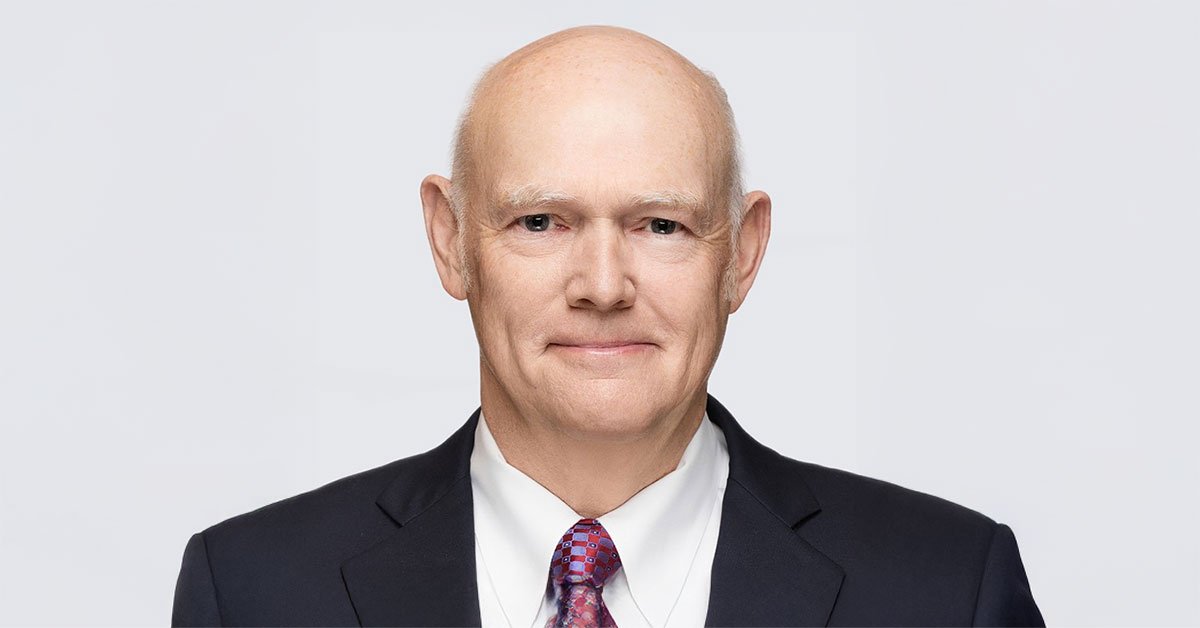
Tory Bruno’s appointment as Honorary Chair of World Space Week 2027 recognises a leadership career spent defending America and the free world.
When the World Space Week Association announced this week that Tory Bruno would serve as Honorary Chair of its 2027 celebration, it chose the theme “To the Moon.” It also chose a man who has spent four decades proving that the romance of spaceflight and the hard discipline of national security are the same job.
Bruno is now President of National Security at Blue Origin, Jeff Bezos’s space company, where he leads a group formed around him in December 2025. For the 11 years before that, he was president and chief executive of United Launch Alliance, the Boeing–Lockheed Martin joint venture that has carried the United States’ most sensitive payloads to orbit for two decades. World Space Week, declared by the United Nations and marked every 4–10 October in close to 100 countries, will in 2027 turn its attention to the missions and partnerships returning humanity to the lunar surface. It is hard to think of a better guide than Tory Bruno.
From ballistics to the boardroom
Salvatore Thomas Bruno was born in Monterey, California, in 1961 and trained as a mechanical engineer at California Polytechnic State University. By his own account, his fascination with propulsion began as a boy on a California ranch, with experiments that involved, among other things, a cache of 80-year-old dynamite. The instinct survived; the ordnance was replaced by professional rigour.
He joined Lockheed Martin as a control systems engineer and moved into propulsion, becoming a ballistician and ordnance engineer. What followed was a career at the sharpest end of the American deterrent. Bruno served as programme manager for Fleet Ballistic Missile rocket propulsion, then as vice-president and general manager of both the FBM and intercontinental ballistic missile programmes. He ran the Terminal High Altitude Area Defense interceptor programme and rose to vice-president and general manager of Lockheed Martin Strategic and Missile Defense Systems, supporting not only the US Department of Defense but the Royal Navy and the British Ministry of Defence on the Trident II D5 system that underpins the United Kingdom’s nuclear deterrent.
This matters for understanding the man. Bruno’s career started with strategic deterrence and never lost sight of the fact that a launch vehicle is, first and last, an instrument of national power. Every weather forecast, every GPS fix and every secure military communication, as he has put it, begins with a controlled explosion overcoming gravity.
Curing a vital supply chain vulnerability
When Bruno took the helm of ULA in August 2014, the company was ostensibly in a comfortable position. It had a near-monopoly on national security launch, a fleet of Atlas and Delta rockets with an unblemished record, and a new competitor, SpaceX, that was about to make that comfort untenable. The Atlas V, moreover, flew on a Russian RD-180 engine, a supply chain dependency that became an indefensible vulnerability after Moscow’s seizure of Crimea that same year.
Bruno’s response was to risk the company’s future on a new rocket in a decision that now looks prescient. Within weeks of taking the job, he announced that ULA would buy Blue Origin’s BE-4 engine for its next-generation vehicle, later named Vulcan. He then set about stripping costs out of a business that had never needed to compete on price, while protecting the mission assurance culture that made ULA the customer of choice for the National Reconnaissance Office and the Space Force.
The Vulcan Centaur flew for the first time in January 2024, completed its two certification flights and, in August 2025, launched USSF-106, its first national security mission, from Cape Canaveral. The United States replaced a Russian engine with an American one and preserved assured access to space for its most exquisite satellites without a break in service. That is the kind of achievement that rarely makes headlines or the history books, but it is precisely the kind of achievement that determines whether a nation keeps its eyes and ears in orbit during a crisis.
Leading Blue Origin’s national security business
Bruno’s move to Blue Origin at the end of 2025 surprised the industry but made strategic sense. Blue Origin’s New Glenn heavy-lift rocket, powered by seven of the same BE-4 engines Bruno had bet on a decade earlier, was selected in April 2025 as the third provider under the Space Force’s National Security Space Launch Phase 3 Lane 2 contract, alongside SpaceX and ULA, with seven high-value missions awarded pending certification. New Glenn reached orbit on its first flight, landed its booster at sea on its second and Blue Origin agreed a four-flight path to Space Force certification.
In January 2026, Blue Origin qualified for SHIELD, the Missile Defense Agency contract vehicle with a $151 billion ceiling that sits at the centre of President Trump’s Golden Dome initiative to protect the American homeland from aerial attacks. Golden Dome has become a strategic priority as four nation-state adversaries — Russia, China, Iran and North Korea — possess capabilities that could be used to launch attacks against the US.
Getting a new entrant through that certification gate, and building the national security business around it, is a task that calls for exactly Bruno’s combination of engineering credibility and fluency with the government customer. Dave Limp, Blue Origin’s chief executive, said on Bruno’s appointment that he brought unmatched experience to the mission. In his first public remarks in the new role, in February 2026, Bruno described his mandate as accelerating urgent national security projects, including Blue Ring, the company’s multi-mission orbital logistics spacecraft designed for refuelling, manoeuvre and hosting payloads across cislunar space.
That last phrase is the bridge to World Space Week 2027. The Moon is no longer only a destination for explorers. It is becoming strategic terrain. Cislunar space, the vast volume between Earth orbit and the lunar surface, is where the next generation of communications, navigation and surveillance infrastructure will be contested, and where China’s steady programme of lunar landers is already staking claims. A theme of “To the Moon”, led by a man who understands both the inspiration and the deterrent logic of space, is a signal in itself.
Bruno is unusual among aerospace executives in his willingness to engage the public directly and to argue in the open. He has written that satellites underpin national security, economic stability and daily life, and that the United States still lacks clearly defined red lines in space to deter aggression and prevent escalation. He has served on the National Space Council Users’ Advisory Group, is a Fellow of the American Institute of Aeronautics and Astronautics, and is a companion of the Naval Order of the United States.
He is also the author of two books on the organisational genius of the Knights Templar, a medieval order that combined religious vocation, military discipline and what we would now call a global logistics and finance network. It is a historic model for a man whose career has been about building institutions that can do hard, precise and dangerous things reliably, year after year, in the service of something larger than themselves.
World Space Week describes itself as the largest space event on Earth, reaching thousands of classrooms and public gatherings. In 2026, it will be chaired by John Elbon, Bruno’s former ULA colleague, under the theme “The Rocket Revolution.” In 2027, it passes to Bruno and turns to the Moon. Somewhere in a classroom that week, a child will hear an engineer from Monterey explain that rockets are the perfect union of imagination, precision and courage. Some of those children will build the next generation of vehicles that keep free nations secure. That, in the end, is what Bruno’s whole career has been about.
Andre Pienaar is the founder and Chief Executive of C5 Capital, a specialist investment firm headquartered in Washington DC with offices in London, Luxembourg and Vienna focused on energy security.
