

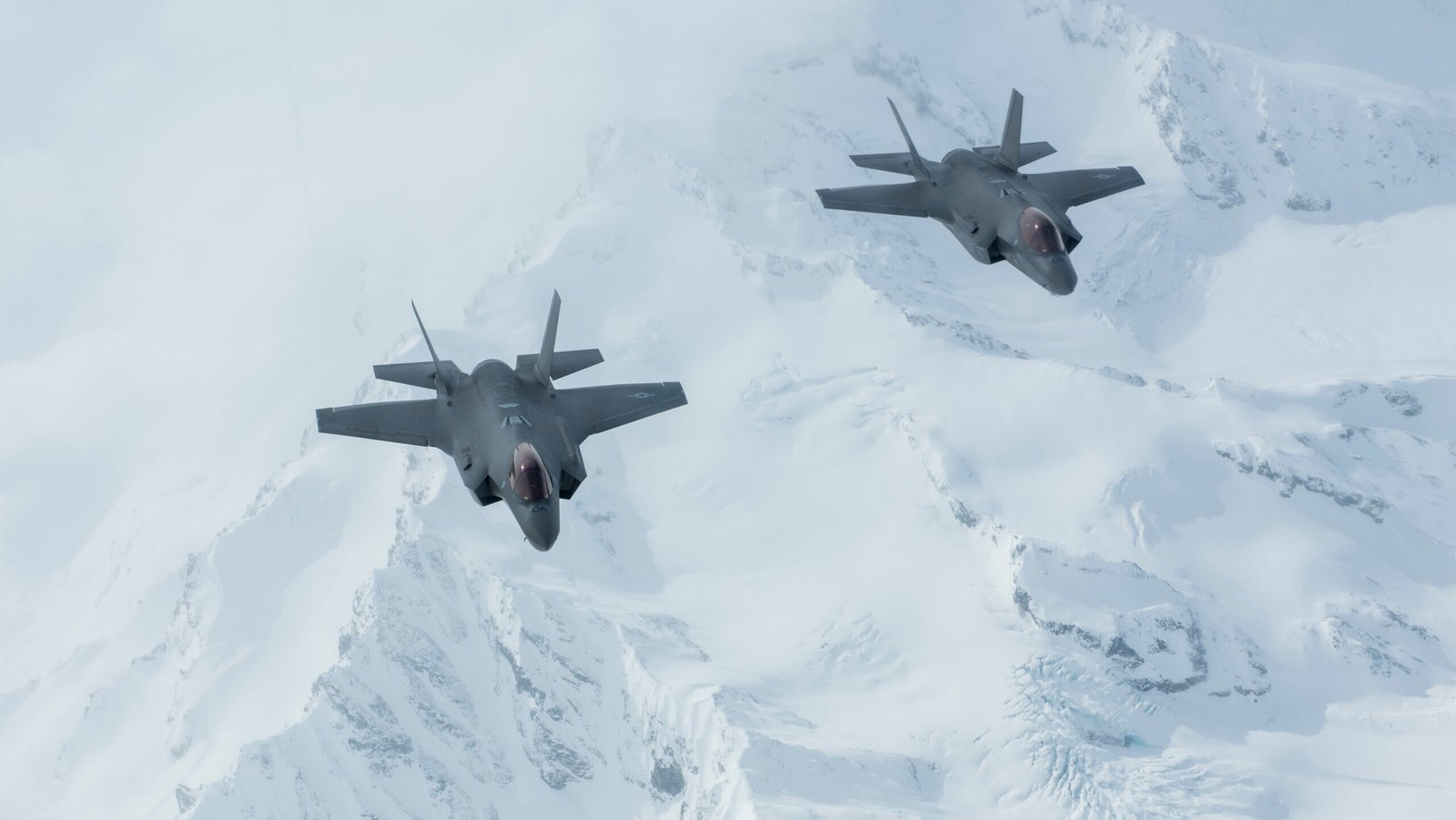
WASHINGTON — The Pentagon and Lockheed Martin are in discussions over a mega-deal for the company’s F-35 Joint Strike Fighter that could span up to a decade and include both production and maintenance for the stealth jet, according to people familiar with the negotiations.
Officials have weighed an F-35 multi-year procurement contract for years, and the latest push comes as the Trump administration seeks to expand the use of long-term agreements to buy key weapons like munitions. A successful deal covering both production and sustainment of the tri-variant fighter could be worth tens of billions of dollars.
“There’s been talk about a 10-year, multi-year buy that would include the production as well as sustainment,” Matt Milas, president of Honeywell Aerospace’s defense division, told Breaking Defense in a September interview. Honeywell is a key supplier for the F-35 program.
A source familiar with the negotiations, who requested anonymity since they were not authorized to speak publicly about the matter, confirmed ongoing talks around a multi-year production and sustainment deal. But they expressed skepticism of its efficacy.
A multi-year procurement “makes sense where the department has seen success with munitions contracts. It makes less sense for aircraft lot buys” — particularly because some aspects of F-35 modernization are still in development, the person said. They added that “the complexities of sustainment present multiple unique challenges.”
Milas said the potential agreement would potentially include “bulk buys” of spare parts, with the increased flow of components beginning around the jet’s 21st production lot, expected in roughly three years. Increasing the supply of spare parts is viewed as a key way to help raise the fighter’s dismal readiness rates.
Proponents of multi-year agreements argue that they give industry more predictability, allowing companies to make long-term investments and leverage economies of scale to reduce costs. Milas said the “big benefit” of an F-35 multi-year agreement would largely be on the sustainment side, since the jet’s production rate is expected to remain at 156 annually.
“It’s more about the sustainment and how do you get more spares and get that bulk buy up front so that you’re not going year-to-year or small lots,” he said.
It’s unclear if the production and sustainment agreements would be linked or structured as separate arrangements, or whether they would stretch the same length of time.
In a statement to Breaking Defense, a Lockheed spokesperson said the company “continues to advocate for a multi-year contracting approach which would provide additional stability for the F-35 industrial base. As demonstrated with other successful programs, this would enable predictable production rates, cost efficiency, and continuous modernization essential to maintaining air superiority and warfighter readiness.”
The company referred all further inquiries to the US government. Spokespeople for the F-35 Joint Program Office and Pentagon declined to comment on negotiations.
A New Version Of A PBL?
Lockheed has previously pushed for a larger sustainment deal in the form of a performance-based logistics (PBL) contract spanning five years. Such agreements essentially pay contractors based on outcomes like equipment availability or readiness rates, and at one point company officials were confident a PBL deal would be reached for the F-35 by the end of 2023.
But lawmakers have required the Pentagon to certify that any PBL agreement would either reduce maintenance costs or increase readiness, a hurdle officials were unable to clear.
The world’s largest defense contractor is once again backing a long-term sustainment contract, according to a company official — but it may not formally be a PBL.
“A multi-year performance-based contract is still in discussion. I wouldn’t necessarily call it a PBL,” Dina Halvorsen, vice president of F-35 global sustainment at Lockheed, said in a Sept. 14 briefing with reporters. “We are looking at advocating for a multi-year agreement for sustainment on the F-35 program.”
But the source familiar with the negotiations characterized the proposal as “PBL by another name.” The person expressed doubt that Lockheed “can successfully propose something that demonstrates long-term cost savings” and noted that congressional approval for a multi-year deal has still not been granted.
The fiscal 2027 defense authorization bill helmed by the Senate Armed Services Committee includes language that would permit the Pentagon to enter into multi-year procurement contracts for the F-35. The House version of the bill includes a similar provision, with some additional guardrails.
For one, it would not authorize multi-year F-35 procurement until the defense secretary certifies that the contract also includes “the full complement of initial spare parts and alternate mission equipment for each aircraft to be procured under the contract.” The Pentagon must also demonstrate that the multi-year contract achieves cost savings of at least 5 percent.
Neither version of the bill explicitly mentions or authorizes a multi-year sustainment agreement, potentially leaving a key piece of the broader proposal unresolved. Both the House and Senate will need to hammer out agreed upon language before Congress passes the finalized bill.
The F-35 program is projected to last until the 2080s, and sustainment accounts for a vast portion of its nearly $2 trillion lifecycle cost estimate. Improving the jet’s mission capable rates is a leading focus for the program, as previous government watchdog reports have found that readiness hampered by a lack of depot capacity, shortages of spare parts and insufficient access for military maintainers to the jet’s technical data.
More than 1,000 F-35s have been delivered to date. But over the last two years, many newly delivered jets have been held for training as officials struggle to clear a new upgrade for combat.
Aaron Mehta contributed to this report.
