

The United States is considering military action against the Houthis after repeated missile and drone attacks on Saudi Arabia exposed weaknesses in the kingdom’s air defences, despite billions of dollars being spent on American weapons systems.
US president Donald Trump warned he could join Saudi Arabia’s military campaign against the Iranian-backed rebels after attacks on Riyadh’s King Khalid International Airport at the weekend killed 14 people and injured more than 300.
The attacks have raised concerns over Saudi Arabia’s ability to defend its cities and infrastructure, with reports that its military is running dangerously low on interceptor missiles.
Saudi officials have warned that their stockpiles are becoming depleted and that the military is struggling to provide air-defence coverage across the kingdom, accodring to reports in the US.
Saudi commanders have reportedly been moving missile-defence batteries around the country to protect critical oil facilities, government buildings and royal palaces.
The kingdom operates American-made Patriot and Terminal High Altitude Area Defence (THAAD) systems, designed to intercept ballistic missiles, but Houthi missiles and drones have repeatedly penetrated its defences.
Saudi Arabia has also approached friendly countries, including Pakistan, seeking additional military assistance and air-defence equipment.
The shortages follow months of fighting across the Middle East, during which American and allied forces have expended large numbers of expensive interceptors defending against Iranian missiles and drones.
The latest attacks came on Saturday when a Houthi missile struck Riyadh’s international airport, killing 13 people, including an American, and injuring more than 300.
A further projectile hit Terminal 4 on Sunday, killing a Pakistani national and wounding 11 others, according to Saudi aviation authorities.
The Saudi-led coalition said the second strike caused a fire inside the terminal. The airport remained closed on Monday as engineers inspected the damage and airlines cancelled or diverted flights.

Saudi air defences were able to intercept other incoming weapons, including a cruise missile near Riyadh airport, a ballistic missile heading towards Khamis Mushait in southern Saudi Arabia and a drone over the Eastern Province.
The Saudi-led coalition has described the attacks on civilian aviation facilities as a war crime and promised to respond.
On Sunday, Saudi Arabia, Turkey, Pakistan and Egypt issued a joint statement condemning the airport attacks as a “dangerous escalation that cannot be justified or accepted under any pretext”.
The four countries said they held the Houthis responsible and supported legitimate measures taken by Saudi Arabia to defend itself.
“The Group holds the Houthi militia fully accountable for the results of these attacks and any repercussions that come with it that threaten regional and international peace and security, and demands the immediate and unconditional halt of these attacks,” the statement said.
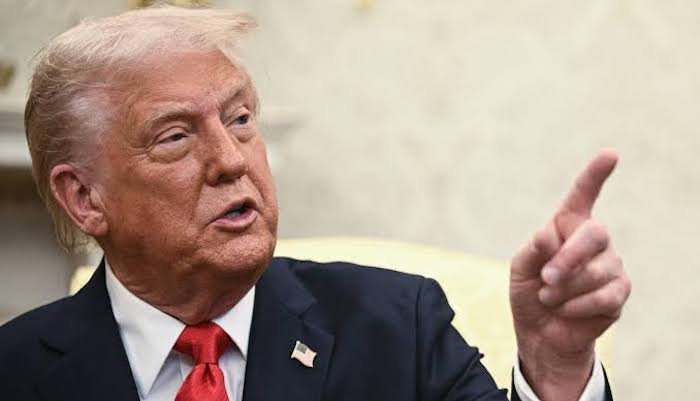
Trump said he was considering whether American forces should join Saudi military operations against the Houthis.
“We may. We’re going to look at it,” he said when asked about direct American military involvement.
He added that he intended to speak to Crown Prince Mohammed bin Salman, Saudi Arabia’s de facto ruler, and said the attacks were unacceptable.
Marco Rubio, the US secretary of state, also condemned the strikes, describing them as “reprehensible attacks” which demonstrated a disregard for civilian life.
The Houthis claimed responsibility for Saturday’s attack and warned international airlines against using Saudi airports while the kingdom continued its military campaign in Yemen.
The group also claimed attacks on King Fahd International Airport in Dammam and two Saudi Aramco facilities, although the strikes on the oil installations have not been independently confirmed.
Yahya Saree, the Houthi military spokesman, said the attacks would continue unless Saudi Arabia ended its military operations in Yemen.
The renewed fighting follows a Saudi-backed offensive by Yemeni government forces against Houthi positions along the Red Sea coast.
Saudi Arabia has provided air support to government troops seeking to recover territory controlled by the rebels.

The Houthis, who control Yemen’s capital, Sanaa, and much of the country’s northwest, possess ballistic missiles, cruise missiles, armed drones and explosive naval craft.
Their missile capabilities have been developed with assistance from Iran’s Islamic Revolutionary Guard Corps.
On Monday, Houthi authorities reported that airstrikes on Sanaa had killed one person and wounded 12 others, including children. They blamed Saudi Arabia, which did not immediately comment.
Iran has offered to mediate talks between Riyadh and the Houthis, while the fighting has prompted fresh international warnings over the safety of commercial aviation and shipping in the region.
Who are the Houthis? The Iran-backed rebels threatening the Middle East
The Houthis have transformed themselves from a little-known Yemeni rebel movement into one of the most powerful armed groups in the Middle East, capable of attacking Saudi cities, striking international shipping and launching ballistic missiles against Israel.
Backed by Iran, the organisation has developed an arsenal of missiles, armed drones and naval weapons which has allowed it to challenge some of the region’s most sophisticated armed forces.
Officially known as Ansar Allah, or Supporters of God, the Houthis are a Shia Islamist political and military movement which emerged in northern Yemen during the 1990s.
The group takes its name from Hussein Badreddin al-Houthi, a religious leader killed by Yemeni government forces in 2004. It is now led by his younger brother, Abdul-Malik al-Houthi.
The movement originated among Yemen’s Zaidi Shia Muslim minority, which complained of political marginalisation, economic neglect and growing Saudi influence.
After years of fighting government forces, the Houthis captured the capital, Sanaa, in 2014, triggering a civil war and a Saudi-led military intervention the following year.

Where are they based?
Today, the Houthis control much of northwestern Yemen, including Sanaa and the strategically important Red Sea port of Hodeidah.
Their territory contains most of Yemen’s population, while the internationally recognised government and rival armed groups control much of the south and east.
Their position along the Red Sea coast has enabled them to threaten shipping passing through the Bab al-Mandeb Strait, one of the world’s most important maritime trade routes linking the Indian Ocean with the Suez Canal.
Who finances them?
Iran is the Houthis’ principal foreign military backer, providing weapons technology, training and technical assistance through the Islamic Revolutionary Guard Corps.
However, the movement also raises substantial funds domestically through taxation, customs duties, fuel imports, telecommunications revenues and the seizure of commercial assets.
United Nations investigators have documented extensive Houthi revenue-raising networks, including compulsory levies imposed on businesses and traders.
What are their aims?
The organisation’s principal aim is to consolidate its control of Yemen, resist Saudi influence and secure a dominant position in any future political settlement.
It also identifies itself with Iran’s regional network of armed groups opposed to Israel and American influence, which includes Hezbollah in Lebanon and several Iraqi militias.
Since the outbreak of the Gaza war in October 2023, the Houthis have launched missiles and drones towards Israel and attacked commercial shipping in the Red Sea, claiming to be acting in solidarity with Palestinians.
What weapons do they possess?
Their military capabilities have expanded significantly over the past decade.
The Houthis possess ballistic and cruise missiles, anti-ship missiles, long-range explosive drones, naval mines and remotely controlled explosive boats.
Some of their missiles have ranges exceeding 1,000 miles, allowing them to threaten targets deep inside Saudi Arabia and Israel.
United Nations experts have estimated that Houthi forces could number as many as 350,000 fighters, although the precise size of their active military remains uncertain.
Their ground forces also possess tanks, artillery, rocket launchers and armoured vehicles, including equipment captured from Yemeni government forces.
Although Iranian assistance has been central to developing their missile and drone capabilities, the Houthis increasingly assemble weapons within Yemen.
Despite repeated airstrikes by American, British, Israeli and Saudi forces, the movement has retained its ability to threaten military installations, civilian infrastructure and commercial shipping across the Middle East.
